


Listen to the article
Venezuelan Opposition Leader Meets with Trump Amid Shifting US-Venezuela Relations
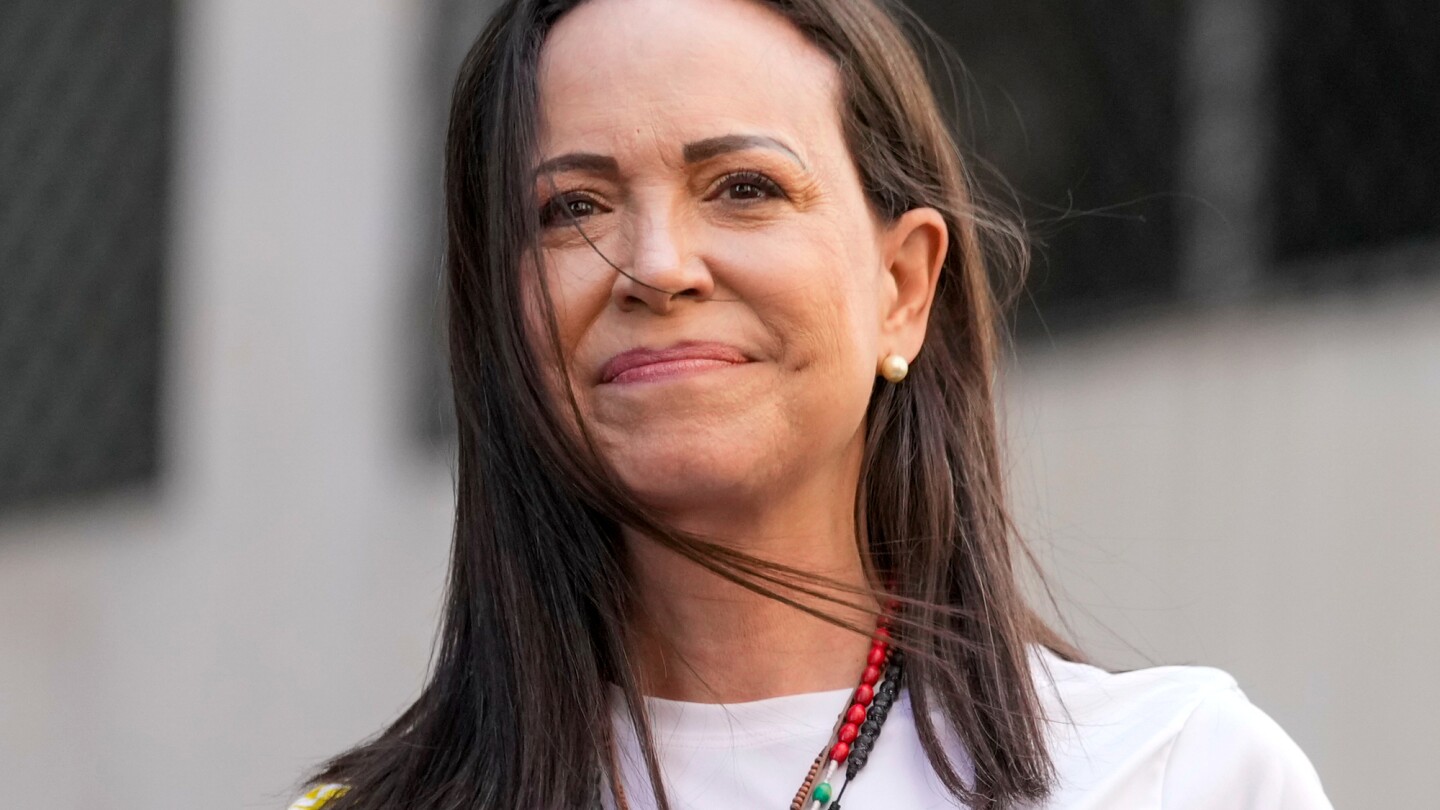
Venezuelan opposition leader María Corina Machado met with President Donald Trump at the White House on Thursday, as the administration navigates a complex diplomatic landscape following the audacious U.S. military raid that captured former President Nicolás Maduro.
The meeting comes amid questions about Trump’s commitment to backing democratic rule in Venezuela. Despite White House Press Secretary Karoline Leavitt describing Machado as “a remarkable and brave voice” for the Venezuelan people, Trump has previously expressed doubts about her ability to lead the country, stating she “doesn’t have the support within or the respect within the country.”
Trump has instead signaled willingness to work with Delcy Rodríguez, Maduro’s former second-in-command who now serves as acting President. Rodríguez was scheduled to deliver her first state of the union speech Thursday, while maintaining day-to-day government operations alongside others from Maduro’s inner circle.
Leavitt indicated Trump’s opinion of Machado remained unchanged, calling his previous assessment “realistic.” She added that Trump supports new Venezuelan elections “when the time is right,” though provided no timeline for when this might occur.
The meeting, sought by Machado, was described as an opportunity for “frank and positive discussion about what’s taking place in Venezuela,” without specific expectations. Machado had previously offered to share with Trump the Nobel Peace Prize she won last year, an honor the president has long coveted but that was rejected by the Nobel Institute.
Following her White House visit, Machado planned meetings at the Senate. Her Washington trip coincides with U.S. forces seizing another sanctioned oil tanker with alleged ties to Venezuela in the Caribbean Sea, part of broader American efforts to take control of the South American country’s oil resources.
The Trump administration’s intervention in Venezuela reached a dramatic peak when U.S. forces captured Maduro and his wife at their heavily guarded compound in Caracas, bringing them to New York to face drug trafficking charges.
According to Leavitt, Venezuela’s interim authorities have been “fully cooperating” with the Trump administration. Rodríguez’s government has reportedly promised to release more prisoners detained under Maduro’s rule, with five Americans already freed this week.
Rodríguez has notably softened her stance toward Trump since Maduro’s ouster, suggesting Venezuela can work within the administration’s “America First” regional policies, at least temporarily. Trump confirmed Wednesday he had a “great conversation” with Rodríguez, describing it as “a long call” where “we discussed a lot of things.”
Machado’s political journey has been marked by opposition to Venezuela’s ruling socialist party. She first challenged the government in 2004 when her NGO, Súmate, promoted a referendum to recall then-President Hugo Chávez. Her 2005 meeting with President George W. Bush in the Oval Office drew Chávez’s ire, as he considered Bush an adversary.
Nearly two decades later, Machado mobilized millions of Venezuelans to reject Maduro in the 2024 elections. Her party is widely believed to have won those elections, though ruling party-loyal electoral authorities declared Maduro the winner despite credible evidence to the contrary. The subsequent anti-government protests were met with brutal crackdowns by state security forces.
Machado’s whereabouts have been largely unknown since she went into hiding early last year after a brief detention in Caracas. She briefly reappeared in Oslo in December when her daughter accepted the Nobel Peace Prize on her behalf.
As the situation continues to evolve, the Trump administration appears to be balancing pragmatic engagement with Rodríguez’s interim government while maintaining communication with opposition figures like Machado, signaling a complex approach to U.S. policy in the oil-rich South American nation.
Fact Checker
Verify the accuracy of this article using The Disinformation Commission analysis and real-time sources.

14 Comments
This meeting between Trump and the Venezuelan opposition leader is a significant development, but it remains to be seen how it will impact the broader diplomatic landscape. The involvement of Maduro’s former deputy adds an interesting wrinkle.
Trump’s shifting positions on Venezuela reflect the complexities of foreign policy. While promoting democratic values is important, the pursuit of strategic interests can sometimes take precedence.
It’s intriguing to see Trump meet with the Venezuelan opposition leader, given his previous doubts about her ability to lead the country. This suggests a potential shift in US strategy, though the details remain to be seen.
The fact that Trump is also engaging with Maduro’s former deputy raises questions about the administration’s true priorities in Venezuela. Is it about promoting democracy, or maintaining influence?
Interesting to see Trump meet with the Venezuelan opposition leader after cozying up to Maduro’s successor. It’s a complex diplomatic situation, with competing claims to legitimacy. Curious to see how this plays out in US-Venezuela relations.
Trump’s past doubts about Machado’s ability to lead Venezuela add an extra layer of intrigue. His willingness to work with Maduro’s inner circle is quite a shift.
Diplomacy is rarely black and white, and Trump’s approach to Venezuela seems to reflect that nuance. While the optics of cozying up to Maduro’s successor are concerning, this meeting with the opposition leader could signal a more balanced strategy.
It’s a tricky balancing act, given the competing claims to legitimacy in Venezuela. Trump’s willingness to engage with different players may be an attempt to position the US as a broker, rather than taking a definitive side.
The optics of this meeting are quite fascinating. Trump has sent mixed signals on Venezuela, seemingly prioritizing pragmatism over ideological purity. I wonder if this is part of a broader recalibration of US policy in the region.
It will be interesting to see if this meeting with the opposition leader signals a renewed push for democratic change in Venezuela, or if it’s more of a symbolic gesture.
The shifting dynamics in US-Venezuela relations are certainly fascinating to observe. Trump’s meeting with the opposition leader could be a sign of a more pragmatic approach, or it could simply be political posturing. Time will tell how this plays out.
The involvement of Maduro’s former deputy adds an extra layer of complexity. It suggests Trump may be keeping his options open, rather than committing to a clear pro-democracy stance.
This is a complex and evolving situation. Trump’s shifting positions on Venezuela reflect the difficult balance between promoting democratic values and pursuing strategic interests. I’m curious to see how this unfolds in the coming months.
The involvement of Maduro’s former deputy is a particularly intriguing development. It suggests Trump may be hedging his bets and keeping lines of communication open with different factions.