


Listen to the article
President Trump lashed out at NATO and other allies Tuesday for refusing to join U.S. efforts to secure the Strait of Hormuz amid the escalating conflict with Iran, now in its third week and causing significant disruptions to the global economy.
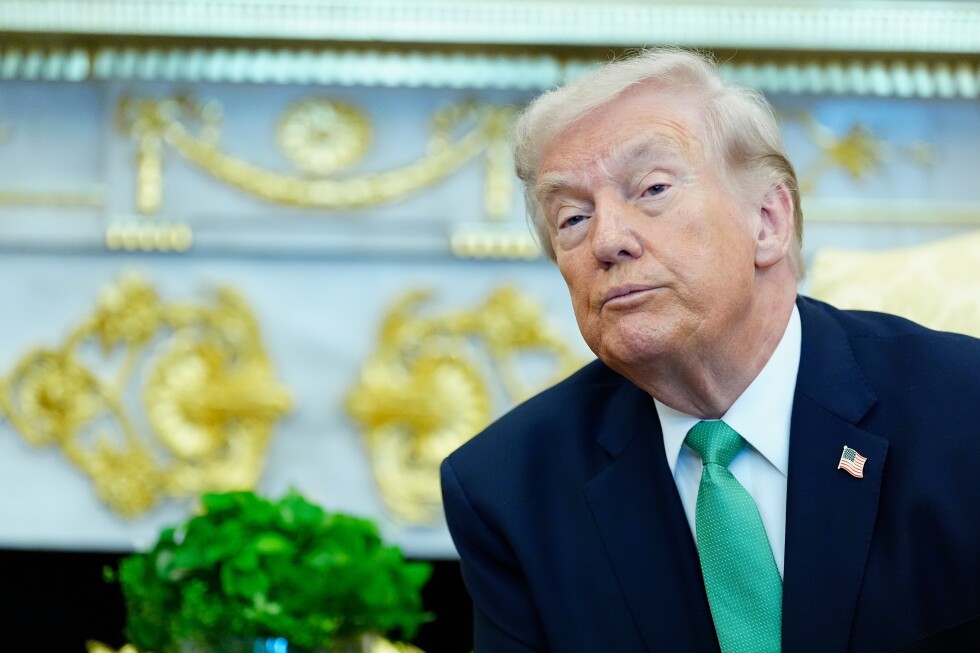
During a St. Patrick’s Day meeting with Irish Prime Minister Micheál Martin at the White House, Trump expressed frustration at the lack of international support. “You would have thought they would have said, ‘We’d love to send a couple of minesweepers.’ That’s not a big deal,” Trump complained. “It doesn’t cost very much money. But they didn’t do that.”
The President’s indignation highlights the isolated nature of the conflict he initiated without international consultation. While Israeli Prime Minister Benjamin Netanyahu had reportedly encouraged this course of action for months, Trump has increasingly framed the conflict as his personal decision, based on what he described as a “feeling” about the threat posed by Iran.
Later Tuesday, the U.S. military announced it had deployed 5,000-pound deep penetrator bombs against hardened Iranian missile sites along Iran’s coastline near the strait. According to U.S. Central Command, these strikes targeted anti-ship cruise missiles that threatened international shipping in the vital waterway.
The Strait of Hormuz represents a critical chokepoint for global energy supplies, with approximately 20% of the world’s crude oil typically passing through it daily. Asian economies are particularly vulnerable to these disruptions due to their heavy reliance on imported fuel.
Trump pointedly criticized NATO allies for benefiting from billions in U.S. support for Ukraine against Russia’s invasion while refusing to reciprocate by aiding American efforts against Iran. “We will protect them, but they will do nothing for us, in particular, in a time of need,” Trump stated on social media.
The President noted that allies including Japan, Australia, and South Korea—as well as China—have rejected his calls to help secure the strait. Trump called this moment “a great test” for NATO and warned the alliance was making “a very foolish mistake” by refusing his requests.
When asked if he was reconsidering U.S. involvement in NATO, Trump responded ominously: “It’s certainly something that we should think about. I don’t need Congress for that decision.” He added, “I have nothing currently in mind, but I’m not exactly thrilled.” This statement raises legal questions, as Congress passed a law in 2023 requiring congressional authorization for any withdrawal from NATO.
European leaders have firmly pushed back against Trump’s demands. EU foreign policy chief Kaja Kallas stated bluntly: “This is not Europe’s war. We didn’t start the war. We were not consulted. We don’t know what are the objectives of this war.”
French President Emmanuel Macron said France would help secure the Strait of Hormuz but only as part of a mission separate from the current conflict. “We are not a party to the conflict, and therefore France will never take part in operations to reopen or liberate the Strait of Hormuz,” Macron declared. Trump dismissed Macron’s position, saying, “Well, he’ll be out of office very soon.”
Trump also expressed disappointment with British Prime Minister Keir Starmer, who initially blocked American planes from using British bases for strikes on Iran before later allowing limited use of bases in England and Diego Garcia for targeting Iran’s ballistic missiles.
Despite his frustration with allies, Trump insisted the U.S. can manage alone. “We don’t need any help, actually,” he told reporters. Meanwhile, the State Department has been actively seeking diplomatic support, asking countries to designate Iran’s Islamic Revolutionary Guard Corps and Hezbollah as terrorist organizations.
The ongoing conflict continues to strain international relationships and test the resilience of longstanding alliances, with Trump’s unilateral approach highlighting a significant shift in American foreign policy engagement.
Fact Checker
Verify the accuracy of this article using The Disinformation Commission analysis and real-time sources.

13 Comments
Securing the Strait of Hormuz is crucial for global trade and energy markets. It’s concerning that NATO allies have not stepped up to help the US in this effort. Unilateral action could further escalate tensions in the region.
Hardened Iranian missile sites near the Strait of Hormuz pose a real security risk. But the US should carefully weigh the potential consequences of its military strikes before escalating the conflict further.
Securing the Strait of Hormuz is a complex challenge that requires a nuanced, multilateral response. Unilateral US action, even with advanced military capabilities, could backfire and further inflame tensions.
It’s concerning that Trump is framing this conflict as his personal decision. Securing the Strait of Hormuz requires a coordinated international effort, not unilateral US action.
Agreed, this is a complex geopolitical issue that demands a thoughtful, multilateral approach. Unilateral US actions could backfire and further destabilize the region.
The global economy is heavily dependent on the free flow of oil and goods through the Strait of Hormuz. Disruptions to this critical chokepoint could have far-reaching economic consequences.
Trump’s ‘feeling’ about the Iranian threat doesn’t seem to be backed by clear evidence. Unilateral US action risks further destabilizing the region and undermining international cooperation.
I agree, the US should be more transparent about the intelligence behind its actions. Consulting with allies could help build a stronger international response.
While I understand Trump’s frustration with NATO’s lack of support, going it alone in the Strait of Hormuz is risky. Coordinated international action would be a more effective and stable approach.
Exactly, the US shouldn’t shoulder this burden alone. Engaging with allies and building a coalition is crucial for maintaining stability and security in the region.
The global economy is already facing significant disruptions due to this conflict. Securing the Strait of Hormuz is in everyone’s interest, so it’s disappointing that NATO allies have not lent more support.
Deploying deep penetrator bombs against Iranian missile sites seems like an escalation that could provoke further retaliation. Diplomacy and de-escalation should be the priority to avoid a wider conflict in the region.
I agree, a diplomatic solution would be much better than continued military action. The US should work with its allies to find a peaceful resolution.