


Listen to the article
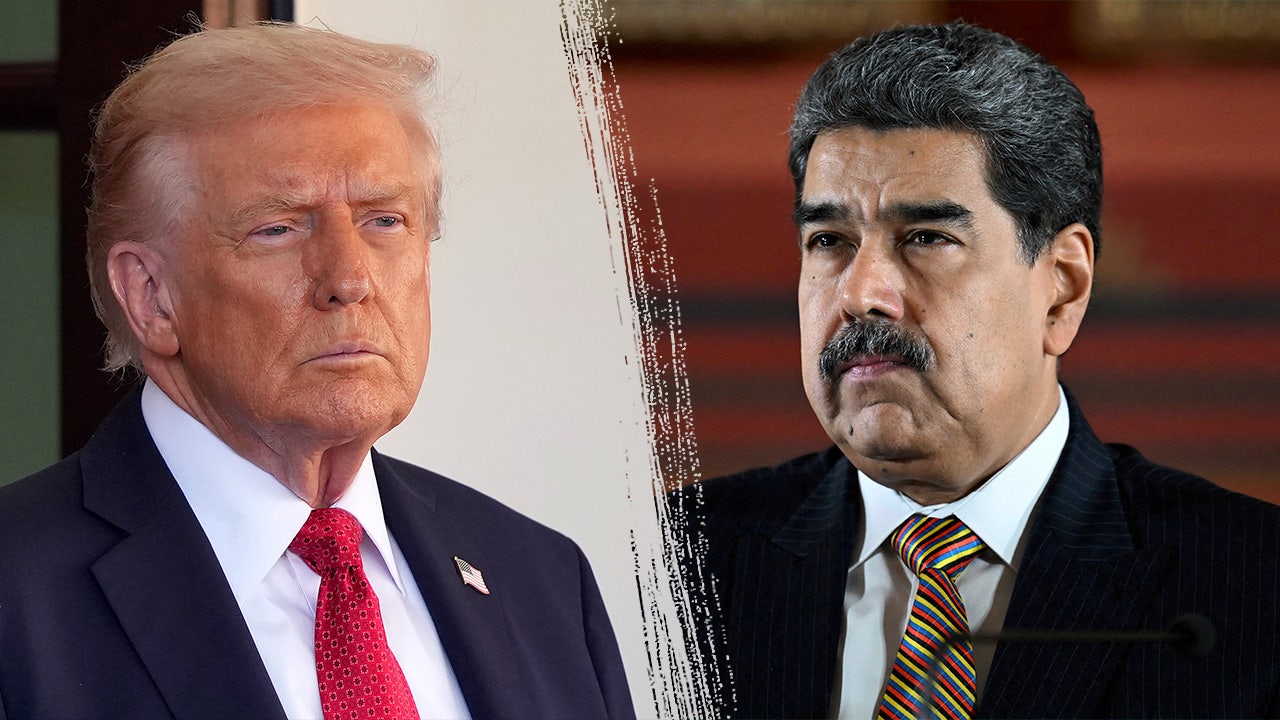
The Trump administration has launched a major escalation against Venezuela’s Maduro regime, implementing a naval blockade on sanctioned oil tankers and designating the government as a Foreign Terrorist Organization. This dramatic move aims to cut off Venezuela’s primary revenue source, with oil accounting for approximately 88% of the country’s export earnings.
In a social media announcement, President Trump declared that Venezuela is now “completely surrounded by the largest Armada ever assembled in the history of South America,” a direct strike at the foundation of the Venezuelan economy.
The action aligns with the administration’s newly released National Security Strategy (NSS), which elevates the Western Hemisphere to the center of U.S. security planning. The strategy identifies regional instability, mass migration, cartel activity, and foreign influence as direct challenges to American security interests.
While Venezuela isn’t specifically named in the document, the framework positions crises like Venezuela’s economic collapse as central to protecting what the strategy terms America’s “immediate security perimeter.” The NSS outlines a hemispheric policy focused on preventing large-scale migration, countering narco-terrorism and cartels, and ensuring regional stability.
Particularly notable is the strategy’s introduction of a “Trump Corollary” to the Monroe Doctrine, aimed at preventing “hostile foreign incursion or ownership of key assets” by strategic competitors in the region.
A senior White House official explained that the Western Hemisphere chapter is designed to “reassert American preeminence” through strengthened security partnerships, reduced drug flows, and prevention of mass migration pressures. The official emphasized that the hemisphere is now viewed as a foundational element of U.S. defense and prosperity.
White House spokesperson Anna Kelly described the NSS as reflecting a historic realignment in U.S. foreign policy. “President Trump’s National Security Strategy builds upon the historic achievements of his first year back in office, which has seen his Administration move with historic speed to restore American strength at home and abroad,” Kelly told Fox News Digital.
Melissa Ford Maldonado, director of the Western Hemisphere Initiative at the America First Policy Institute, characterized Venezuela as illustrating why the hemisphere is now treated as America’s “first line of defense.”
“The Maduro regime functions as a narco-dictatorship closely tied to criminal cartels, which are now considered foreign terror organizations, and supported by China, Iran, and Russia,” she said. “Confronting this criminal regime is about keeping poison off our streets and chaos off our shores.”
Some analysts, however, caution that the strategy’s sharper posture could itself become destabilizing. Roxanna Vigil, a fellow at the Council on Foreign Relations, warned that escalation could create a dangerous power vacuum. “If there is a power vacuum, who fills it?” she asked, suggesting that without a negotiated transition, a sudden collapse could produce outcomes “potentially worse than Maduro.”
Vigil noted that armed groups, hardline regime actors, and cartel-linked networks would all compete for power in such a scenario, with potential spillover effects across a region already strained by mass displacement from Venezuela.
Jason Marczak, vice president of the Atlantic Council’s Adrienne Arsht Latin America Center, observed that the NSS underscores why the administration views Maduro’s continued rule as incompatible with its regional priorities. “All of those goals cannot be accomplished as long as Nicolás Maduro or anybody close to him remains in power,” he said, highlighting the strategy’s focus on migration, regional security, and countering foreign influence.
Both Marczak and Vigil emphasized that the danger extends beyond Maduro himself to the criminal ecosystem and foreign partnerships that sustain his regime. Without a negotiated transition, Vigil cautioned, the forces most likely to prevail would be those already controlling territory: militias, cartel-linked groups, and pro-Chavista power brokers.
Ford-Maldonado argued this reality is precisely why the administration’s strategy elevates Venezuela’s crisis within its broader Western Hemisphere doctrine. “Confronting a narco-regime tied to foreign adversaries is not a distraction from America First — it’s the clearest expression of it,” she said. “What’s ultimately being defended are American lives, American children, and American communities.”
The administration’s adoption of a “Trump Corollary” signals a more assertive U.S. stance toward the hemisphere, framing Venezuela not merely as a humanitarian or political crisis but as a critical test of the strategy’s core principles: controlling migration, countering cartel operations, and limiting the reach of foreign adversaries in the region.
Fact Checker
Verify the accuracy of this article using The Disinformation Commission analysis and real-time sources.

12 Comments
The new National Security Strategy’s emphasis on the Western Hemisphere reflects the administration’s view that regional issues like the crisis in Venezuela pose direct threats to US security interests. Designating Venezuela’s government as a ‘Foreign Terrorist Organization’ is a particularly strong move.
While the administration’s goals may be understandable, implementing an extensive naval blockade could have complex humanitarian and diplomatic consequences that will need to be carefully considered.
The Trump administration’s focus on the Western Hemisphere as a key defense priority underscores its concerns about regional instability and foreign influence. The strategy of cutting off Venezuela’s oil revenue is a high-stakes gambit aimed at toppling the Maduro regime.
It remains to be seen whether this aggressive approach will succeed in pressuring Maduro to step down, or if it will exacerbate the humanitarian crisis and deepen regional divisions.
This represents a significant escalation in the US government’s efforts to pressure the Maduro regime in Venezuela. Designating the country’s government as a ‘Foreign Terrorist Organization’ is an especially strong move with far-reaching implications.
While the administration’s goals may be understandable, the effectiveness and broader impacts of this naval blockade on Venezuela’s oil exports will need to be closely monitored going forward.
The focus on the Western Hemisphere in the new National Security Strategy reflects the administration’s view that regional instability and foreign influence pose direct threats to the US. However, the aggressive tactics against Venezuela’s government raise concerns about unintended consequences.
It will be critical for the administration to coordinate closely with regional allies and partners as this strategy is implemented. Unilateral actions could undermine broader diplomatic efforts in the hemisphere.
Interesting move by the Trump administration to focus on Venezuela and the Western Hemisphere as a key defense priority. Cutting off Venezuela’s oil revenue could have major economic impacts, but it remains to be seen if this naval blockade will be effective in pressuring Maduro’s regime.
The administration seems to be taking an aggressive stance against Venezuela, likely due to concerns over regional instability and foreign influence. It will be important to monitor the outcomes and implications of this strategy.
I’m curious to see how this new hemispheric defense strategy plays out in practice. Cutting off Venezuela’s oil exports is a bold step, but will it actually succeed in pressuring Maduro to step down? There are a lot of potential ripple effects to monitor.
Agreed. Protecting US interests in the region is important, but the administration will need to balance security concerns with diplomatic realities and potential humanitarian impacts.