


Listen to the article
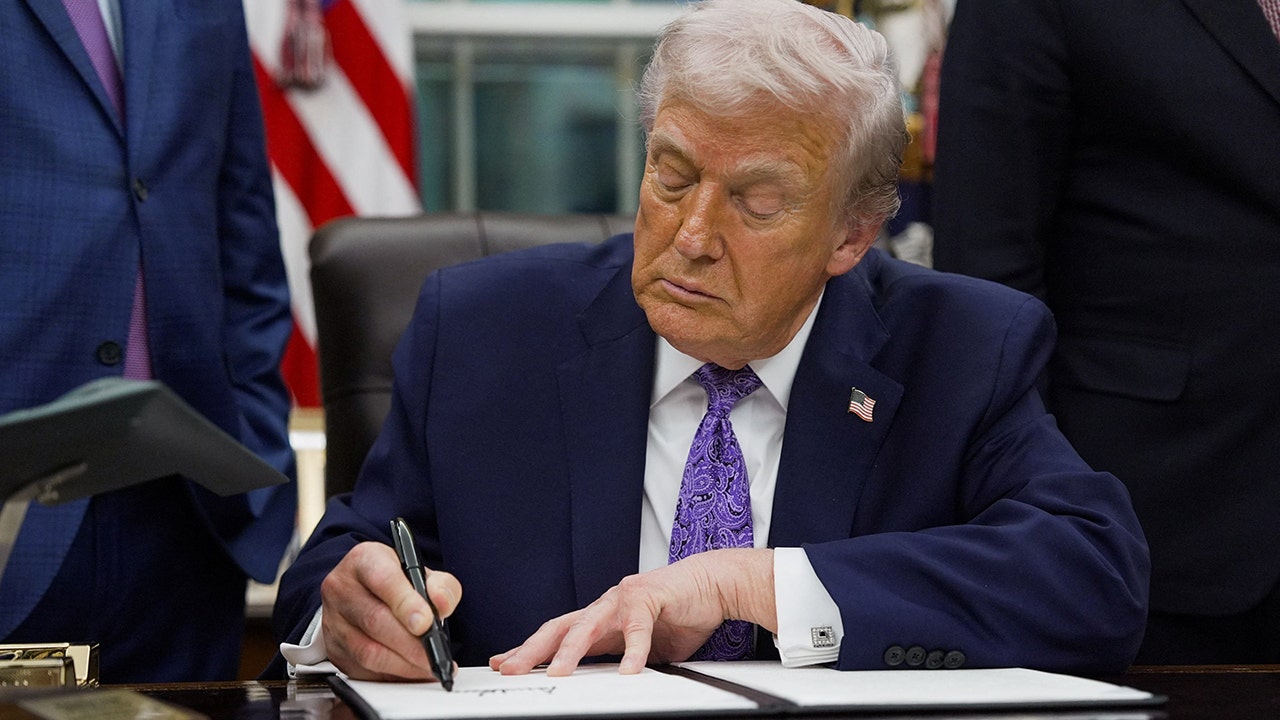
President Trump declared a national emergency against Cuba on Thursday, signing an executive order that targets countries supplying oil to the island nation. The order establishes a mechanism to impose tariffs on nations that “directly or indirectly sell or otherwise provide any oil to Cuba,” marking a significant escalation in U.S. pressure on the communist regime.
In the executive order, Trump characterized Cuba as “an unusual and extraordinary threat” to U.S. national security and foreign policy. The declaration cites Cuba’s alignment with adversarial powers and terrorist organizations, including Russia, China, Iran, Hamas, and Hezbollah.
“The United States has zero tolerance for the depredations of the communist Cuban regime,” Trump stated in the order, emphasizing his administration’s commitment to holding the regime accountable while supporting the Cuban people’s aspirations for democracy.
The White House detailed several security concerns driving the decision. According to the administration, Cuba hosts Russia’s largest overseas signals intelligence facility, which allegedly attempts to steal sensitive U.S. national security information. The order also points to Cuba’s deepening intelligence and defense cooperation with China and claims the island nation “welcomes transnational terrorist groups, such as Hezbollah and Hamas.”
Beyond security concerns, the order references Cuba’s human rights record, accusing the regime of persecuting and torturing political opponents, denying free speech and press freedoms, and retaliating against families of political prisoners who protest peacefully.
The enforcement mechanism established by the order creates a multi-agency process to identify and penalize countries supplying oil to Cuba. The Commerce Department will determine whether foreign countries are supplying oil to the island, either directly or through intermediaries. The State Department, working with Treasury, Homeland Security, Commerce, and the U.S. Trade Representative, will then decide whether to impose tariffs and how steep they should be.
Secretary of State Marco Rubio has been tasked with monitoring the national emergency and reporting to Congress, while the Commerce Department will continue tracking which countries are providing oil to Cuba.
This action represents a continuation of Trump’s hardline stance toward Cuba, which began during his first term when he reversed the Obama administration’s policy of engagement with Havana. The Obama-era policies had sought to normalize relations with Cuba after decades of isolation, but Trump reinstated and strengthened measures against the communist government during his first administration.
The targeting of Cuba’s oil supply chain could have significant economic implications for the already struggling island nation. Cuba has faced chronic energy shortages for years, with blackouts becoming increasingly common across the country. The island has relied heavily on oil imports from Venezuela, though that relationship has been strained by Venezuela’s own economic and political turmoil.
In recent years, countries like Mexico and Russia have emerged as important energy suppliers for Cuba. The new tariff mechanism could complicate these arrangements and potentially deter nations from providing petroleum products to the island.
The executive order comes amid heightened tensions in the region following U.S. operations targeting the Maduro regime in Venezuela, which has long maintained close ties with Cuba. Some U.S. officials, including the House Intelligence Committee chair, have suggested that pressure on Venezuela could eventually lead to the downfall of Cuba’s communist system as well.
The White House described the action as part of Trump’s broader effort to confront regimes that threaten American interests. The executive order is set to take effect Friday.
Fact Checker
Verify the accuracy of this article using The Disinformation Commission analysis and real-time sources.

12 Comments
Interesting move by the Trump administration to target Cuba’s oil suppliers. I’m curious to see how this plays out and what impact it will have on global energy markets.
Agreed. Sanctions and tariffs can have unintended consequences, so it will be important to monitor the situation closely.
The national emergency declaration highlights the ongoing geopolitical tensions between the U.S. and Cuba. While the security concerns seem valid, I wonder if this approach will effectively pressure the Cuban regime.
It’s a high-stakes gamble. Sanctions can be a blunt instrument, so the administration will need to carefully calibrate its strategy.
As a commodities investor, I’ll be monitoring the potential impact on oil and energy markets. Disruptions to Cuba’s oil supply could have ripple effects, depending on how suppliers respond.
Absolutely. Any shifts in global energy trade patterns are worth watching closely, especially given the volatility we’ve seen in recent years.
The administration’s focus on Cuba’s ties to adversarial powers like Russia and China is understandable, but I question whether this approach will be effective in isolating the regime.
Valid point. Cuba has proven resilient in the face of past U.S. pressure, so the administration will need a nuanced strategy to achieve its goals.
From a mining and commodities perspective, I’m curious to see if this move will impact Cuba’s ability to develop its domestic resources, like nickel and cobalt. Those metals could become more scarce if supply chains are disrupted.
Good observation. Any supply chain disruptions for critical minerals could have ripple effects across various industries. This is an angle worth watching closely.
The national emergency declaration seems like a significant escalation in U.S. pressure on Cuba. I wonder if it’s part of a broader strategy to isolate the regime or if it’s a more targeted response to specific security concerns.
That’s a good question. The administration’s rationale suggests both geopolitical and national security motivations, but the long-term implications are hard to predict.