


Listen to the article
Trinidad and Tobago Grants U.S. Military Access to Airports Amid Rising Venezuela Tensions
The government of Trinidad and Tobago announced Monday it will allow the United States military to access its airports in the coming weeks, a move that comes amid escalating tensions between Washington and neighboring Venezuela.
This development follows the recent installation of a U.S. military radar system at Tobago’s airport. Trinidad and Tobago’s government has emphasized that the radar is intended to combat local crime and stressed that the nation would not serve as a launchpad for attacks on any other country.
According to Trinidad and Tobago’s Ministry of Foreign Affairs, U.S. military activities at the airports will be “logistical in nature, facilitating supply replenishment and routine personnel rotations.” The ministry provided no additional details about the scope or duration of this arrangement.
The Caribbean nation has two main airports: Piarco International Airport in Trinidad and ANR Robinson International Airport in Tobago. Geographically, Trinidad lies just 7 miles (11 kilometers) from Venezuela at their closest point, making this access strategically significant.
Hours after the announcement, Venezuelan Vice President Delcy Rodríguez announced her country was immediately terminating all contracts, deals, and negotiations to supply natural gas to Trinidad and Tobago. She accused Trinidad and Tobago of participating in what she described as a recent “act of piracy” involving the U.S. seizure of an oil tanker off the country’s coast.
Rodríguez directed particular criticism at Trinidad and Tobago Prime Minister Kamla Persad-Bissessar, accusing her of pursuing a “hostile agenda” against Venezuela. “This official has turned the territory of Trinidad and Tobago into a U.S. aircraft carrier to attack Venezuela, in an unequivocal act of vassalage,” Rodríguez stated.
Persad-Bissessar dismissed these allegations when speaking with The Associated Press, calling them “simply false propaganda.” She suggested Venezuela should “direct their complaints to President Trump, as it is the U.S. military that has seized the sanctioned oil tanker.” The prime minister maintained that her nation continues to have “peaceful relations with the Venezuelan people” and asserted that Trinidad and Tobago has “never depended” on Venezuela for natural gas supplies, claiming adequate reserves within its own territory.
This diplomatic tension comes despite previous cooperation between the two nations. In December 2023, Venezuela granted a license for oil giant Shell and Trinidad and Tobago to develop a gas field in Venezuelan waters near their maritime border. The U.S. government had granted Trinidad and Tobago permission to negotiate this gas deal without facing U.S. sanctions placed on Venezuela.
Opposition voices within Trinidad and Tobago have expressed concern about the government’s decision. Amery Browne, an opposition senator and former foreign minister, accused the government of deception, claiming Trinidad and Tobago has become “complicit facilitators of extrajudicial killings, cross-border tension and belligerence.”
“There is nothing routine about this. It has nothing to do with the usual cooperation and friendly collaborations that we have enjoyed with the USA and all of our neighbors for decades,” Browne stated. He argued that the “blanket permission” with the U.S. pushes the country further toward becoming a “satellite state” that embraces a “‘might is right’ philosophy.”
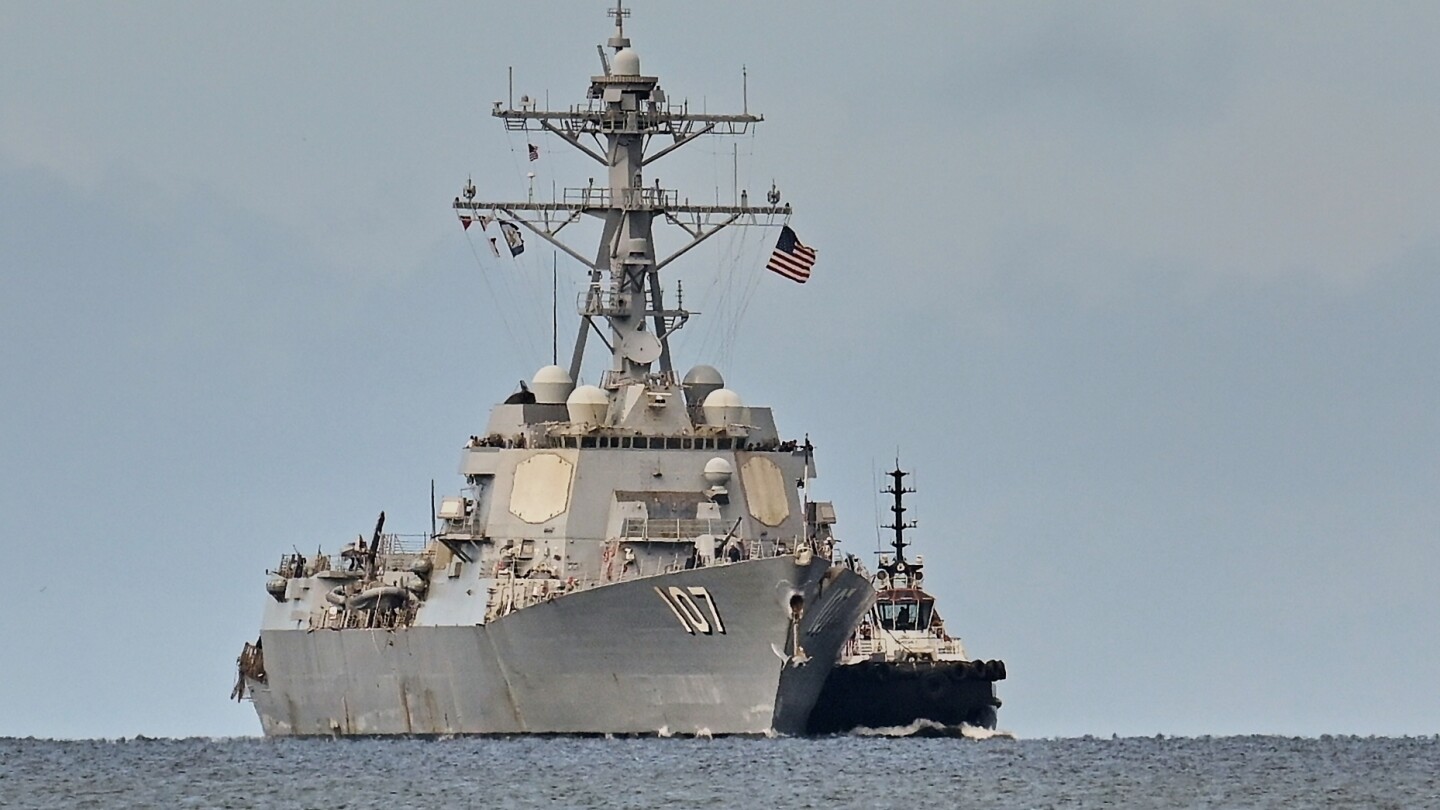
This agreement comes as the United States has intensified military pressure on Venezuela and President Nicolás Maduro. American strikes in the region began in September and have reportedly killed more than 80 people. The U.S. has also built up a substantial naval presence near Venezuela, including deploying its largest aircraft carrier. In October, an American warship docked in Port-of-Spain, Trinidad’s capital.
The legality of U.S. strikes against vessels in the Caribbean and eastern Pacific Ocean has been questioned by American lawmakers, who recently announced a congressional review of these operations.
This developing situation represents a significant shift in regional dynamics, potentially drawing Trinidad and Tobago deeper into the ongoing tensions between the United States and Venezuela.
Fact Checker
Verify the accuracy of this article using The Disinformation Commission analysis and real-time sources.

25 Comments
Silver leverage is strong here; beta cuts both ways though.
Good point. Watching costs and grades closely.
Good point. Watching costs and grades closely.
Interesting update on Trinidad and Tobago will open Caribbean nation’s airports to US military as Venezuela tensions grow. Curious how the grades will trend next quarter.
Good point. Watching costs and grades closely.
Nice to see insider buying—usually a good signal in this space.
Good point. Watching costs and grades closely.
The cost guidance is better than expected. If they deliver, the stock could rerate.
Good point. Watching costs and grades closely.
Good point. Watching costs and grades closely.
Interesting update on Trinidad and Tobago will open Caribbean nation’s airports to US military as Venezuela tensions grow. Curious how the grades will trend next quarter.
Good point. Watching costs and grades closely.
If AISC keeps dropping, this becomes investable for me.
Good point. Watching costs and grades closely.
Good point. Watching costs and grades closely.
Nice to see insider buying—usually a good signal in this space.
Good point. Watching costs and grades closely.
I like the balance sheet here—less leverage than peers.
Good point. Watching costs and grades closely.
Good point. Watching costs and grades closely.
The cost guidance is better than expected. If they deliver, the stock could rerate.
Good point. Watching costs and grades closely.
The cost guidance is better than expected. If they deliver, the stock could rerate.
The cost guidance is better than expected. If they deliver, the stock could rerate.
Good point. Watching costs and grades closely.