


Listen to the article
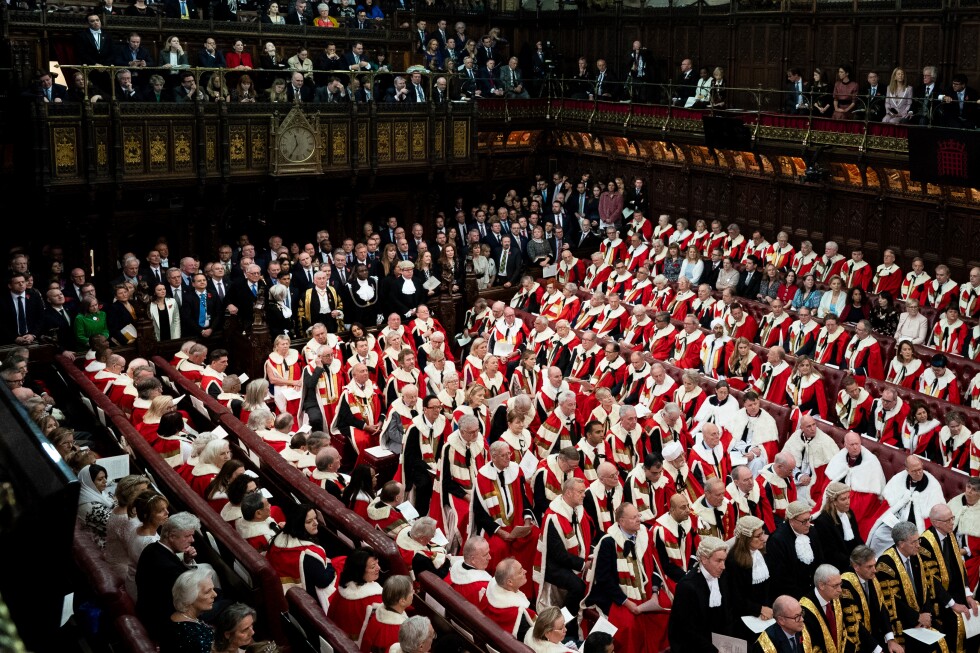
The fallout from Jeffrey Epstein’s legacy has reached the hallowed halls of Britain’s House of Lords, igniting fresh debate about the relevance and accountability of the UK’s unelected upper chamber.
Former UK ambassador to Washington Peter Mandelson recently resigned from his position in the Lords following revelations about his friendship with the late convicted sex offender Jeffrey Epstein. In one particularly damaging exchange revealed in court documents, Mandelson asked Epstein: “Need a Lord on the board?” highlighting how the prestigious title can be leveraged for influence.
The scandal has reinvigorated longstanding criticism of the chamber, which many view as an antiquated institution ill-equipped for modern democracy. With more than 850 members who serve for life and bear the titles of “Lord” or “Lady,” critics argue the House of Lords represents a vestige of Britain’s feudal past rather than a contemporary legislative body.
“It’s a mess,” said Jenny Jones, one of two Green Party members serving in the Lords. “In spite of our being supposedly a modern democracy, we have a semifeudal system.”
The House of Lords has evolved considerably over its 700-year history. Originally composed solely of male hereditary nobles and bishops, it gradually expanded to include “life peers” – distinguished individuals appointed by the government – in the 1950s, which also marked the entrance of the first women into the chamber.
A significant reform came in 1999 when Prime Minister Tony Blair’s Labour government removed most hereditary peers, though 92 were allowed to remain as part of a compromise to avoid aristocratic rebellion. Now, a quarter century later, Prime Minister Keir Starmer’s Labour government has introduced legislation to finally remove these remaining hereditary members.
The proposed changes have met resistance from current peers. Charles Hay, the 16th Earl of Kinnoull, who leads the cross-bench (non-party affiliated) peers, defended the hereditary members: “Hereditary peers actually work harder than average peers. It means that you chuck out a lot of people who are actually being effective.”
Despite criticisms, the Lords serves an important function in British democracy by reviewing legislation passed by the elected House of Commons. The upper chamber can amend bills and return them for reconsideration, though ultimately it is expected to yield to the elected house’s authority.
The Lords has come under fire for occasionally overstepping these bounds, as with a current bill to legalize assisted dying that was approved by Commons but has become mired in amendments in the Lords.
Disciplinary mechanisms within the chamber have evolved slowly. Until relatively recently, there was little parliamentary authorities could do about peers who committed ethical breaches or crimes. Notable examples include novelist Jeffrey Archer, who was imprisoned for perjury in 2001, and media baron Conrad Black, who served a U.S. prison sentence for fraud – yet neither could be removed from the Lords under the rules at that time.
While laws have since changed to allow expulsion for code of conduct violations, imprisonment, or non-attendance, no member has yet been formally expelled for misconduct. Several have resigned before facing expulsion, including peers involved in sexual assault and drug scandals.
Even after Mandelson’s resignation, he retains his title as Lord Mandelson. Similarly, Matthew Doyle, Starmer’s former chief of staff who was appointed to the Lords despite his friendship with a man later jailed for possessing indecent images of children, faces pressure but keeps his lordship. Removing these titles would require new legislation – something not done since 1917, when several lords lost their titles for supporting Germany in World War I.
The Mandelson scandal has created a political crisis for Prime Minister Starmer, with anger among Labour lawmakers threatening his leadership. It has also highlighted concerns about the selection process for the Lords.
“There’s really no proper quality check and there’s no limit on numbers and it just looks so anachronistic,” said Meg Russell, politics professor at University College London’s Constitution Unit. “It’s clear that there ought to be more rigorous processes to check people on the way in.”
Labour remains officially committed to eventually replacing the House of Lords with “a more representative” second chamber, though change has historically been glacial. In December, the Lords established a committee to explore introducing an 80-year retirement age and stricter participation requirements.
Meanwhile, reformists like Baroness Jones advocate more radical change: “We should call it the Senate or something and stop this ridiculous class-based nomenclature. I’d be happy to be called senator and not lady.”
Fact Checker
Verify the accuracy of this article using The Disinformation Commission analysis and real-time sources.

8 Comments
This saga underscores the need for greater transparency and oversight of the UK’s political establishment. The public deserves to know how access and power are being wielded in the Lords.
The Epstein connection adds a further cloud of scandal over the House of Lords. This institution needs to demonstrate its value and earn public trust, not be perceived as a bastion of privilege and influence-peddling.
Concerning to see the prestigious title of ‘Lord’ potentially being leveraged for personal gain. The public rightly expects high ethical standards from those in positions of power.
While the Lords has evolved over time, these latest revelations raise valid questions about its continued relevance and purpose. Meaningful reform seems long overdue to align with democratic principles.
The House of Lords does seem like an anachronistic institution in a modern democracy. The allegations of leverage and influence-peddling are troubling and reinforce calls for reform.
I agree, the unelected, hereditary nature of the Lords is hard to justify in the 21st century. Time for a serious rethink of this relic of Britain’s feudal past.
Fascinating how the Epstein scandal is rippling through Britain’s political elite. The revelations about Mandelson’s connections highlight the concerning lack of accountability in the House of Lords.
The House of Lords has long been criticized as an undemocratic relic. These latest developments will only add fuel to the calls for significant reform or even abolition of this unelected upper chamber.