


Listen to the article
German Chancellor’s China Visit Navigates Economic Tensions and Global Order Shifts
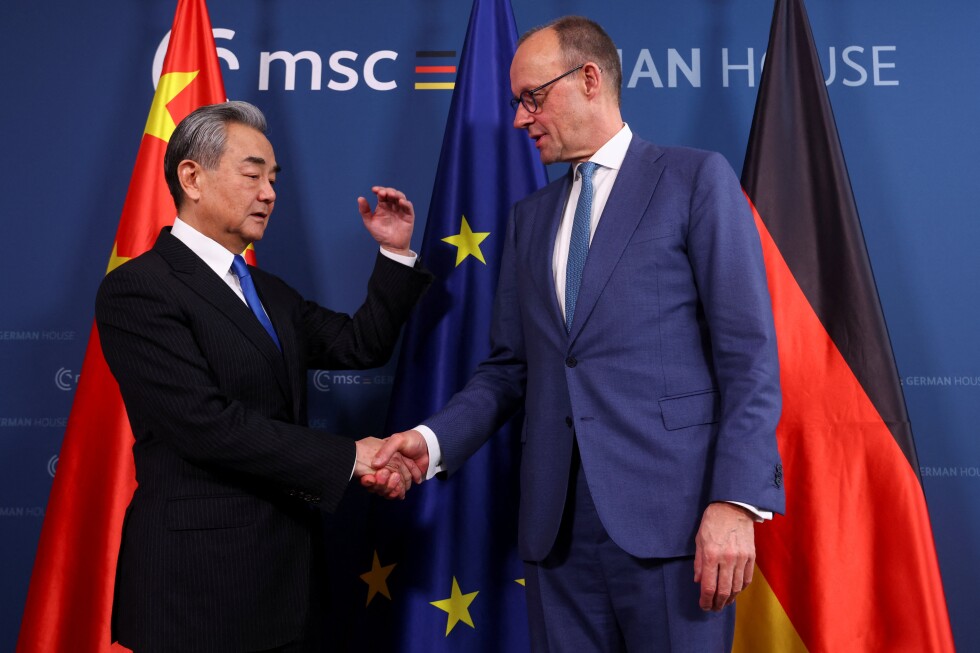
German Chancellor Friedrich Merz arrived in Beijing Wednesday for his first official visit to China, a two-day diplomatic mission occurring amid mounting economic pressures and significant global geopolitical realignment.
The visit comes at a particularly challenging moment for German-Chinese relations. German manufacturers face increasingly stiff competition from Chinese rivals, especially in the automotive sector, where emerging electric vehicle makers are directly challenging established German brands like Volkswagen. Meanwhile, Donald Trump’s imminent return to the White House has created uncertainty about the future of the post-World War II global order that Europe has long relied upon.
China’s Foreign Ministry spokesperson Mao Ning emphasized the importance of the relationship ahead of the visit, stating that “sound China-Germany relations serve the interests of both sides and meet the expectations of the international community.” However, significant points of tension remain unresolved between the two economic powerhouses.
Chief among these concerns is Germany’s growing trade deficit with China. Last year’s figures starkly illustrate the imbalance: German imports from China rose 8.8% to €170.6 billion ($201 billion), while German exports to China fell 9.7% to €81.3 billion. This widening gap has intensified longstanding German calls for China to reduce trade barriers and further open its markets to foreign competitors.
The visit’s agenda reflects both diplomatic and economic priorities. On Wednesday, Merz held talks with Chinese Premier Li Qiang and President Xi Jinping, whose limited international travel has established a pattern where foreign leaders must travel to Beijing for high-level meetings. Thursday’s itinerary includes a visit to a Mercedes-Benz facility and a trip to Hangzhou, a technology hub home to e-commerce giant Alibaba and innovative robotics developer Unitree Robotics.
Merz brought a delegation of German business leaders seeking expanded market access, underscoring the continued importance of China as a market for German exports despite recent complications. Germany’s approach toward China has evolved substantially in recent years, now officially viewing the country as both a vital economic partner and a systemic competitor.
This dual perspective has prompted Germany to pursue what it terms “de-risking” – efforts to reduce dependence on China both as an export market and as a supplier of critical materials like rare earths, which are essential for automotive, technology, and defense industries. The strategy reflects growing concerns about economic vulnerability and supply chain security.
The Ukraine conflict represents another significant point of contention. While Merz is expected to raise concerns about China’s support for Russia’s position in the war, analysts anticipate little movement from Beijing. China maintains what it describes as an “objective and impartial position” on Ukraine, which fundamentally conflicts with Germany’s stance and that of most European nations.
Merz’s visit is part of a steady stream of world leaders traveling to Beijing in recent weeks, including French President Emmanuel Macron and leaders from Ireland, South Korea, Canada, Finland, and Britain. This diplomatic flurry comes approximately five weeks before Trump’s planned visit to China.
In a January address to the German parliament, Merz emphasized that Europe must “learn the language of power politics” to assert itself in a changing global environment. He cautioned against illusions about China, which he characterized as asserting “the claim to define a new multilateral order according to its own rules.”
Immediately following his China trip, Merz plans his second visit to Washington since taking office in May, highlighting Germany’s delicate balancing act between its relationships with China and the United States.
While some Western nations like Canada and the UK have recently sought to repair strained relations with China, Germany’s objective appears more nuanced – maintaining a necessary economic relationship while acknowledging the fundamental complications and competitive elements that now define it.
Fact Checker
Verify the accuracy of this article using The Disinformation Commission analysis and real-time sources.

10 Comments
The visit comes at a critical time, with the war in Ukraine and the broader tensions between the West and China. Germany will have to tread carefully to protect its economic interests while also addressing these pressing global issues.
Indeed, Germany faces a complex balancing act. This visit will be a test of its diplomatic skills and ability to navigate the competing interests at play.
Interesting to see how Germany is trying to navigate the complex geopolitical and economic landscape during this visit to China. Maintaining strong ties with both the US and China will be a delicate balancing act.
You’re right, Germany has to carefully manage its relationships with the major powers. This visit will be crucial for finding the right trade-offs.
The trade deficit with China is a significant concern for Germany. They’ll likely push for more balanced trade relations and market access during this visit.
Absolutely. Germany will need to find a way to address the trade imbalance while preserving its valuable economic ties with China.
The global order is indeed shifting, and Germany has to adapt its strategy accordingly. Strengthening ties with China could help offset some of the economic uncertainty caused by US-China tensions.
That’s a good point. Germany will need to be pragmatic and flexible in its approach to maintain its economic interests.
It will be interesting to see how the discussions around the global order and the role of Europe unfold. Germany’s position as a key European power will be crucial in shaping the new world order.
You raise a good point. Germany’s influence within the EU and its relationship with China could have a significant impact on the evolving global geopolitical landscape.