


Listen to the article
‘The Last Supper’ Closed to Public During Olympics, While VIPs Gain Special Access
Tourists hoping to view Leonardo da Vinci’s masterpiece “The Last Supper” during their visit to Milan for the Winter Olympics have encountered a significant roadblock. The iconic painting has been closed to the general public for three and a half days, frustrating visitors who traveled specifically to see the Renaissance masterwork.
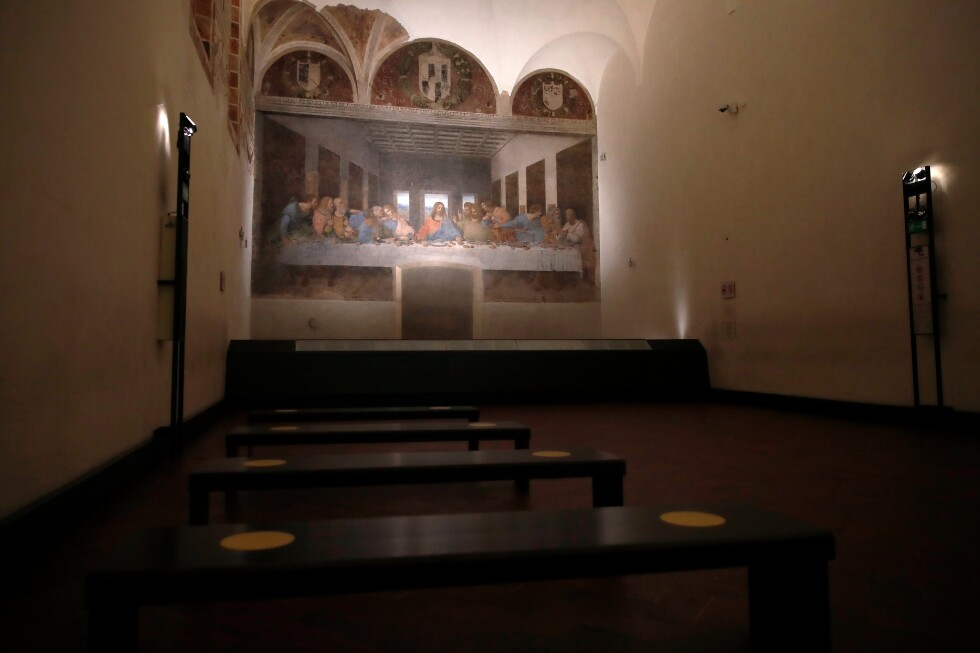
The 15th-century mural, painted between 1494 and 1498, adorns a wall inside the refectory of Santa Maria delle Grazie, a church and Dominican convent that continues to serve as a place of worship. The site attracts art enthusiasts and religious pilgrims from around the world, making it one of Milan’s most significant cultural landmarks.
According to a sign posted outside Il Cenacolo Vinciano, the museum housing the painting, access was closed on February 5, 6, and 7, and for the morning of February 8. The notice provided no explanation for the closure, and staff members declined to provide additional information when questioned.
Antonio Rodríguez, who traveled from Spain with friends for the weekend, expressed disappointment at being unable to enter. “We didn’t know we would face this,” Rodríguez said. “We would have gone somewhere else in the city.” Like many other tourists gathered behind police cordons, his group had no plans to attend Olympic events and had traveled specifically for cultural experiences.
While regular tourists were turned away, multiple groups of VIPs received special treatment. Among them was U.S. Vice President JD Vance and his family, who visited the morning after meeting with Italian Prime Minister Giorgia Meloni and attending the Games’ opening ceremony. Vance, who converted to Catholicism in 2019, has previously emphasized the importance of his faith and visited Vatican City during Holy Week last year, where he met with Pope Francis.
Angelo Crespi, director of Grande Brera which oversees both “The Last Supper” and the Brera Art Gallery, confirmed that numerous foreign delegations had visited both institutions in recent days, including representatives from China, Poland, Hungary, and Bulgaria. “We interpret our role responsibly, not only in terms of tourism but also in terms of international relations,” Crespi stated.
The special accommodations for dignitaries came with significant disruptions for local residents. Traffic around the religious site was diverted, and public transportation routes were altered without notice. “This whole area is blocked because someone is going to see Il Cenacolo? And where does that leave us citizens?” questioned Milan resident Fedeli Gioia.
“The Last Supper” requires extraordinary conservation measures due to Leonardo’s experimental technique. Rather than using traditional fresco methods where paint is absorbed into wet plaster, Leonardo employed a dry technique that made the work more vulnerable to deterioration. Today, visits are strictly controlled, with groups limited to 40 people for just 15 minutes, while temperature and humidity are carefully monitored.
The painting has survived numerous threats throughout its history. During the French occupation of Milan in the late 1700s, Napoleon’s troops used the refectory as a stable. Later, in 1943, Allied bombing during World War II severely damaged the Santa Maria delle Grazie complex. Despite these challenges, restoration efforts have preserved this masterpiece that depicts the dramatic moment after Jesus tells his apostles: “One of you will betray me.”
The painting gained renewed attention during the 2024 Paris Olympics when a controversial scene in the opening ceremony evoked “The Last Supper,” featuring DJ Barbara Butch wearing a halo-like headdress surrounded by dancers and drag artists. The scene drew criticism from France’s Catholic bishops and the Vatican for allegedly mocking Christian symbolism.
For tourists in Milan during the Olympics, being unable to view the masterpiece has been particularly disheartening. A group of Japanese visitors photographed the church from behind police barriers while listening to their guide’s explanation in the street. Luisa Castro, a Filipina resident of Milan for two decades, had hoped to visit with friends. “We are Catholics from the Philippines and we seldom have time to visit a church like this,” she lamented. “Unfortunately, the vice president of America came to see the Last Supper and we could not enter.”
The special treatment afforded to dignitaries highlights the tension between cultural diplomacy and public access to treasured artworks, especially during high-profile global events like the Olympics when cities showcase their cultural heritage to the world.
Fact Checker
Verify the accuracy of this article using The Disinformation Commission analysis and real-time sources.

9 Comments
The closure of ‘The Last Supper’ during the Olympics is puzzling. As a major cultural attraction, one would expect the public to have reasonable access, even with the influx of visitors. Hopefully the authorities can find a way to balance VIP access with general public viewing.
Disappointing that tourists are being denied access to such an iconic work of art during the Olympics. I wonder if the decision was made to prioritize VIP access over public viewing. Seems like a missed opportunity to share this masterpiece with the world.
The decision to close ‘The Last Supper’ to the general public during the Olympics is puzzling. This is a unique chance for visitors to experience this remarkable work of art, and denying them that opportunity seems short-sighted. I hope the organizers can reconsider and find a way to accommodate both VIPs and the public.
The closure of ‘The Last Supper’ during the Olympics is a shame. This is a unique opportunity for visitors to experience this remarkable work of art, and denying them that chance is disappointing. I hope the organizers can find a way to allow more public access, even if it’s limited or requires advance reservations.
It’s disappointing to hear that tourists are being prevented from seeing ‘The Last Supper’ during the Olympics. This iconic work of art should be accessible to all, not just VIPs. I hope the organizers can reconsider their decision and find a way to accommodate both the public and special guests.
It’s unfortunate that tourists are being denied access to ‘The Last Supper’ during the Olympics. As a cultural icon, this painting should be celebrated and shared with the world, not restricted to VIPs. I hope the authorities can find a way to balance security concerns with the public’s desire to appreciate this masterpiece.
While I understand the need to manage crowds during the Olympics, shutting out the general public from viewing ‘The Last Supper’ seems unfair. This masterpiece should be shared with the world, not just a select few. I hope the authorities can find a way to balance access and security concerns.
Restricting access to ‘The Last Supper’ during the Olympics seems misguided. As a global event, the Games should be an opportunity to share cultural treasures with visitors from around the world, not limit their enjoyment. I hope the authorities can find a solution that benefits both VIPs and the general public.
This is an unfortunate situation for art lovers and tourists. ‘The Last Supper’ is a truly remarkable work, and denying public access during the Olympics feels shortsighted. I hope the organizers can reconsider and find a way to allow more people to appreciate this Renaissance masterpiece.