


Listen to the article
Egyptian Tour Guide Arrested for Defacing Ancient Pyramid During Tourist Excursion
An Egyptian tour guide has been detained by authorities after allegedly drawing a stick figure on the outer casing of the 4,000-year-old Pyramid of Unas while leading a group of tourists through the Saqqara necropolis, officials confirmed Tuesday.
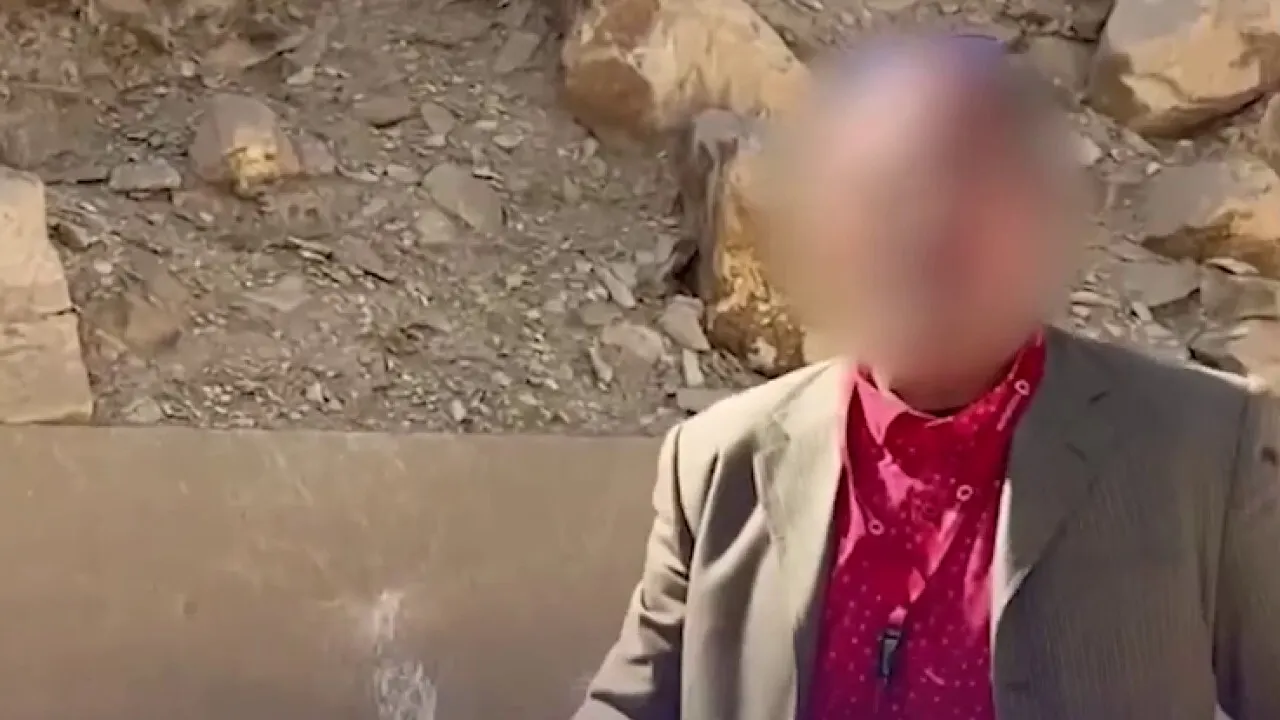
The incident, captured on video and widely circulated on social media, shows the guide leaning toward a lower section of the pyramid while tourists gather nearby. After making the markings, he attempts to wipe them away with his hand, though traces remain visible in the footage that ultimately led to his arrest.
Egypt’s Interior Ministry announced the arrest in a statement posted on X (formerly Twitter), saying the guide “damaged an antiquity by drawing on the outer casing of one of the pyramids” while explaining the site to tourists. The investigation was launched after the video spread online, prompting an antiquities inspector to file a formal report with the Saqqara Tourism Police Station.
According to the ministry, the suspect has confessed to the act during questioning. “Legal measures have been taken,” the statement added, noting that specialists have successfully removed the markings from the ancient monument.
The Pyramid of Unas, located within the sprawling Saqqara necropolis south of Cairo, represents a crucial piece of Egypt’s archaeological heritage. Built around 2375-2345 B.C. for Pharaoh Unas, the final ruler of Egypt’s Fifth Dynasty, the structure is particularly significant for containing the earliest known Pyramid Texts – religious inscriptions consisting of more than 200 spells carved into the pyramid’s interior walls that scholars consider the oldest collection of funerary texts in existence.
This incident occurs amid Egypt’s intensified efforts to protect its archaeological treasures, which form the backbone of the country’s tourism industry. The tourism sector, which accounts for approximately 12 percent of Egypt’s GDP and employs nearly three million people, has faced multiple challenges in recent years from political instability and the COVID-19 pandemic.
Under Egypt’s Antiquities Protection Law, acts of vandalism or damage to archaeological sites can result in severe penalties, including prison sentences and substantial fines. The specific charges against the tour guide have not yet been disclosed, but similar offenses have resulted in prison terms ranging from one to seven years, depending on the extent of the damage.
The Saqqara necropolis, part of ancient Memphis – Egypt’s first capital and a UNESCO World Heritage Site – contains numerous pyramids, tombs, and temples spanning several dynasties of ancient Egyptian history. The site receives thousands of visitors daily and requires constant monitoring to prevent degradation from both natural elements and human activity.
Dr. Mohammed Abbas, an Egyptologist not affiliated with this case but familiar with preservation efforts at Saqqara, explained the challenges facing Egypt’s ancient monuments. “These structures have survived for millennia, but they remain vulnerable to even seemingly minor damage,” he said. “What might appear insignificant to a visitor can accelerate deterioration and compromise the historical record.”
Egyptian authorities have recently ramped up preservation and enforcement efforts at archaeological sites nationwide as the country seeks to balance tourism promotion with cultural heritage protection. This includes increased security personnel, improved surveillance systems, and stricter penalties for violations.
The incident has sparked renewed discussions among tourism industry professionals about proper training and oversight for guides who serve as frontline representatives for Egypt’s cultural heritage. While the vast majority of Egypt’s approximately 15,000 licensed tour guides adhere to strict protocols, isolated incidents can have significant consequences for both the artifacts and the industry’s reputation.
As the legal proceedings against the guide continue, the case serves as a stark reminder of the delicate balance between accessibility and preservation at one of the world’s most treasured archaeological landscapes.
Fact Checker
Verify the accuracy of this article using The Disinformation Commission analysis and real-time sources.

9 Comments
This is truly disappointing to see. The Pyramids of Giza are global treasures that belong to all humanity. I hope Egypt continues to crack down firmly on any attempts to vandalize or deface these priceless historical sites.
Damaging ancient monuments through careless actions, even by a tour guide, is completely unacceptable. Egypt’s archaeological wonders must be protected and preserved for future generations to appreciate their magnificence.
This is a disappointing breach of trust and responsibility by the tour guide. Egypt’s archaeological treasures must be treated with the utmost care and respect, not used as canvases for unauthorized markings, no matter the intent.
This is a disappointing incident. Defacing ancient monuments is never acceptable, even if the intent was just to provide a visual aid for tourists. Egypt’s cultural heritage deserves the utmost respect and preservation.
While creative teaching methods can be helpful, defacing a 4,000-year-old pyramid is never acceptable, no matter the intent. I’m glad the authorities took swift action to address this incident and uphold the integrity of Egypt’s invaluable cultural heritage.
While creative educational methods can be valuable, defacing a 4,000-year-old pyramid crosses a clear line. I’m glad the authorities took swift action to address this incident and uphold the integrity of Egypt’s cultural heritage.
It’s good that the authorities have taken swift action against this tour guide. Unauthorized modifications to historical sites can cause irreparable harm. Hopefully this serves as a strong lesson for others to appreciate and protect these irreplaceable treasures.
Defacing ancient landmarks is never justified, even in the name of tourism. I’m glad the authorities took this seriously and arrested the responsible party. Egypt’s cultural heritage must be preserved with the utmost care and respect.
While making educational content more engaging is understandable, damaging 4,000-year-old structures crosses a clear line. I hope the guide faces appropriate consequences and that Egypt continues to safeguard its incredible archaeological wonders for future generations.