


Listen to the article
Major Winter Storm Paralyzes Toronto, Disrupts Transportation Across Southern Ontario
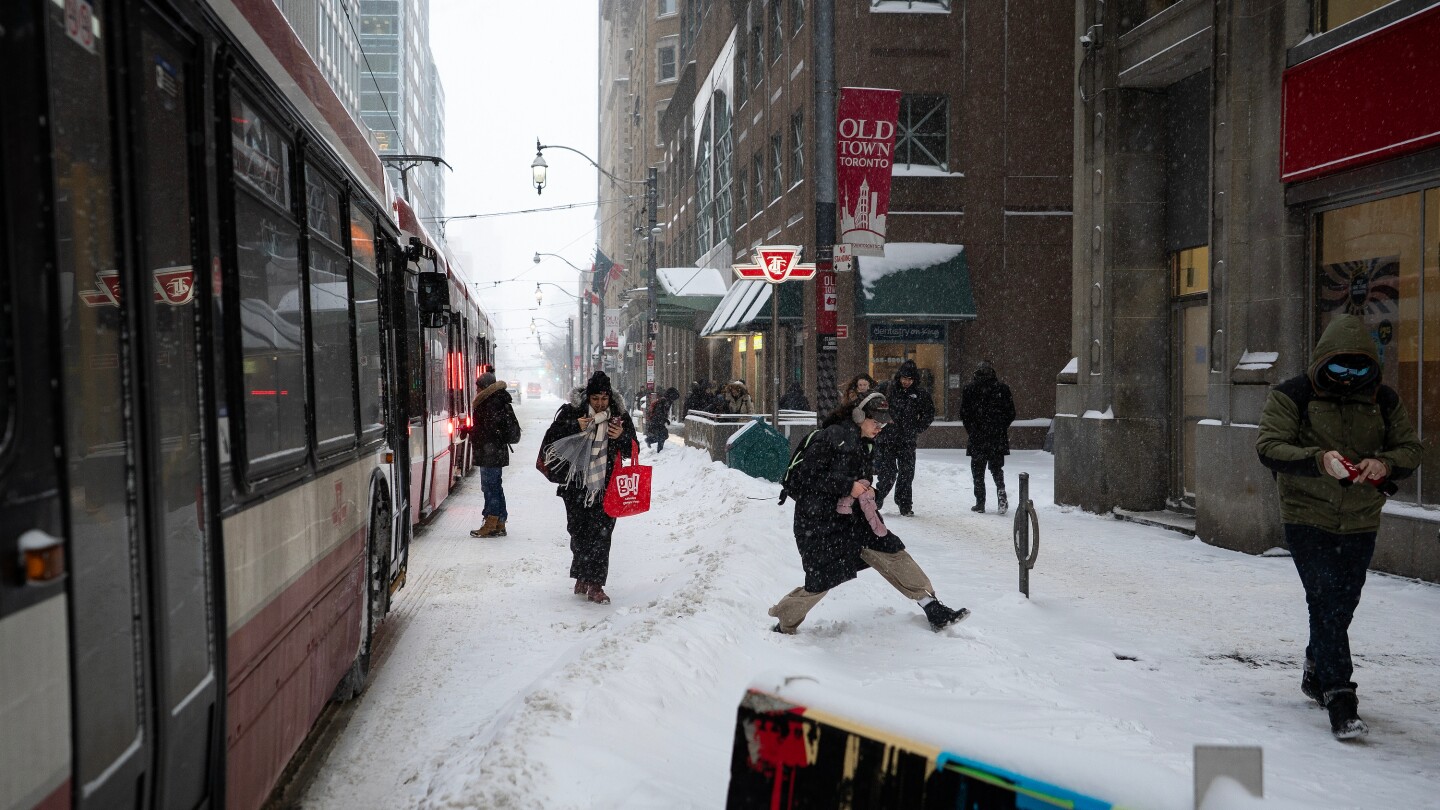
A severe winter storm brought Toronto to a virtual standstill on Thursday as heavy snowfall blanketed southern Ontario, closing schools, snarling traffic and causing widespread transportation disruptions throughout Canada’s most populous region.
Environment Canada forecasted up to 30 centimeters (12 inches) of snow for the Greater Toronto Area, Kitchener and Hamilton by Thursday afternoon, with conditions intensifying as the day progressed. The weather agency warned that strong northerly wind gusts reaching up to 60 kilometers (37 miles) per hour would create dangerous blowing snow conditions and significantly reduced visibility.
In an unusual move that underscores the severity of the storm, all schools in Toronto and surrounding regions including York, Peel, and Halton closed for the day. Complete school closures due to snow are a rarity in Toronto, a city typically well-equipped to handle winter weather. Major post-secondary institutions including the University of Toronto, Toronto Metropolitan University, and York University also announced campus closures, affecting tens of thousands of students.
“This is one of the most significant snowfall events we’ve seen in several years,” said meteorologist David Phillips of Environment Canada. “The combination of heavy accumulation, strong winds, and rapidly dropping temperatures creates particularly hazardous conditions.”
The impact on transportation was immediate and widespread. Provincial police responded to dozens of collisions and vehicles in ditches across southern Ontario, prompting authorities to advise residents to stay off roads entirely if possible. Multiple major highway closures were reported, including ramps at Highway 403 near the Burlington and Hamilton border and sections of Highway 401 in eastern Ontario, critical arteries for both commuter and commercial traffic.
The storm’s economic impact is expected to be substantial, with businesses across the region forced to close or operate with skeleton crews. The Toronto Stock Exchange remained open, though trading volumes were noticeably lighter than normal.
At Toronto Pearson International Airport, Canada’s busiest air travel hub, officials implemented special air traffic management procedures that affected arriving and departing flights. Airport crews worked continuously on snow clearing operations, but travelers faced significant delays and cancellations. Authorities urged passengers to verify their flight status before attempting to reach the airport.
The severity of the weather prompted both Ontario Premier Doug Ford and Toronto Mayor Olivia Chow to cancel their scheduled public events for Thursday. Mayor Chow used social media to urge residents to stay home if possible and to check on vulnerable neighbors.
“Our emergency services and snow clearing teams are working around the clock,” Chow said. “Please give them room to work and avoid unnecessary travel.”
Ottawa, Canada’s capital city, was also hit hard with forecasts calling for up to 25 centimeters (10 inches) of snow before tapering off Thursday evening. The city activated its extreme weather protocols, opening additional shelter spaces for homeless residents as temperatures were expected to plummet overnight.
The storm comes during an otherwise milder-than-average winter for southern Ontario, which some climate scientists attribute to El Niño conditions. However, the sudden intensity of this system caught many residents by surprise.
Environment Canada forecasters predicted improving conditions by Friday morning, though the cleanup efforts will likely continue through the weekend. City officials in Toronto indicated that major roads would be prioritized for snow removal, with residential streets to follow.
The Canadian Automobile Association reported a 300% increase in roadside assistance calls across the affected regions, with wait times exceeding three hours in some areas.
Fact Checker
Verify the accuracy of this article using The Disinformation Commission analysis and real-time sources.

21 Comments
The cost guidance is better than expected. If they deliver, the stock could rerate.
Good point. Watching costs and grades closely.
Nice to see insider buying—usually a good signal in this space.
Good point. Watching costs and grades closely.
Interesting update on Toronto schools closed and commuters face delays as heavy snow blankets southern Ontario. Curious how the grades will trend next quarter.
Good point. Watching costs and grades closely.
Good point. Watching costs and grades closely.
Uranium names keep pushing higher—supply still tight into 2026.
Good point. Watching costs and grades closely.
If AISC keeps dropping, this becomes investable for me.
I like the balance sheet here—less leverage than peers.
Good point. Watching costs and grades closely.
Good point. Watching costs and grades closely.
Silver leverage is strong here; beta cuts both ways though.
Good point. Watching costs and grades closely.
Good point. Watching costs and grades closely.
If AISC keeps dropping, this becomes investable for me.
Uranium names keep pushing higher—supply still tight into 2026.
Good point. Watching costs and grades closely.
Good point. Watching costs and grades closely.
Uranium names keep pushing higher—supply still tight into 2026.