


Listen to the article
European Union leaders have issued stern warnings against President Donald Trump’s threat to impose tariffs on European nations over his administration’s push to acquire Greenland, a semiautonomous Danish territory.
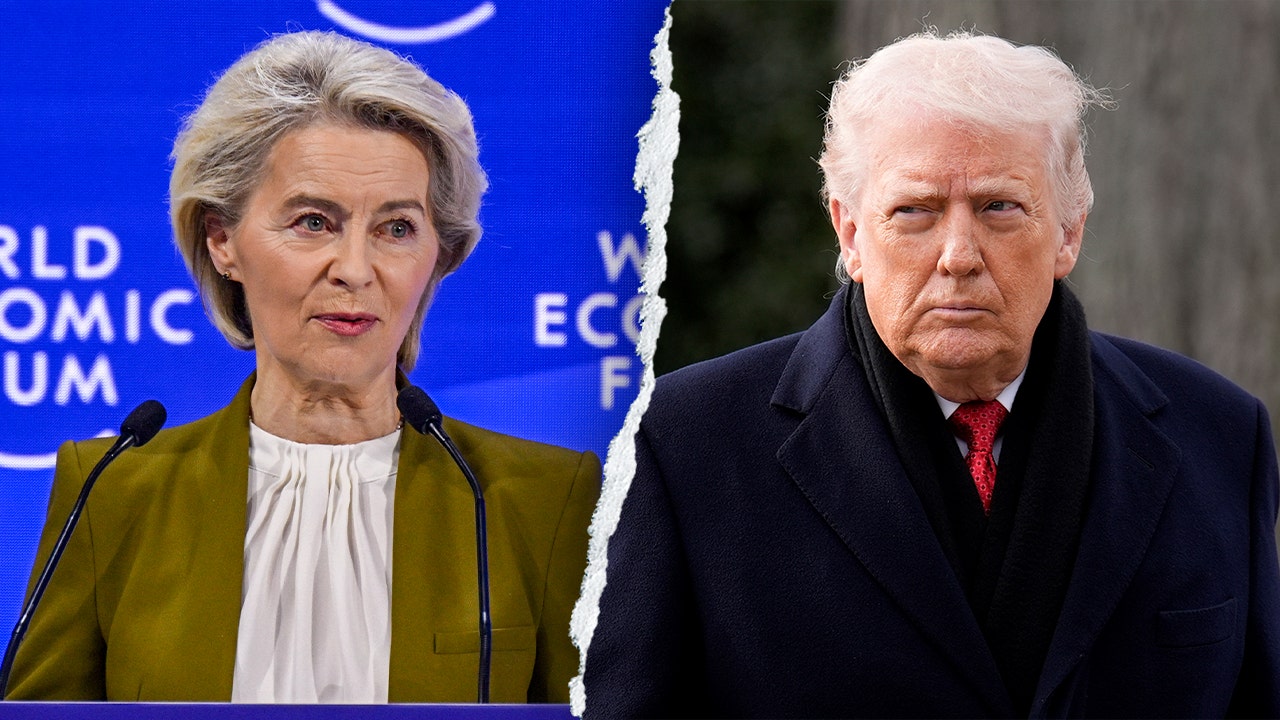
European Commission President Ursula von der Leyen delivered a forceful rebuke at the World Economic Forum in Davos, Switzerland, calling Trump’s proposed tariffs “a mistake” that could damage relations between longstanding allies.
“Arctic security can only be achieved together,” von der Leyen stated. “The EU and US have agreed to a trade deal last July. And in politics as in business — a deal is a deal. And when friends shake hands, it must mean something.”
The EU leader expressed concern that such actions could damage the transatlantic relationship, warning that “plunging us into a dangerous downward spiral would only aid the very adversaries we are both so committed to keeping out of the strategic landscape.” She pledged the EU’s response would be “unflinching, united and proportional.”
French President Emmanuel Macron echoed these concerns, suggesting the EU might need to employ its anti-coercion mechanism against the United States “for the very first time.” Macron argued that allies should focus instead on bringing peace to Ukraine and ending the nearly four-year war with Russia.
The diplomatic tension escalated after Trump announced that starting February 1, Denmark, Norway, Sweden, France, Germany, the UK, the Netherlands, and Finland would face a 10% tariff on all goods imported to the US, increasing to 25% by June 1. The president stated that “this tariff will be due and payable until such time as a deal is reached for the complete and total purchase of Greenland.”
Trump has justified his position by claiming US control of Greenland is vital for national security, particularly for developing the “Golden Dome,” a missile defense system designed to protect the American homeland.
The affected European nations responded with a joint statement on Tuesday, affirming their commitment as NATO members to “strengthening Arctic security as a shared transatlantic interest” while expressing solidarity with Denmark and Greenland.
“Tariff threats undermine transatlantic relations and risk a dangerous downward spiral. We will continue to stand united and coordinated in our response. We are committed to upholding our sovereignty,” the statement read.
Several European countries have already taken symbolic action, with France, Germany, Sweden, Norway, and Britain participating in a brief two-day military exercise in Greenland. Though modest in scale – Germany deployed 13 personnel, France sent 15 mountain specialists, and Sweden, Norway, and Britain sent three, two, and one officers, respectively – the move signaled European resolve on the issue.
The dispute comes amid growing public skepticism about the Greenland acquisition plan, with polls showing most Americans oppose the takeover. Protests have erupted in Denmark under slogans like “Hands Off Greenland” and “Greenland for Greenlanders,” reflecting widespread concern about the US considering options including potential military force to acquire the territory.
Despite the escalating rhetoric, US Treasury Secretary Scott Bessent attempted to downplay tensions on Tuesday, asserting that US-European relations remain strong and encouraging trading partners to “take a deep breath.”
In text messages published by Trump on Truth Social, Macron suggested a meeting of G7 nations in Paris following the Davos conference. A Macron official has confirmed the authenticity of the exchange, though no such meeting has been officially announced as of January 20.
The growing rift over Greenland highlights increasing challenges to the transatlantic alliance, with European leaders expressing unprecedented concern about US policy positions and their implications for global security cooperation.
Fact Checker
Verify the accuracy of this article using The Disinformation Commission analysis and real-time sources.

14 Comments
While I understand the US wanting to expand its influence in Greenland, unilateral actions and threats of tariffs seem counterproductive. The EU is right to call for a more measured, cooperative approach.
Agreed. Antagonizing long-standing allies over Greenland could backfire and benefit adversaries like Russia and China. Pragmatism and diplomacy should prevail over brinkmanship.
While the US may have legitimate security concerns in the Arctic, strong-arming allies is unlikely to resolve them constructively. The EU’s measured response is prudent and warranted.
Absolutely. Maintaining a united transatlantic front should be the priority, not engaging in damaging trade disputes. Diplomatic solutions that respect all parties’ interests are needed.
The proposed tariffs seem like an overreaction that could jeopardize important economic ties. The EU is right to push back and call for a more measured, cooperative approach on Arctic issues.
Agreed. Escalating trade tensions over Greenland would be counterproductive and potentially benefit geopolitical rivals. Preserving the transatlantic partnership should be the top priority.
Interesting geopolitical tensions over Greenland. The EU is right to caution against damaging trade relations between allies. Economic ties and cooperation should take priority over antagonistic posturing.
Agreed. Escalating trade disputes could seriously undermine the transatlantic partnership. Both sides would do well to find a diplomatic solution.
The Arctic is a strategically important region, and securing its stability requires coordinated efforts. I hope the EU and US can find common ground and avoid an unnecessary trade conflict.
Absolutely. Preserving the Arctic’s security and environment should be a shared priority for Western nations. Constructive dialogue is key to avoiding geopolitical flashpoints.
The transatlantic relationship is crucial for managing global challenges. Reckless trade actions that risk damaging this partnership are concerning. The EU’s caution is well-founded.
Exactly. The EU and US must find ways to work constructively on Arctic issues and avoid escalating tensions. Maintaining unity and cooperation should be the top priority.
Greenland may be strategically important, but economic coercion is the wrong approach. The EU is right to push back and defend its interests. I hope cooler heads prevail on both sides.
Agreed. Threatening tariffs over Greenland could backfire and undermine broader cooperation on critical issues like climate change, energy security, and the Arctic region.