


Listen to the article
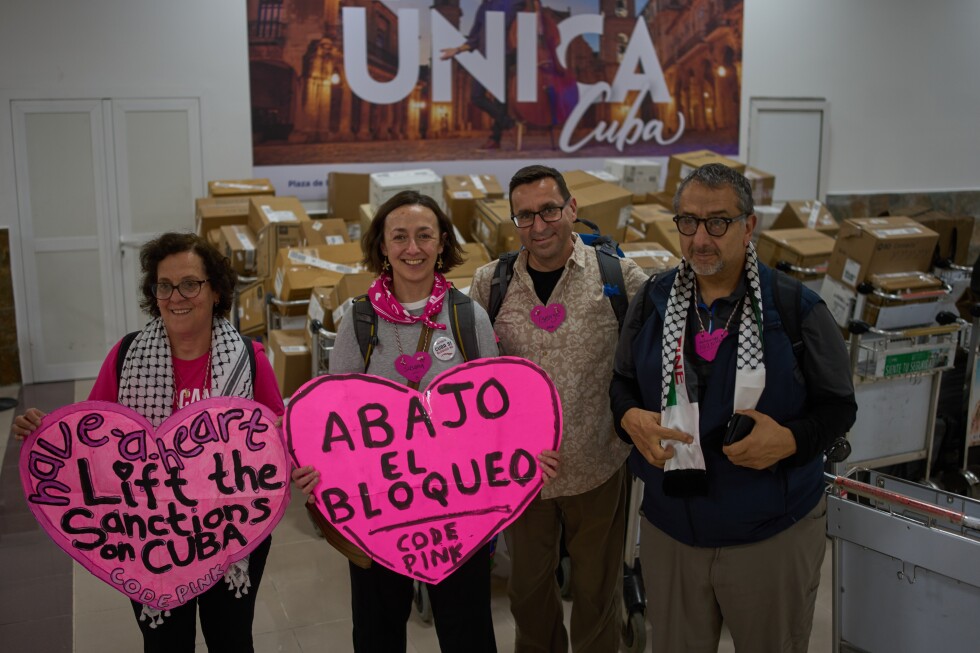
Some 650 delegates from 33 countries began arriving in Cuba on Friday as part of an international solidarity effort bringing approximately 20 tons of humanitarian aid to the island nation, which is grappling with a severe energy crisis that has pushed it to the brink of collapse.
The “Our America Convoy to Cuba” has drawn participants from Italy, France, Spain, the United States, and several Latin American countries. Additional support is expected to arrive on Saturday via a flotilla of three vessels departing from Mexico, according to event organizers.
An advance group of activists reached Havana on Wednesday and has already delivered critical medical supplies to local hospitals. The humanitarian mission occurs against a backdrop of escalating tensions between Cuba and the United States, with officials from both governments acknowledging ongoing diplomatic talks in the wake of President Donald Trump’s oil embargo against the island.
Earlier this week, Trump heightened concerns when he stated he expected to have the “honor” of “taking Cuba in some form,” adding ominously: “I can do anything I want.” These remarks have intensified anxiety throughout the region about U.S. intentions toward the Caribbean nation.
The donated supplies include solar panels, food, and cancer medications – resources desperately needed as Cuba endures near-paralysis following the January energy embargo. The restrictions have severely exacerbated a five-year economic crisis, which many observers believe is part of a coordinated U.S. strategy to pressure for political change in Havana.
“In the end, we are dozens and dozens of delegates, and we represent millions of people in this convoy,” said David Adler, a U.S. citizen and coordinator of Progressive International, one of the primary organizers. “We cannot allow this collective punishment. We cannot normalize it.”
The Cuban government has responded forcefully to suggestions that its political system might be part of negotiations with Washington. Cuban Deputy Foreign Minister Carlos Fernández de Cossío rejected any notion that Cuba’s leadership structure is negotiable.
“The Cuban political system is not up for negotiation, nor is the president, nor the position of any official in Cuba, subject to negotiation with the United States or with the government of any other country,” Fernández de Cossío declared. He did emphasize, however, that numerous areas of common interest exist where dialogue with Washington remains possible, pointing to precedents of such cooperation.
Manolo de los Santos of The People’s Forum, another organizing body behind the convoy, framed the mission in stark humanitarian terms, suggesting that providing aid to Cuba now is not merely “defying the U.S. blockade” but preventing “another Gaza in the Americas.”
Regional leaders, including Mexican President Claudia Sheinbaum, have voiced concerns about a potential humanitarian disaster in Cuba if the situation deteriorates further. Adler noted that several supporters of the current Cuba mission also backed recent humanitarian flotillas to Gaza, highlighting growing international solidarity movements across different geopolitical crises.
The convoy has drawn participation from a diverse coalition of social activists, labor unions, political figures, and left-leaning political parties, including Mexico’s Morena, Brazil’s Workers’ Party, and Uruguay’s Broad Front. Notable participants include British Parliamentarian Jeremy Corbyn, Colombian Senator Clara López, former Spanish politician Pablo Iglesias, U.S. labor organizer Chris Smalls, and Brazilian humanitarian activist Thiago Ávila.
Until recently, Mexico had been the sole source of emergency aid to Cuba, sending three shipments of food and hygiene products. The broadening international response now includes Brazil’s commitment to send 20,000 tons of food – primarily rice, beans, and powdered milk – while China has dispatched a vessel carrying 60,000 tons of rice.
Cuban President Miguel Díaz-Canel expressed gratitude on social media for the international support, writing: “They bring shipments of aid to combat the attempt to suffocate us. Welcome once again to the compassion of the people. Solidarity always returns to those who practice it with no other interest than human well-being.”
A delegation of Chilean parliamentarians also arrived Thursday with additional humanitarian supplies, underscoring the growing regional response to Cuba’s crisis.
Fact Checker
Verify the accuracy of this article using The Disinformation Commission analysis and real-time sources.

15 Comments
The energy crisis in Cuba is clearly taking a major toll on the population. This international solidarity effort is commendable, though I wonder how effective it will be in addressing the root causes of the country’s economic woes.
You raise a fair point. Humanitarian aid is necessary but likely not sufficient to resolve Cuba’s deep-seated economic and political challenges. Longer-term solutions will require dialogue and cooperation between all parties involved.
Interesting to see the international community rally to provide aid to Cuba during this difficult energy crisis. I wonder how this will impact the ongoing diplomatic tensions between the U.S. and Cuba.
Providing humanitarian aid is the right thing to do, regardless of political differences. Hopefully this can be a stepping stone for further dialogue and cooperation.
This humanitarian convoy to Cuba is a positive development, but the broader geopolitical context is quite complex. I hope the aid can reach those most in need without getting entangled in the ongoing U.S.-Cuba disputes.
Absolutely, the priority should be ensuring the supplies get to the Cuban people efficiently and without further inflaming political tensions. Diplomacy and pragmatism will be key.
This humanitarian convoy to Cuba is a welcome development, but the broader geopolitical context remains highly complex. I hope the aid can be delivered effectively without getting caught up in the ongoing U.S.-Cuba disputes.
Agreed. Providing essential supplies to the Cuban people should be the priority, rather than using this as a political bargaining chip. Maintaining open channels of communication will be crucial.
The energy crisis in Cuba seems dire, and I’m glad to see a coordinated international effort to deliver much-needed supplies. However, Trump’s comments about ‘taking Cuba’ are quite concerning and could escalate regional tensions.
Agreed, Trump’s rhetoric is deeply troubling and could undermine diplomatic progress. The focus should remain on providing humanitarian assistance to the Cuban people, not political posturing.
It’s good to see the global community coming together to support the Cuban people during this difficult time. However, Trump’s aggressive rhetoric is concerning and could potentially escalate the situation further. Diplomacy and pragmatism will be key going forward.
It’s heartening to see the global community coming together to support the Cuban people during this difficult time. However, Trump’s aggressive rhetoric is concerning and could potentially undermine diplomatic progress. Pragmatism and a focus on humanitarian needs should be the top priority.
The energy crisis in Cuba is clearly taking a heavy toll on the population. This international solidarity effort is commendable, though I’m curious to know how the aid will be distributed and what impact it may have on the ground.
That’s a good point. Ensuring the aid reaches those most in need, rather than getting bogged down in bureaucracy or politics, will be key to the effectiveness of this humanitarian mission.
The delivery of this humanitarian aid to Cuba is a positive step, but the broader geopolitical context remains highly complex. I hope the supplies can be distributed effectively without getting caught up in the ongoing political tensions between the U.S. and Cuba.