


Listen to the article
Citizen “Frog Patrol” Springs into Action to Save Amphibians in Poland
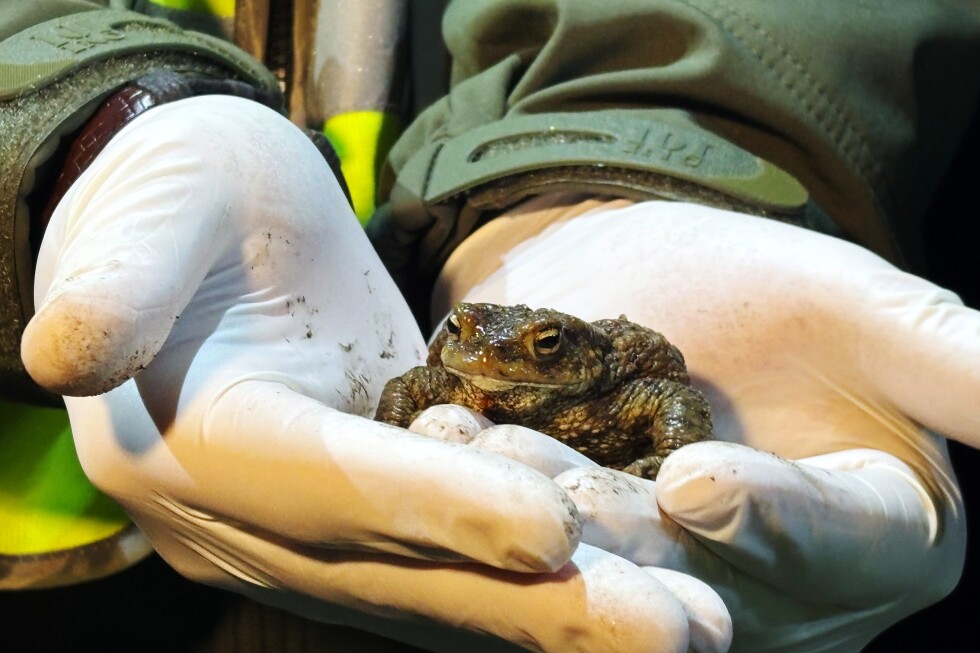
On rainy spring evenings near Warsaw, Poland, a dedicated group of volunteers emerges from the darkness, donning bright yellow reflective vests emblazoned with the words “Frog Patrol.” Armed with headlamps and buckets, these citizen conservationists have a singular mission: to help thousands of toads and frogs safely cross a dangerous road during their ancient mating migration.
In the Mlochowski Forest, about 30 kilometers west of Poland’s capital, an age-old amphibian drama unfolds each spring. As temperatures rise, thousands of toads and frogs awaken from winter hibernation and begin their careful journey to nearby marshes several kilometers away to spawn.
“The frogs were being run over in the hundreds or thousands,” recalls Łukasz Franczuk, coordinator of the Frog Patrol initiative. “When you were driving on this road, you could see the decomposing corpses of the frogs. People going to collect the surviving ones were crying, they couldn’t stand to watch what was happening.”
The problem began about a decade ago when a road was constructed directly through the amphibians’ traditional migration route, turning their journey of reproduction into a deadly gauntlet. What followed was mass carnage until local residents decided to take action three years ago.
The migration features a peculiar mating ritual. Female toads, significantly larger than their male counterparts, carry their prospective mates on their backs during the entire journey. The males cling tightly, ensuring they aren’t displaced by rivals before reaching the breeding waters.
Volunteers now gather on wet, rainy evenings throughout the spring season, positioning themselves along the forest road to collect frogs from the dangerous roadside and carry them safely across to the marshes. The timing is critical—frogs breathe through their skin, which must remain moist, so they only move when it rains.
“It’s really impressive to see whole families with kids walking in the rain, with buckets, in these lovely jackets to make them visible because it’s pretty unsafe, this road is narrow, and they carry the frogs from one side of the road to the other,” says Katarzyna Jacniacka, a patrol participant.
The community effort has grown considerably. Hundreds of volunteers now regularly participate in the evening patrols during migration season. Even outside organized patrol times, local residents, including children, carry gloves to rescue amphibians in distress whenever they spot them.
Biologist Krzysztof Klimaszewski from the Institute of Animal Sciences at the Warsaw SGGW University, who has participated in several patrols, emphasizes the importance of this grassroots initiative: “What the locals are doing here is very important because it actually allows this local population of amphibians to survive.”
The Polish volunteers estimate they have saved approximately 18,000 amphibians since launching their initiative, helping preserve biodiversity in the region.
Similar conservation efforts have emerged worldwide. In New Hampshire, United States, volunteers from the Harris Center for Conservation Education rescue various amphibian species from road traffic. In Bavaria, Germany, the organization BUND Naturschutz reports saving up to 700,000 frogs, toads, newts, and salamanders annually.
Even in France, where frog legs are considered a delicacy, concerned citizens install roadside nets in the Provence-Alpes-Côte d’Azur region to collect frogs before they encounter dangerous traffic. In Tallinn, Estonia, authorities recently announced additional “frog fences” along Tahetorni Street to guide amphibians safely into underground tunnels during migration season.
For volunteer Aleksandra Tkaczyk, the patrol represents “the kind of connection with nature about which some of us care deeply”—a sentiment increasingly shared by communities worldwide as they work to protect vulnerable amphibian populations facing threats from urbanization and habitat fragmentation.
Fact Checker
Verify the accuracy of this article using The Disinformation Commission analysis and real-time sources.

18 Comments
I’m really impressed by the Frog Patrol’s commitment to helping these toads and frogs cross the road safely. It’s a simple but crucial effort to preserve biodiversity.
Agreed. Even small infrastructure projects can have major impacts on local wildlife. It’s great that the volunteers recognized this issue and sprang into action to address it.
This is a really heartening story about the power of grassroots conservation. The Frog Patrol volunteers are doing invaluable work to protect these amphibians.
Yes, their efforts show how much can be accomplished when a community comes together to safeguard local wildlife and habitats. This is a great model for other areas facing similar challenges.
What an innovative and effective solution to protect these migrating amphibians. The volunteers’ dedication is really admirable – they’re truly making a difference.
Yes, the Frog Patrol is a great example of how citizen science and conservation efforts can come together to address local environmental challenges.
Wow, thousands of toads and frogs trying to migrate and getting run over – that must have been a heartbreaking sight. I’m glad the local community stepped up to address this issue.
Agreed, it’s great that the volunteers recognized the problem and took action to save the amphibians. Preserving biodiversity is so important, even for lesser-known species.
What a heartwarming story! It’s great to see volunteers taking action to protect these vulnerable amphibians during their migration. Preserving local ecosystems is so important.
Absolutely. Building roads through sensitive habitats can have devastating impacts on wildlife. This initiative shows how community engagement can make a real difference.
This is a wonderful story of how a community can come together to safeguard vulnerable wildlife. The Frog Patrol’s efforts are both heartwarming and impactful.
Absolutely. It’s great to see volunteers taking the initiative to protect these important amphibians and their natural habitat. More communities should follow this inspiring example.
What an inspiring initiative! The Frog Patrol volunteers are true heroes, risking their own safety to ensure these vulnerable amphibians can complete their migration safely.
Absolutely. It’s so admirable that they’re willing to go out at night, in the rain, to physically guide the toads and frogs across the dangerous road. Their dedication is truly commendable.
This is a really inspiring story of grassroots conservation efforts. The Frog Patrol shows how regular citizens can make a tangible difference for local wildlife.
Absolutely. Even small actions like helping amphibians cross the road can have a big impact. It’s heartening to see this level of community involvement.
I’m glad the Frog Patrol is there to help these frogs and toads cross the dangerous road safely. It’s a clever and compassionate solution to a tricky conservation challenge.
Yes, using reflective vests and buckets is a simple but effective way to guide the amphibians. Kudos to the Polish volunteers for their dedication.