


Listen to the article
Tech Billionaire Peter Thiel’s Antichrist Lectures Spark Controversy in Rome
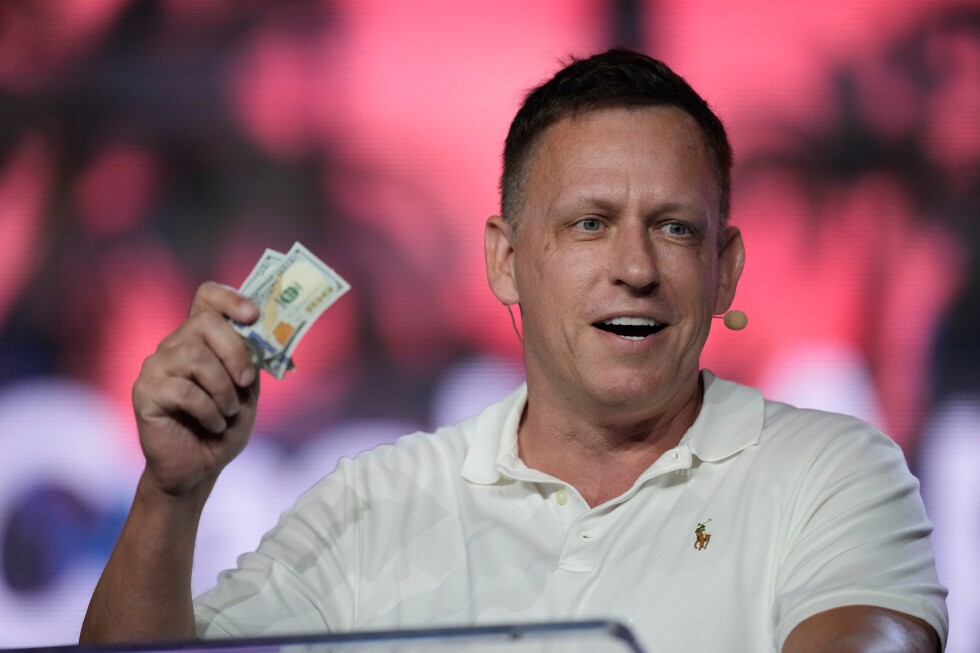
One of the most sought-after tickets in Vatican City this week is for an exclusive four-part lecture series on the Antichrist delivered by Silicon Valley billionaire Peter Thiel. The invitation-only conference, running Sunday through Wednesday in Rome, has generated significant controversy, with Catholic institutions originally linked to the event now distancing themselves.
Thiel, co-founder of PayPal and Palantir Technologies, has long been fascinated with apocalyptic concepts. In a November essay published in the Catholic magazine First Things, he wrote: “Christians debated these prophecies for millennia. Who was the Antichrist? When would he arrive? What would he preach?”
The tech mogul’s Rome lectures appear to follow a similar format to a series he delivered in San Francisco last September. According to circulating invitations, his remarks will explore “the theology, history, literature and politics of the Antichrist,” drawing upon religious thinkers including René Girard, Francis Bacon, and John Henry Newman.
As word spread about the controversial lectures, Catholic institutions began to distance themselves. Initially, reports suggested the talks would be held at the Pontifical St. Thomas Aquinas University (Angelicum), where Pope Leo XIV studied as a young priest. However, the university quickly issued a statement clarifying that “this event is not organized by the University, will not take place at the Angelicum, and is not part of any of our institutional initiatives.”
The event was reportedly jointly organized by the Vincenzo Gioberti Cultural Association, an Italian organization dedicated to renewing political culture through classical and Christian thought, and the Cluny Institute at the Catholic University of America (CUA). However, CUA also denied official involvement, with a spokesperson stating: “The Catholic University of America is not sponsoring or hosting an event featuring Peter Thiel this month in Rome. The Cluny Project is an independent initiative incubated at the university.”
Thiel’s influence extends well beyond the tech sector into politics and policy. A key donor to Donald Trump’s first presidential campaign, Thiel has maintained connections to the current administration. His data-mining company Palantir Technologies recently secured an agreement with U.S. Immigration and Customs Enforcement to streamline deportation processes for targeted individuals.
The billionaire’s political reach expanded further through his close relationship with Vice President JD Vance. Thiel invested millions in Vance’s successful U.S. Senate primary campaign, with many viewing him as a mentor to Vance, a Catholic convert who now holds the highest political position of any Catholic in the current administration.
Vance’s theological justification for stricter immigration policies, based on an ancient Christian concept called the “order of love,” received notable criticism from Pope Francis shortly before his death. Before being elected pope, Leo XIV (then Robert Prevost) shared an article on social media with the headline, “JD Vance is wrong: Jesus doesn’t ask us to rank our love for others.”
Thiel, who co-founded PayPal in 1998 alongside other entrepreneurs like Elon Musk who became known as the “PayPal Mafia,” sold the company to eBay in 2002 for $1.5 billion. He subsequently founded hedge fund Clarium Capital Management and helped launch Palantir Technologies.
The Rome lectures reflect Thiel’s ongoing intellectual engagement with existential questions facing humanity. In his public writings and talks, he frequently frames the concept of the Antichrist in terms of technological and social choices that determine humanity’s future path.
Despite the controversy surrounding the event, the exclusive nature of the invitation-only series has only heightened interest among Rome’s intellectual and religious communities, creating an unusual intersection of Silicon Valley wealth, political influence, and apocalyptic theology in the shadow of the Vatican.
Fact Checker
Verify the accuracy of this article using The Disinformation Commission analysis and real-time sources.

5 Comments
Drawing on thinkers like Girard, Bacon, and Newman to explore the theology and politics of the Antichrist seems like an intriguing intellectual exercise, even if it challenges traditional Catholic views.
The distancing of Catholic institutions from this event suggests they are wary of being associated with Thiel’s unorthodox views. This could be a delicate balancing act, as they may want to engage with new ideas, but not at the risk of undermining core Church teachings.
Thiel’s fascination with apocalyptic concepts is well-known, but bringing those views to the Vatican’s doorstep is bound to generate significant debate. It will be interesting to see how Catholic leaders respond to his lectures.
The Catholic Church is typically quite cautious about engaging with ideas that could be seen as undermining core beliefs. It will be interesting to see how they navigate this delicate situation with Thiel’s controversial lectures.
This is certainly a provocative and controversial topic for Thiel to be exploring in the heart of Catholicism. I’m curious to learn more about his perspective and how it may challenge or engage with traditional Catholic thought on the Antichrist.