


Listen to the article
Escalating attacks on key oil and gas facilities in the Persian Gulf have heightened the risk of prolonged price increases across multiple sectors, from energy and transportation to electronics and food production.
Iran’s recent strikes on Gulf infrastructure, launched in retaliation for an Israeli attack on the South Pars natural gas field, have transformed what began as temporary price shocks at the start of the conflict into potentially long-term economic disruptions.
Gulf nations have already reduced oil production as Iranian strike threats have effectively blocked most tanker traffic through the Strait of Hormuz, leaving producers with limited export options. Industry analysts warn that even if maritime passage becomes safe again soon, the complex process of restarting refineries and related facilities means energy supplies won’t resume immediately. Infrastructure damage from ongoing attacks would further extend recovery timelines.
The disruption has hit Asia particularly hard, as the region receives the majority of oil and gas exports from the Gulf. In the Philippines, government offices have reduced operations to four days per week and implemented air conditioning restrictions. Vietnam has encouraged remote work to conserve energy resources.
Beyond fossil fuels, the conflict has endangered supplies of critical raw materials. Helium, essential for semiconductor manufacturing, and sulfur, a key fertilizer component, face potential shortages that could trigger price increases throughout global supply chains.
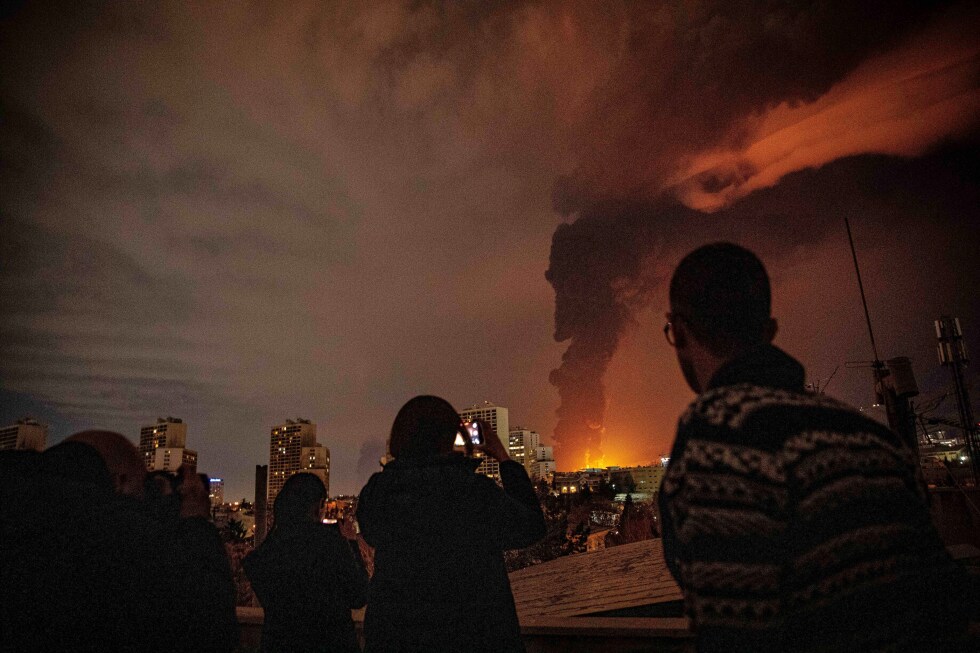
The South Pars gas field, shared between Iran and Qatar (where it’s known as North Field), stands at the center of the escalation. As the world’s largest natural gas reservoir, it provides most of Iran’s domestic supply for heating and electricity generation. The Israeli strike on facilities connected to the field at Asuleyah prompted Iranian threats against oil and gas sites across the Gulf region.
For Iran, which already faces periodic electricity shortages, losing South Pars output would significantly worsen civilian living conditions. U.S. President Donald Trump has indicated that Israel would refrain from striking South Pars again but warned of massive retaliation if Iran continued targeting Qatari energy infrastructure.
Qatar’s Ras Laffan liquefied natural gas terminal, the world’s largest LNG export facility, sustained “extensive” damage during Thursday’s Iranian attack. The facility, which had already suspended operations following an earlier drone strike, represents approximately 20% of global LNG production. Its disruption has sent European energy prices soaring.
Iran’s Kharg Island, the terminal handling nearly all of the country’s pre-war crude exports (approximately 1.6 million barrels daily, mostly to China), has been partially spared in military operations thus far. Trump indicated U.S. forces bombed military sites on the island in March while avoiding oil infrastructure, though he suggested petroleum facilities could be targeted next. Some tankers continue loading at Kharg, with evidence of a “dark fleet” employing false signals and obscured ownership to evade sanctions.
Saudi Arabia’s East-West pipeline, connecting the Abqaiq processing center to Yanbu port on the Red Sea, has provided a crucial alternative to the Hormuz route. However, the pipeline lacks capacity to fully compensate for the strait’s closure, and a recent strike on Saudi Arabia’s SAMREF refinery at Yanbu has raised concerns about export capabilities.
The United Arab Emirates’ Fujairah oil terminal, positioned strategically on the Gulf of Oman, enables Abu Dhabi to export significant quantities without transiting the Strait of Hormuz. Despite experiencing two strikes, the terminal has reportedly resumed operations.
Kuwait’s Mina al-Ahmadi and Mina Abdullah refineries experienced fires following drone attacks, though the extent of damage remains unclear. The prolonged shutdown of these facilities could force oil well closures due to the lack of processing capacity, with lengthy restart procedures delaying recovery.
Oman’s Port of Salalah houses an $800 million facility producing liquid petroleum gas primarily for Asian markets, where it serves as essential cooking fuel. The disruption has already forced restaurants in India to reduce operating hours and modify menus to exclude energy-intensive dishes. Despite its location outside the Strait of Hormuz, operations were suspended as a precautionary measure after drone strikes.
Abu Dhabi’s Shah gas field, supplying approximately 20% of the emirate’s natural gas and serving as a major source of sulfur for fertilizer and chemical production, suspended operations Tuesday following a drone strike, further straining regional and global supply chains.
Fact Checker
Verify the accuracy of this article using The Disinformation Commission analysis and real-time sources.

9 Comments
Retaliation strikes on Gulf energy infrastructure raise the specter of prolonged supply chain issues and price volatility. The impacts on Asia are particularly worrying given their heavy reliance on Gulf exports. Exploring alternative sources and routes may help build resilience.
Agreed. Diversifying supply sources is key to reducing vulnerability in the face of geopolitical tensions and infrastructure attacks in the Gulf region.
Escalating attacks on key Gulf energy facilities are a major risk factor, potentially leading to prolonged price increases and supply chain issues across various sectors. The impacts on Asia, which relies heavily on Gulf exports, are particularly concerning.
This news is concerning for the global economy, as the Gulf region is a critical energy hub. Damage to facilities and disrupted exports could have far-reaching consequences across multiple industries. Careful monitoring and contingency planning will be essential.
The vulnerability of critical energy infrastructure in the Gulf region is deeply concerning. Even temporary price shocks can lead to long-term economic disruptions, as we’re seeing with reduced production and limited export options. Diversifying supply sources may be prudent.
Concerning news about the attacks on Gulf energy infrastructure. This raises serious risks of prolonged price increases and supply disruptions across multiple industries. The impacts on Asia in particular are worrying as they rely heavily on Gulf energy exports.
The targeting of Gulf energy infrastructure is deeply troubling. Even temporary supply shocks can lead to extended economic disruptions, as we’re seeing with reduced production and limited export options. Governments and businesses will need to adapt and explore alternative sources.
This news highlights the geopolitical risks facing the global energy market. Attacks on Gulf facilities have wide-ranging ripple effects, from energy and transportation to manufacturing and agriculture. Careful monitoring of the situation and mitigation planning will be crucial in the months ahead.
The escalating tensions and strikes in the Gulf are alarming. Restarting damaged facilities will be a complex process, likely extending recovery timelines. Governments and businesses in affected regions will have to adjust operations accordingly.