


Listen to the article
Palestinians Await Vital Reopening of Rafah Crossing as Gaza Ceasefire Advances
Palestinians are eagerly awaiting the reopening of the Rafah border crossing, Gaza’s critical lifeline to the outside world that wasn’t controlled by Israel before the war. The expected opening follows Israel’s Monday announcement that the remains of the final hostage in Gaza, Ran Gvili, had been recovered.
Hours earlier, Israeli officials had stated they would open the Rafah crossing with limitations once the search operation for Gvili was complete. The opening of this crucial crossing between Gaza and Egypt is viewed as inaugurating the second phase of the U.S.-brokered ceasefire, though its opening had been designated as part of the initial phase.
The timing and specific operational parameters remain unclear. Prime Minister Benjamin Netanyahu’s office announced late Sunday that Israel agreed to reopen the crossing “for pedestrian passage only, subject to a full Israeli inspection mechanism.” This limited access falls short of what many Palestinians and humanitarian organizations have been demanding.
Hamas quickly responded with a statement Monday calling on Israel to open the Rafah crossing in both directions “without restrictions.” Ali Shaath, who heads the new Palestinian committee administering Gaza’s daily affairs, had previously indicated the crossing would open this week to facilitate movement both in and out of the war-ravaged territory.
For Gaza’s 2.3 million residents, a reopened Rafah crossing would significantly improve access to medical treatment abroad, enable international travel, and allow family visits to Egypt, where tens of thousands of Palestinians currently reside. The economic implications are also substantial, as Palestinian products like olive oil have traditionally found markets in Egypt and across the Arab world.
“We hope this will close off Israel’s pretexts and open the crossing,” said Abdel-Rahman Radwan, a Gaza City resident whose mother is a cancer patient requiring treatment outside Gaza. His sentiment reflects the desperation of countless Gazans with urgent medical needs that cannot be addressed within the territory’s devastated healthcare system.
Israel has specified that Palestinians seeking to exit Gaza must secure both Israeli and Egyptian security approval. Egypt, meanwhile, has advocated for immediate bidirectional opening of the crossing to allow Palestinians in Egypt to return to Gaza. Egyptian officials have consistently opposed the permanent resettlement of Palestinian refugees within their borders, a position that has shaped their approach to border management throughout the conflict.
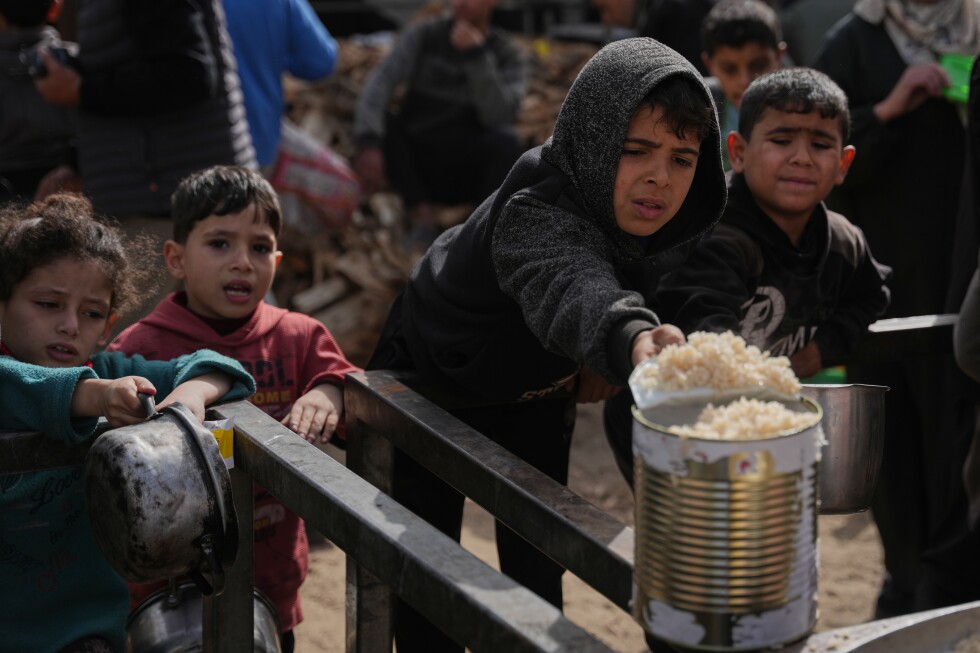
The humanitarian situation in Gaza remains dire. With much of the territory reduced to rubble, the United Nations has emphasized that Gaza’s population urgently needs massive deliveries of fuel, food, medicine, and shelter. While some aid has entered through the crossing, supply trucks have been lined up outside for months awaiting permission to enter.
“We’re trying to get clarity on what exactly the Rafah opening means, how it will be implemented,” U.N. spokesperson Stephane Dujarric said Monday. “What we want to see is humanitarian goods going in, cargo going in, both from the humanitarian community and private cargo.”
Prior to the war, which began after Hamas-led militants attacked southern Israel on October 7, 2023, the Rafah crossing was a bustling transit point for both people and goods. Although Gaza has four other border crossings, these share boundaries with Israel, making Rafah the only connection to another neighboring country.
After the October 2023 attack, Egypt tightened restrictions at Rafah. The situation worsened in May 2024 when Israeli forces took control of the Gaza side as part of their offensive, essentially closing the crossing except for occasional medical evacuations.
The infrastructure at the Gaza side of Rafah has suffered extensive damage during the conflict. When operations resume, Israel has committed to adhering to humanitarian terms established during the previous ceasefire implemented in January 2025, including allowing a specific number of aid trucks to enter Gaza daily.
With the current ceasefire terms stipulating that Hamas should have no role in governing Gaza, questions remain about who will manage the Palestinian side of the Rafah crossing in the future. This uncertainty extends to Gaza’s broader reconstruction efforts.
Last week, Jared Kushner, U.S. President Donald Trump’s son-in-law and Middle East adviser, indicated that post-war construction would initially focus on building “workforce housing” in Rafah, the southern city currently under Israeli military control.
However, Netanyahu’s Monday statement to Israel’s parliament struck a different tone: “We are at the start of the next ceasefire phase. What is the next phase? The next phase is disarming Hamas and demilitarizing the Gaza Strip. The next phase is not reconstruction.”
Meanwhile, humanitarian aid continues to move forward incrementally. On Monday, the Egyptian Red Crescent facilitated the entry of a convoy carrying over 7,060 tons of food and medical supplies through the Egyptian side of Rafah, headed for Israeli inspection at Kerem Shalom before potentially continuing into Gaza.
As Palestinians await the crossing’s reopening, the international community watches closely to see if this development marks a genuine turning point toward sustained humanitarian relief and eventual reconstruction in Gaza.
Fact Checker
Verify the accuracy of this article using The Disinformation Commission analysis and real-time sources.

16 Comments
The news of the Rafah crossing’s potential reopening is encouraging, but the continued restrictions on access are worrying. I hope this is the start of a broader effort to restore Gaza’s connections and support its economic recovery.
Agreed, the limited reopening is a positive first step, but more comprehensive access is needed to truly address the region’s pressing humanitarian and economic challenges.
The reopening of the Rafah crossing is critical for Gaza’s economy and humanitarian needs. Allowing pedestrian passage with Israeli inspection is a positive first step, though more comprehensive access will be needed long-term.
Agreed, the crossing’s full reopening is essential for restoring normalcy and reviving Gaza’s connections to the outside world.
While the planned reopening of the Rafah crossing is a step in the right direction, the lack of full access is concerning. Sustainable progress will require negotiations to address the root causes of the conflict and restore Gaza’s connections to the outside world.
Reopening the Rafah crossing, even in a limited capacity, is an encouraging development. However, the lack of full access is concerning and may constrain Gaza’s economic recovery. Continued negotiations will be crucial.
The Rafah crossing is a vital lifeline for Gaza. While the planned pedestrian-only reopening is a step forward, I hope this is just the beginning of a more comprehensive reopening to support the region’s recovery.
Agreed, the full restoration of the Rafah crossing is essential for alleviating the severe economic and humanitarian crisis in Gaza.
This news highlights the fragile situation in Gaza and the need for durable political solutions to improve living conditions for Palestinians. I hope the ceasefire holds and leads to further easing of restrictions at Rafah.
You raise a good point. Sustainable peace will require addressing the root causes behind the conflict, not just temporary measures.
While the planned reopening of the Rafah crossing is a positive step, the continued restrictions on access are concerning. I hope this is just the first stage in a broader effort to restore Gaza’s connections to the outside world.
You make a fair point. Sustainable progress will require a more complete reopening of the crossing to facilitate the flow of goods, services, and people.
The reopening of the Rafah crossing, even with Israeli inspections, represents progress towards easing the blockade on Gaza. However, more comprehensive access is needed to support the region’s long-term development and stability.
The Rafah crossing is a critical lifeline for Gaza, and its reopening, even in a limited capacity, is an important development. However, the long-term stability and prosperity of the region will require more comprehensive access to the outside world.
The Rafah crossing is a vital link for Gaza, and its reopening, even with limitations, is a welcome development. However, I hope this is just the beginning of a broader effort to restore comprehensive access and support the region’s long-term recovery.
You make a fair point. The limited reopening is an important milestone, but the ultimate goal should be the full restoration of the Rafah crossing to facilitate Gaza’s economic and social development.