


Listen to the article
The last remaining nuclear arms pact between Russia and the United States is set to expire Thursday, removing any caps on the two largest atomic arsenals for the first time in more than a half-century.
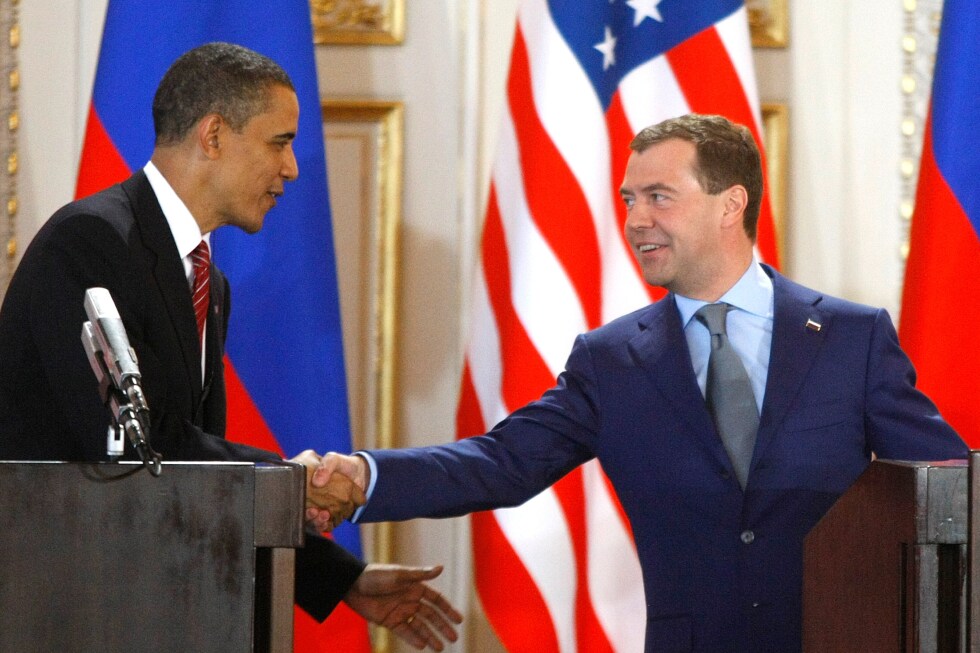
The termination of the New START Treaty sets the stage for what many experts fear could become an unconstrained nuclear arms race at a time of already heightened global tensions. The treaty, which restricts each nation to no more than 1,550 nuclear warheads on 700 missiles and bombers, has been a cornerstone of strategic stability since its signing in 2010.
Russian President Vladimir Putin has declared readiness to adhere to the treaty’s limits for another year if Washington follows suit, but the Trump administration has been noncommittal about extending the agreement. A White House official, speaking on condition of anonymity, indicated Monday that Trump desires maintaining limits on nuclear weapons and involving China in arms control talks, but will make a decision “on his own timeline.”
Beijing, however, has consistently rejected restrictions on its smaller but growing nuclear arsenal, complicating efforts to create a multilateral framework. Putin reportedly discussed the pact’s expiration with Chinese leader Xi Jinping, according to Kremlin adviser Yuri Ushakov, who noted Washington hasn’t responded to Russia’s proposed extension.
“Russia will act in a balanced and responsible manner based on thorough analysis of the security situation,” Ushakov stated, signaling Moscow’s cautious approach.
Arms control advocates have long voiced concern about New START’s expiration, warning it could lead to a dangerous new arms race, increase global instability, and heighten the risk of nuclear conflict. Pope Leo XIV on Wednesday called for the treaty “not to be abandoned without seeking to ensure its concrete and effective continuation.”
Daryl Kimball, executive director of the Arms Control Association in Washington, emphasized the gravity of the situation. “We’re at the point now where the two sides could, with the expiration of this treaty, for the first time in about 35 years, increase the number of nuclear weapons that are deployed on each side,” he told The Associated Press. “This would open up the possibility of an unconstrained, dangerous three-way arms race, not just between the U.S. and Russia, but also involving China.”
Kingston Reif of the RAND Corporation warned that “in the absence of the predictability of the treaty, each side could be incentivized to plan for the worst or to increase their deployed arsenals to show toughness and resolve, or to search for negotiating leverage.”
The stakes have grown considerably since Russia’s invasion of Ukraine in 2022, after which Putin repeatedly brandished Russia’s nuclear might, warning Moscow was prepared to use “all means” to protect its security interests. In 2023, Putin signed a revised nuclear doctrine lowering the threshold for nuclear weapons use, further increasing tensions.
New START, originally set to expire in 2021, was extended for five additional years and included sweeping on-site inspections to verify compliance. These inspections ceased in 2020 due to the COVID-19 pandemic and never resumed. In February 2023, Putin suspended Moscow’s participation, citing that Russia couldn’t allow U.S. inspections while Washington and NATO openly declared Moscow’s defeat in Ukraine as their goal. The Kremlin emphasized it wasn’t withdrawing completely, pledging to respect the treaty’s caps.
Rose Gottemoeller, the chief U.S. negotiator for the pact and a former NATO deputy secretary-general, argued that extending the treaty would have served U.S. interests. “A one-year extension of New START limits would not prejudice any of the vital steps that the United States is taking to respond to the Chinese nuclear buildup,” she said during an online discussion last month.
New START followed a long succession of U.S.-Russian nuclear arms reduction agreements, beginning with SALT I in 1972 signed by U.S. President Richard Nixon and Soviet leader Leonid Brezhnev. The landscape of arms control has deteriorated significantly in recent years, with the U.S. withdrawal from the Anti-Ballistic Missile Treaty in 2001 and the termination of the Intermediate-range Nuclear Forces Treaty in 2019.
In response to these shifts, Russia has developed new weapons systems, including the Burevestnik nuclear-tipped cruise missile and the Poseidon nuclear-armed underwater drone, which it claims to have successfully tested and is preparing for deployment.
Adding to concerns is Trump’s proposed “Golden Dome” missile defense system, which has alarmed both Russia and China. Dmitry Medvedev, now deputy head of Putin’s Security Council, warned that if Russia is “not heard, we act proportionately seeking to restore parity.”
Kimball noted that Russia and China are “likely going to respond to Golden Dome by building up the number of offensive weapons they have to overwhelm the system,” adding that offensive capabilities can be built faster and cheaper than defensive ones.
Trump’s recent statement about resuming U.S. nuclear tests for the first time since 1992 has further troubled the Kremlin. Putin stated Russia would respond in kind if the U.S. resumes tests, which are banned by a global treaty both nations signed.
“This marks a potential turning point into a much more dangerous period of global nuclear competition, the likes of which we’ve not seen in our lifetimes,” Kimball concluded, painting a sobering picture of an increasingly unstable nuclear landscape.
Fact Checker
Verify the accuracy of this article using The Disinformation Commission analysis and real-time sources.

5 Comments
The expiration of the New START Treaty is certainly concerning. Nuclear arms control has been a critical part of maintaining global security for decades. I hope the US and Russia can find a way to extend or replace this important agreement, even if involving China proves challenging.
Agreed, this could lead to an escalation of the nuclear arms race at a very delicate time geopolitically. Continued dialogue and diplomacy will be crucial to avoid that outcome.
While the termination of this pact is worrying, I’m curious to see if the Trump administration can broker a new multilateral framework that addresses the growing nuclear capabilities of China as well. Engaging all major nuclear powers will be key to effective arms control going forward.
That’s a good point. Bringing China into the fold, even if difficult, seems necessary to create a more comprehensive and stable arms control regime. It will be a complex negotiation, but the stakes are too high to avoid it.
The potential for an unconstrained nuclear arms race is deeply concerning. I hope the US and Russia can find a way to extend or replace the New START Treaty, even if it means making concessions to get China involved. Global security depends on maintaining limits on these devastating weapons.