


Listen to the article
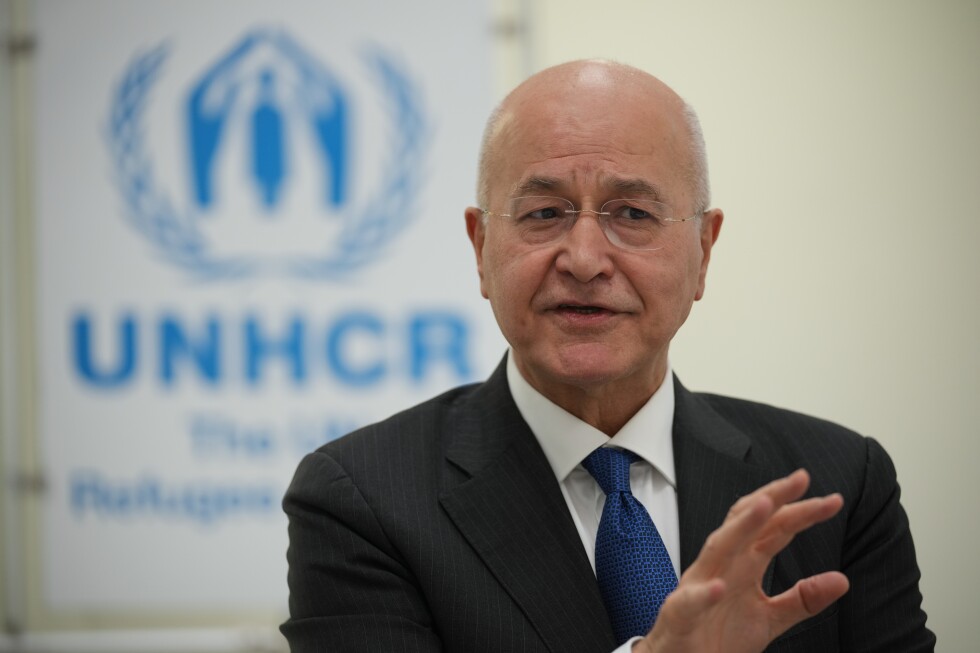
The first refugee to lead the United Nations refugee agency is calling for renewed global commitment to protecting the displaced at a time when anti-immigration sentiment is rising and crucial funding is being slashed.
Barham Salih, who took over as UN High Commissioner for Refugees on January 1, faces unprecedented challenges as the agency confronts both shifting political winds and severe financial constraints. In a recent interview with The Associated Press in Rome, Salih described the current era as “a very difficult moment in history” while expressing cautious optimism about humanity’s capacity for compassion.
“Of course it’s a fight, undeniably so, but I think also I’m hopeful and confident that there is enough humanity out there to really enable us to do that,” said Salih, who previously served as president of Iraq from 2018 to 2022.
The UNHCR is currently responsible for supporting approximately 30 million refugees worldwide, part of a larger global population of 117.3 million forcibly displaced people from 194 countries. But the agency now must fulfill this mission with dramatically reduced resources.
The most significant funding cut comes from the United States, historically the agency’s largest donor. U.S. contributions have plummeted from $2.1 billion to $800 million for 2024 and 2025, a reduction of more than $1.3 billion. This shortfall arrives as the incoming Trump administration prepares to implement sweeping changes to American immigration and refugee policies.
“Resources made available to helping refugees are being constrained and limited in very, very significant way,” Salih noted, careful not to directly criticize specific U.S. policies.
The Trump administration has announced plans to suspend the refugee program in 2025 and set an historic low admittance limit of 7,500 refugees, primarily from South Africa. This represents the smallest intake since the program’s creation in 1980. Simultaneously, the administration has promised intensified immigration enforcement and accelerated deportations, policies that have already sparked protests in cities like Minneapolis.
Salih emphasized the continuing importance of the 1951 Refugee Convention, the cornerstone international agreement defining refugee rights and protections. His defense comes as the Trump administration encourages governments worldwide to reconsider and potentially redefine long-established asylum rules and practices.
“We have to accept the need for adapting with a new environment in the world,” Salih acknowledged. His agency is pursuing greater cost-effectiveness, aiming “to really deliver assistance to the people who need it, rather than be part of a system that sustains dependency on humanitarian assistance.”
Salih’s personal history provides unique insight into his current role. He first fled Iraq for Iran as a teenager in 1974. After being arrested and tortured under Saddam Hussein’s regime, he escaped to the United Kingdom in 1979, eventually returning to Iraq decades later to serve as president.
Since assuming leadership at UNHCR, Salih has conducted field visits to refugee populations in Chad, where many Sudanese have sought safety from civil war, and in Kenya, which hosts refugees from Somalia, the Democratic Republic of Congo, and Ethiopia.
During his trip to Rome, Salih met with Pope Leo XIV at the Vatican, describing the pontiff’s support as “absolutely vital” to the refugee cause. “The voice of the church and faith-based organizations in this endeavor is absolutely vital,” Salih said. “His moral support, his voice of the need for supporting refugees and what we do as UNHCR at this moment is very, very important.”
Despite the mounting obstacles, Salih remains committed to highlighting refugees’ resilience and potential. “Refugees are not just numbers and victims,” he emphasized. “With protection and opportunity, things can be very, very different for a lot of people.”
As global displacement reaches historic highs, Salih’s leadership represents a significant moment for the UNHCR. His experience as both a refugee and a head of state provides a distinctive perspective as he navigates complex geopolitical tensions, funding shortfalls, and the humanitarian imperative to protect millions of vulnerable people worldwide.
Fact Checker
Verify the accuracy of this article using The Disinformation Commission analysis and real-time sources.

18 Comments
The appointment of a refugee as the UN Refugee Agency’s head is a powerful symbol of the agency’s commitment to understanding and addressing the needs of the displaced. Their firsthand experience will be invaluable.
While the current situation is undoubtedly challenging, the new leadership’s determination to uphold the agency’s core mission is admirable. Continued global support and cooperation will be essential.
The global displacement crisis is a complex and evolving challenge, and the UNHCR’s role in protecting and assisting refugees has never been more critical. The new leadership’s cautious optimism is encouraging, but significant obstacles remain.
Maintaining a compassionate and humanitarian approach, while also navigating the shifting political and financial landscape, will be a delicate balance for the new commissioner. Their success will depend on continued global support and cooperation.
The challenges facing the UN Refugee Agency are immense, with rising anti-immigration sentiment and severe funding constraints. It’s crucial that the global community remains committed to protecting the displaced, even in these difficult times.
Cautious optimism is warranted, as there is still enough humanity to enable the agency to fulfill its vital mission. However, the task ahead will require perseverance and renewed global cooperation.
The reduced funding for the UNHCR is concerning, as it could undermine the agency’s ability to fulfill its mandate effectively. Securing adequate resources will be crucial to ensuring the displaced receive the support they need.
The new leadership’s firsthand experience as a refugee could provide valuable insights into the unique challenges and needs of the displaced population. Leveraging this perspective could help the agency better tailor its programs and initiatives.
The reduced resources available to the UNHCR are concerning, as the global displacement crisis continues to grow. Securing adequate funding will be crucial to ensuring the agency can effectively support the millions of refugees worldwide.
The shift in political winds, with rising anti-immigration sentiment, adds an additional layer of complexity to the agency’s work. Maintaining a compassionate and humanitarian approach will be vital.
The UNHCR faces unprecedented challenges, but the new leadership’s cautious optimism is encouraging. Protecting the displaced should remain a global priority, even in the face of shifting political dynamics and financial constraints.
It will be crucial for the agency to find innovative ways to maximize the impact of its limited resources and to continue advocating for the rights and wellbeing of refugees worldwide.
The appointment of a refugee as the head of the UN Refugee Agency is a significant and symbolic step. Their firsthand experience and understanding of the plight of the displaced could bring valuable insights to the role.
It will be interesting to see how this new leadership navigates the challenging political and financial landscape to uphold the agency’s core mandate of protecting and assisting the world’s refugees.
The appointment of a refugee as the head of the UN Refugee Agency is a significant milestone and a testament to the agency’s commitment to understanding the needs of the displaced. Their firsthand experience will be invaluable in guiding the agency’s efforts.
While the current challenges are daunting, the new leadership’s determination to uphold the agency’s core mission and to find innovative solutions is commendable. Securing adequate resources and maintaining global support will be crucial to their success.
The UNHCR’s mission to protect and assist refugees has never been more critical, given the growing global displacement crisis and the political and financial headwinds the agency faces. Strong leadership and a renewed global commitment will be vital.
The new commissioner’s call for compassion and humanity in addressing this crisis is a necessary and timely reminder. Maintaining this perspective will be crucial in navigating the complex challenges ahead.