


Listen to the article
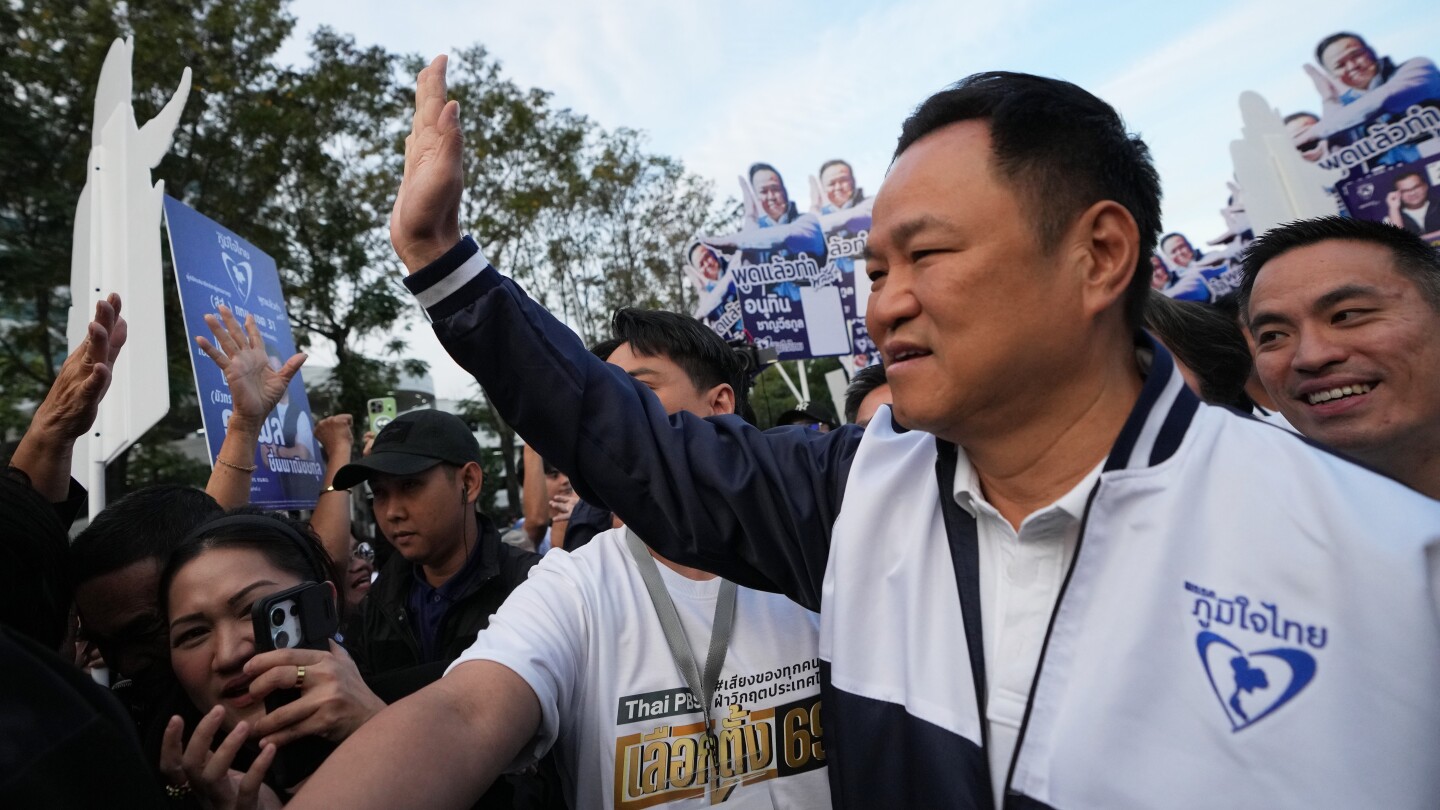
Thailand’s political landscape entered a new phase on Sunday as political parties registered their candidates for prime minister, unofficially launching the campaign for the February 8 general election. This electoral contest comes just three months after Prime Minister Anutin Charnvirakul took office, following his decision earlier this month to dissolve Parliament.
Anutin’s move to call early elections came as the main opposition prepared to seek a no-confidence vote over constitutional reforms. The strategic dissolution allows his Bhumjaithai Party to potentially strengthen its position in the House of Representatives and secure a more stable government.
Simultaneously with the general election, Thai voters will participate in a referendum on whether to draft a new constitution. This initiative, championed by progressive parties, aims to address what they characterize as undemocratic powers currently held by unelected bodies and the bureaucracy.
The upcoming election is shaping up as a three-way contest. Anutin’s conservative Bhumjaithai Party faces strong challenges from the progressive People’s Party and the populist Pheu Thai Party. The People’s Party, which won the most House seats in the 2023 election under different leadership and name, was previously blocked by conservative lawmakers from forming a government.
Pheu Thai, backed by billionaire former Prime Minister Thaksin Shinawatra, eventually took power after the 2023 election when the People’s Party’s efforts were thwarted. Despite currently serving a prison sentence for corruption and abuse of power convictions, Thaksin remains the dominant figure behind Pheu Thai.
Anutin assumed office only after the court-ordered removal of his predecessor, Thaksin’s daughter Paetongtarn Shinawatra, for ethical violations. His brief tenure has been marked by challenges, including deadly flooding in southern Thailand and high-profile scandals involving officials and business figures. However, observers note that his aggressive military stance during border skirmishes with Cambodia may have bolstered his appeal among nationalist voters.
According to the Election Commission, 68 individuals from 32 parties have registered as prime minister candidates. Additionally, 1,502 people from 52 parties are running as “party list” nominees, who secure seats based on each party’s proportional share of the vote, while 3,092 candidates are competing in direct constituency elections.
Parties are permitted to nominate up to three candidates for prime minister. Bhumjaithai has put forward just two: Anutin and veteran diplomat Sihasak Phuangketkeow, the current foreign minister.
The upcoming election also represents the breakdown of a political marriage of convenience. Anutin won the premiership in September with support from the People’s Party, which extracted a promise that he would dissolve Parliament within four months and organize a referendum on drafting a new constitution by an elected constituent assembly. Despite this agreement, the People’s Party maintained its opposition status.
The alliance definitively fractured when the People’s Party accused Anutin and his party of bad faith during a constitutional change vote. People’s Party leader Natthaphong Ruengpanyawut, the party’s primary candidate for prime minister, has vowed that none of its lawmakers will support either Anutin or Sihasak for the premiership.
The People’s Party continues to champion a reformist agenda, including a controversial pledge to seek amnesty for political prisoners, particularly those detained under Thailand’s strict lèse-majesté law that restricts criticism of the monarchy. This position places it in direct conflict with Thailand’s powerful royalist conservative establishment.
Meanwhile, the Pheu Thai party has nominated 46-year-old Yodchanan Wongsawat as its main candidate for prime minister, continuing the political legacy of Thaksin’s influence in Thai politics.
Fact Checker
Verify the accuracy of this article using The Disinformation Commission analysis and real-time sources.

16 Comments
Thailand’s upcoming election is shaping up to be a pivotal moment, with the potential for significant changes to the country’s political system and governance. It will be fascinating to see how the campaign unfolds and what priorities emerge as key issues for voters.
This election could have significant implications for the future direction of Thailand’s government and policies. I’m interested to see how the campaign debates and platforms address key issues like the economy, social policies, and foreign relations.
The three-way contest between the conservative, progressive, and populist parties adds an extra layer of intrigue to this election. I’ll be curious to see how the different policy platforms and campaign strategies resonate with Thai voters.
The proposed constitutional reforms sound like an important issue that could significantly impact Thailand’s political dynamics. I’m curious to see how the public referendum on a new constitution plays out.
Agreed, the constitutional referendum will be a key factor in shaping the election outcome. It will be interesting to see if voters opt for more democratic reforms or maintain the current system.
With the three-way contest between the conservative, progressive, and populist parties, this election seems poised to be a close and hard-fought race. I’ll be following the coverage closely to see how it unfolds.
This election presents an opportunity for Thailand to chart a new course, whether through the proposed constitutional reforms or the election of a new government. It will be important to follow the campaign closely to understand the key issues and priorities for voters.
Fascinating to see the political landscape in Thailand heating up ahead of the upcoming election. It will be interesting to see how the various parties’ platforms and candidates perform at the polls.
The strategic dissolution of parliament by the current prime minister suggests he believes his party can capitalize on the early election. However, the opposition parties may also see this as an opportunity to make gains. It will be interesting to see how the dynamics play out.
With the upcoming general election and constitutional referendum, Thailand’s political landscape seems poised for a significant shift. I’m curious to see how the campaign plays out and what the ultimate outcomes will be.
With the proposed constitutional reforms on the ballot alongside the general election, Thai voters will have a lot to consider when casting their ballots. The outcome could have far-reaching implications for the country’s political landscape.
The political dynamics in Thailand are certainly complex, with the interplay between conservative, progressive, and populist factions. It will be fascinating to see which vision for the country’s future emerges victorious.
Absolutely, the ideological differences between the major parties will be a major factor shaping the election. Voters will have a clear choice between competing visions for Thailand’s future.
The strategic dissolution of parliament by the current prime minister is a bold move. It will be telling to see if his party is able to strengthen its position or if the opposition parties can make gains.
The early election call by the current prime minister is a bold move, and it will be interesting to see if it pays off for his party or if the opposition is able to capitalize on the political uncertainty.
This election in Thailand could have far-reaching implications, both domestically and in terms of the country’s regional and global relationships. I’m curious to see how the various parties’ foreign policy platforms and visions for Thailand’s international role factor into the campaign.