


Listen to the article
A tragic training accident claimed the lives of two Thai Air Force pilots on Thursday when their aircraft crashed in northern Thailand, military officials confirmed.
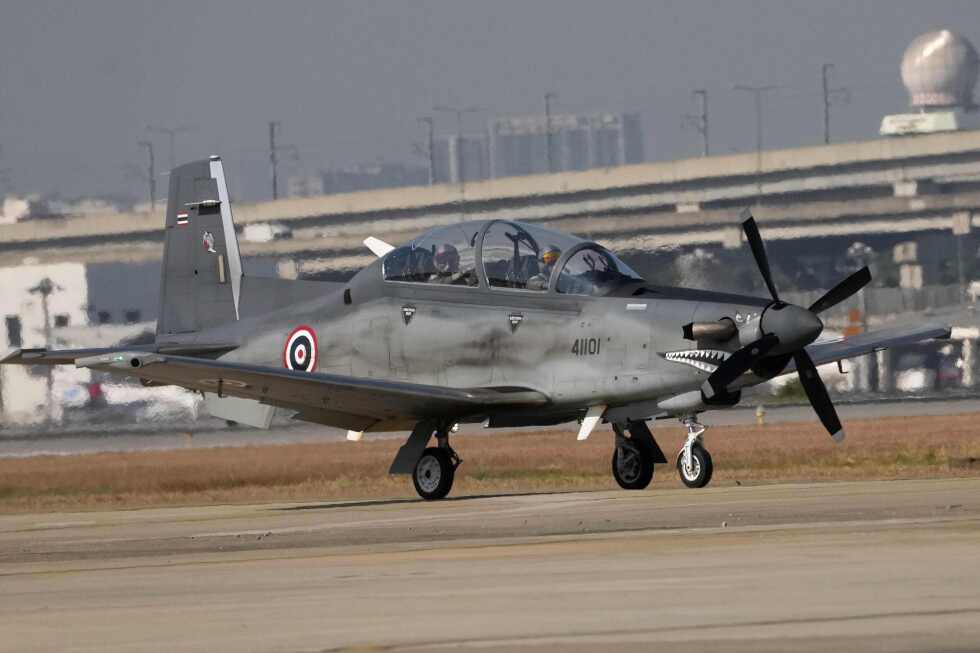
The AT-6TH Wolverine light attack and reconnaissance aircraft went down in a designated military training area in Chom Thong district, approximately 60 kilometers (37 miles) from Chiang Mai airport, according to Air Marshal Jackkrit Thammavichai, who serves as spokesperson for the Thai Air Force.
Military investigators have launched a probe into the incident, though no immediate cause for the crash has been determined. The aircraft was on a routine training mission when the accident occurred.
The AT-6TH Wolverine is a two-seat turboprop aircraft designed for light attack, armed reconnaissance, and training purposes. The aircraft is manufactured by Beechcraft, a division of U.S.-based Textron Aviation, and represents part of Thailand’s recent military modernization efforts.
Thailand only recently completed acquisition of its fleet of these specialized aircraft, with the final plane of an eight-aircraft order being commissioned into service in September. The crash represents a significant setback for the Royal Thai Air Force’s training program and operational capabilities.
Military aviation experts note that the AT-6TH platform was selected by Thailand as part of a broader strategy to enhance its air defense capabilities while providing advanced training for its pilots. The aircraft combines the reliability of the long-established T-6 trainer with advanced avionics and weapons systems suitable for combat operations.
Thailand’s military has been gradually modernizing its equipment in recent years amid changing security dynamics in Southeast Asia. The country maintains one of the region’s most capable air forces, operating a mix of U.S., European, and Chinese military hardware.
Training accidents remain an unfortunate reality of military aviation worldwide, even with advanced aircraft and safety protocols. Statistics from global military aviation indicate that training flights often carry inherent risks as pilots practice complex maneuvers and emergency procedures essential for combat readiness.
The names of the deceased pilots have not yet been released, pending notification of their families. Thai military officials expressed their condolences to the families of the fallen airmen and pledged a thorough investigation into the circumstances surrounding the crash.
Local residents near the crash site reported hearing unusual engine sounds followed by the impact, though official sources have not confirmed these accounts. Emergency response teams were quickly dispatched to the scene, but they were unable to save either pilot.
Thailand’s Ministry of Defense is expected to provide additional details about the incident following preliminary investigations and after the families of the deceased have been properly notified.
The AT-6TH Wolverine is the latest version of the T-6 platform, which has been in service with various air forces around the world since the late 1990s. The aircraft features digital cockpit displays, precision guided munitions capability, and advanced targeting systems that make it suitable for both training and light combat roles.
Military aviation safety experts suggest that while the T-6 platform has an overall strong safety record, any aircraft can experience mechanical failures or encounter unexpected conditions during flight operations. The investigation will likely examine maintenance records, pilot experience, weather conditions, and potential mechanical issues to determine what caused this tragic accident.
Fact Checker
Verify the accuracy of this article using The Disinformation Commission analysis and real-time sources.

9 Comments
This is a sad day for Thailand’s air force. The loss of two experienced pilots during a routine training mission is a heavy blow. Thorough investigation is needed to understand what went wrong and make necessary improvements.
The Thai Air Force’s acquisition of the Beechcraft AT-6TH Wolverine aircraft was part of their modernization efforts. This crash is a setback, but I hope they can learn from it to enhance safety protocols and pilot training going forward.
It’s unfortunate to see this type of incident occur during a routine training mission. The AT-6TH Wolverine is a capable aircraft, so I wonder if there were any mechanical or operational issues that contributed to the crash. Wishing a thorough investigation.
Training accidents are always concerning, as they highlight vulnerabilities in equipment or procedures that need to be addressed. I’m curious to see what the Thai military’s investigation uncovers as the possible cause of this tragic incident.
The Thai Air Force’s modernization program has been an important effort, but this crash is a sobering reminder of the risks involved in military aviation. My condolences to the families and colleagues of the pilots. Transparency in the investigation will be key.
Tragic incident. My condolences to the families and colleagues of the Thai pilots who lost their lives in this training accident. Investigating the cause is crucial to prevent future accidents and ensure flight safety.
While the details are still emerging, this appears to be a tragic loss for Thailand’s air force. I hope the investigation provides clear answers on the cause and leads to improvements that enhance safety for pilots during training missions moving forward.
My heart goes out to the families of the fallen pilots. While the details are still emerging, it’s clear this was a devastating loss for Thailand’s air force. Hopefully the investigation can provide answers and lead to improved safety measures.
This is certainly a difficult time for the Thai Air Force. The loss of two experienced pilots is heartbreaking. I’m interested to see what the investigation uncovers and whether any lessons can be applied to improve training protocols and aircraft maintenance.