


Listen to the article
Thousands Flee Northwestern Pakistan Amid Military Operation Uncertainty
Over 70,000 people have evacuated from Tirah in Pakistan’s northwestern Khyber Pakhtunkhwa province amid fears of an impending military operation against the Pakistani Taliban, despite official denials from the federal government.
The mass exodus, predominantly comprised of women and children, began after mosque loudspeakers urged residents to leave the remote region by January 23 to avoid potential combat operations. Local authorities have registered approximately 10,000 families from Tirah, which has a total population of around 150,000.
Defense Minister Khawaja Mohammad Asif has firmly rejected claims of planned military action in the area, attributing the migration instead to harsh winter weather conditions. “No military operation is underway or planned in Tirah,” Asif stated at a recent press conference in Islamabad.
This has created tension between federal and provincial authorities. Shafi Jan, a provincial government spokesman in Khyber Pakhtunkhwa, publicly blamed the federal government for the displaced residents’ plight, accusing Islamabad of retracting its earlier position regarding military operations.
Provincial Chief Minister Suhail Afridi, whose party is led by imprisoned former Prime Minister Imran Khan, has taken a strong stance against potential military action, stating his government will not permit troops to launch a full-scale operation in the region.
The Pakistani military maintains it will continue intelligence-based operations against Tehrik-e-Taliban Pakistan (TTP), though it has not announced plans for a larger campaign. Security officials claim many TTP leaders and fighters have established safe havens in neighboring Afghanistan since the Taliban’s return to power in 2021, with hundreds reportedly crossing into Tirah and using local residents as human shields during raids on militant hideouts.
For residents caught in this political standoff, the reality is one of disrupted lives and uncertainty. Zar Badshah, 35, fled with his wife and four children after community elders instructed villagers to evacuate. “Mortar shells had exploded in villages in recent weeks, killing a woman and wounding four children in my village,” he recounted.
The situation echoes last August’s military operation against the TTP in the Bajaur district, which displaced hundreds of thousands of people, raising concerns that Tirah residents could face a similar fate.
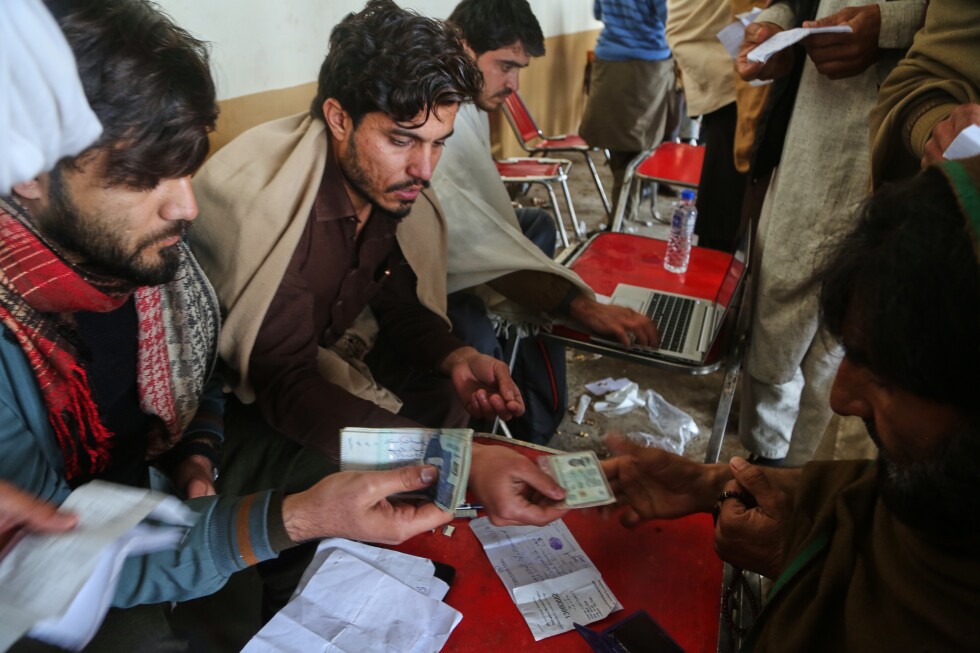
At a government school in Bara, where many evacuees have sought refuge, hundreds line up daily outside registration centers, waiting to enroll for government assistance. Many complain about the slow processing.
Narendra Singh, a 27-year-old member of the minority Sikh community, explained that his family fled not only due to security concerns but also because of severe food shortages exacerbated by heavy snowfall. “There was a severe shortage of food items in Tirah, and that forced us to leave,” Singh said.
Talha Rafiq Alam, the local government administrator overseeing relief efforts, confirmed that the registration deadline for displaced persons has been extended to February 5. He assured that residents would be able to return once security conditions improve, though he provided no timeline for when that might occur.
Tirah gained national attention last September after an explosion at a compound allegedly used to store bomb-making materials killed at least 24 people. While authorities claimed most casualties were TTP militants, local leaders contested this narrative, insisting civilians, including women and children, were among the dead.
This current crisis highlights the persistent security challenges in Pakistan’s northwestern regions, where civilian populations often find themselves caught between militant groups and military operations. As winter continues, the humanitarian situation for displaced families remains precarious, with access to food, shelter, and medical services becoming increasingly critical concerns.
Fact Checker
Verify the accuracy of this article using The Disinformation Commission analysis and real-time sources.

15 Comments
This is a complex situation that requires nuanced understanding. While the federal government’s position is understandable, the provincial authorities’ concerns should not be dismissed. A balanced and inclusive approach to addressing the security challenges in the region is necessary.
The harsh winter weather conditions may have exacerbated the situation, but the large-scale evacuation suggests there are deeper security concerns at play. It will be important for the international community to closely monitor the developments and ensure that the human rights of the affected population are protected.
Absolutely, the welfare of the displaced residents should be the top priority, regardless of the political tensions. Humanitarian aid and support will be crucial in the coming days and weeks.
While the federal government’s denial of a military operation is understandable, the large-scale evacuation suggests that the local population perceives a significant threat. Bridging this gap in understanding and addressing the concerns of the affected communities should be a priority.
Exactly, the disconnect between the federal and provincial authorities is deeply concerning. Transparent communication and a coordinated response are essential to ensure the safety and well-being of the displaced residents.
This situation underscores the complexity of security challenges in the region and the importance of addressing them through a comprehensive, multi-stakeholder approach. The displaced residents deserve immediate assistance and protection, regardless of the political dynamics.
While the federal government denies plans for a military operation, the local authorities seem to have a different perspective. This disconnect highlights the complexities of the security situation in the region and the need for a coordinated response to protect civilian lives.
The mass exodus of over 70,000 people is a significant humanitarian crisis that deserves immediate attention. Regardless of the political dynamics, ensuring the safety and well-being of the displaced residents should be the top priority for all stakeholders involved.
This crisis highlights the complex security challenges facing the region and the importance of finding a balanced, inclusive solution that prioritizes the needs of the affected population. Transparent communication and collaboration between all stakeholders will be crucial in addressing this situation.
I agree, a holistic approach that considers the concerns of the local authorities and the welfare of the displaced residents is essential. Addressing the root causes of the crisis and restoring trust in the affected communities should be the ultimate goal.
The mass exodus of over 70,000 people is a clear indication of the gravity of the situation. Regardless of the political dynamics, the humanitarian needs of the displaced population must be the top priority. Immediate action is required to provide relief and support.
The conflicting narratives between the federal and provincial authorities are concerning and highlight the need for better coordination and transparency. Resolving this situation will require a collaborative effort that puts the needs of the affected population first.
I agree, the lack of clear communication and alignment between the different levels of government is troubling. Proactive steps to address the humanitarian crisis and restore trust in the affected communities will be crucial.
This is a concerning situation in northwest Pakistan. The mass exodus of over 70,000 people, mostly women and children, suggests there may be more to the story than the federal government is letting on. It will be important to closely monitor the situation and ensure the safety of the displaced residents.
I agree, the conflicting statements from federal and provincial authorities are quite puzzling. Transparency and communication will be crucial to address the humanitarian needs of the displaced population.