


Listen to the article
Russia-Ukraine Peace Talks Show Progress Amid Ongoing War Challenges
Negotiations aimed at ending Russia’s invasion of Ukraine are showing encouraging signs, though significant obstacles remain before a comprehensive settlement can be reached, according to senior Kremlin officials. The talks, facilitated by the United States in Abu Dhabi over the weekend, have been described as constructive by all parties involved.
Kremlin spokesman Dmitry Peskov told journalists Monday that while no major breakthrough has occurred, “The very fact that these contacts have begun in a constructive way can be assessed positively, but there is still serious work ahead.” Another round of talks is scheduled for next week as diplomats continue their efforts.
The Abu Dhabi negotiations represent part of a yearlong initiative by the Trump administration to guide the warring nations toward a peace deal after nearly four years of full-scale conflict. U.S. President Donald Trump has established deadlines for an agreement and threatened additional sanctions against Moscow, though Russian President Vladimir Putin has remained firm in his public demands.
Ukrainian President Volodymyr Zelenskyy also characterized the talks as constructive but acknowledged that “complex political issues remain unresolved.” A U.S. official, speaking on condition of anonymity, revealed that negotiators will return to the United Arab Emirates on Sunday for further discussions covering military and economic matters, including the possibility of implementing a ceasefire before a comprehensive agreement is reached.
Territory remains one of the most contentious issues in the negotiations. Both sides disagree fundamentally on whether Russia should keep or withdraw from occupied Ukrainian territories, particularly in eastern Ukraine’s industrial Donbas region, and whether Russia should be granted control over land it hasn’t yet captured.
German Foreign Minister Johann Wadephul criticized Moscow’s approach on Monday, saying the Kremlin’s “stubborn insistence on the decisive territorial issue” could derail progress. During a visit to Latvia, he warned that “if there is no agility here, I am afraid that the negotiations may take a long time or will not be successful now.”
While diplomats work toward a resolution, Zelenskyy announced Sunday that a document outlining American security guarantees for Ukraine in a post-war scenario is “100% ready,” though it still requires formal signatures. Kyiv has consistently demanded post-war security commitments from the United States as part of any broader peace agreement with Moscow, citing Russia’s 2014 illegal annexation of Crimea and support for separatist rebels in eastern Ukraine.
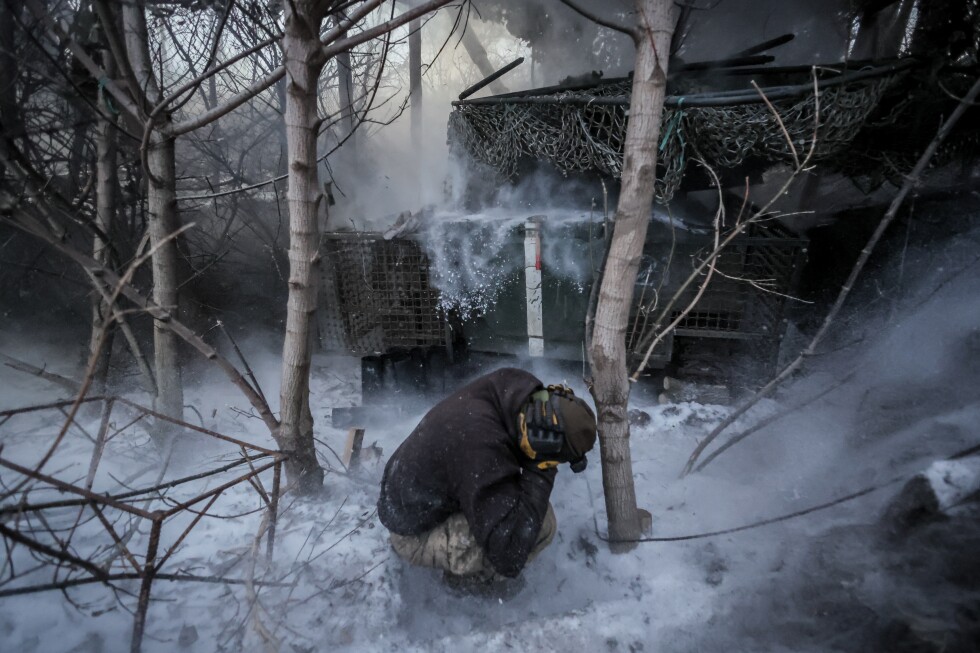
On the battlefield, the war of attrition continues along the approximately 1,000-kilometer (600-mile) front line through eastern and southern Ukraine. Ukrainian civilians face another winter of hardship following Russian bombardments of cities behind the front lines.
In the latest military developments, Russia’s Defense Ministry reported that air defenses intercepted 40 Ukrainian drones late Sunday and early Monday, including 34 over the Krasnodar region and four over the Sea of Azov. Krasnodar officials stated that drone fragments struck two industrial facilities in the city of Slavyansk, causing fires that were subsequently extinguished. One person was reportedly injured.
Ukraine’s general staff claimed their forces targeted an oil refinery in the Krasnodar region that supplied the Russian military. Meanwhile, Ukraine’s air force reported that Russian forces launched 138 drones overnight, with Ukrainian defenses shooting down or suppressing 110 of them. Twenty-one drones reportedly hit targets in eleven locations across Ukraine.
The ongoing military exchanges underscore the challenges facing negotiators as they attempt to forge a lasting peace agreement. Despite the diplomatic movement, the humanitarian toll continues to mount as the conflict approaches its four-year mark since Russia’s full-scale invasion in February 2022, which followed eight years of lower-intensity conflict after Russia’s actions in Crimea and eastern Ukraine in 2014.
Fact Checker
Verify the accuracy of this article using The Disinformation Commission analysis and real-time sources.

21 Comments
If AISC keeps dropping, this becomes investable for me.
Exploration results look promising, but permitting will be the key risk.
Good point. Watching costs and grades closely.
Good point. Watching costs and grades closely.
I like the balance sheet here—less leverage than peers.
Interesting update on Talks with US and Ukraine in Abu Dhabi were constructive but major challenges remain, Kremlin says. Curious how the grades will trend next quarter.
Good point. Watching costs and grades closely.
Exploration results look promising, but permitting will be the key risk.
Uranium names keep pushing higher—supply still tight into 2026.
Good point. Watching costs and grades closely.
Exploration results look promising, but permitting will be the key risk.
Good point. Watching costs and grades closely.
I like the balance sheet here—less leverage than peers.
Good point. Watching costs and grades closely.
Interesting update on Talks with US and Ukraine in Abu Dhabi were constructive but major challenges remain, Kremlin says. Curious how the grades will trend next quarter.
Uranium names keep pushing higher—supply still tight into 2026.
Good point. Watching costs and grades closely.
Good point. Watching costs and grades closely.
Interesting update on Talks with US and Ukraine in Abu Dhabi were constructive but major challenges remain, Kremlin says. Curious how the grades will trend next quarter.
Exploration results look promising, but permitting will be the key risk.
Good point. Watching costs and grades closely.