


Listen to the article
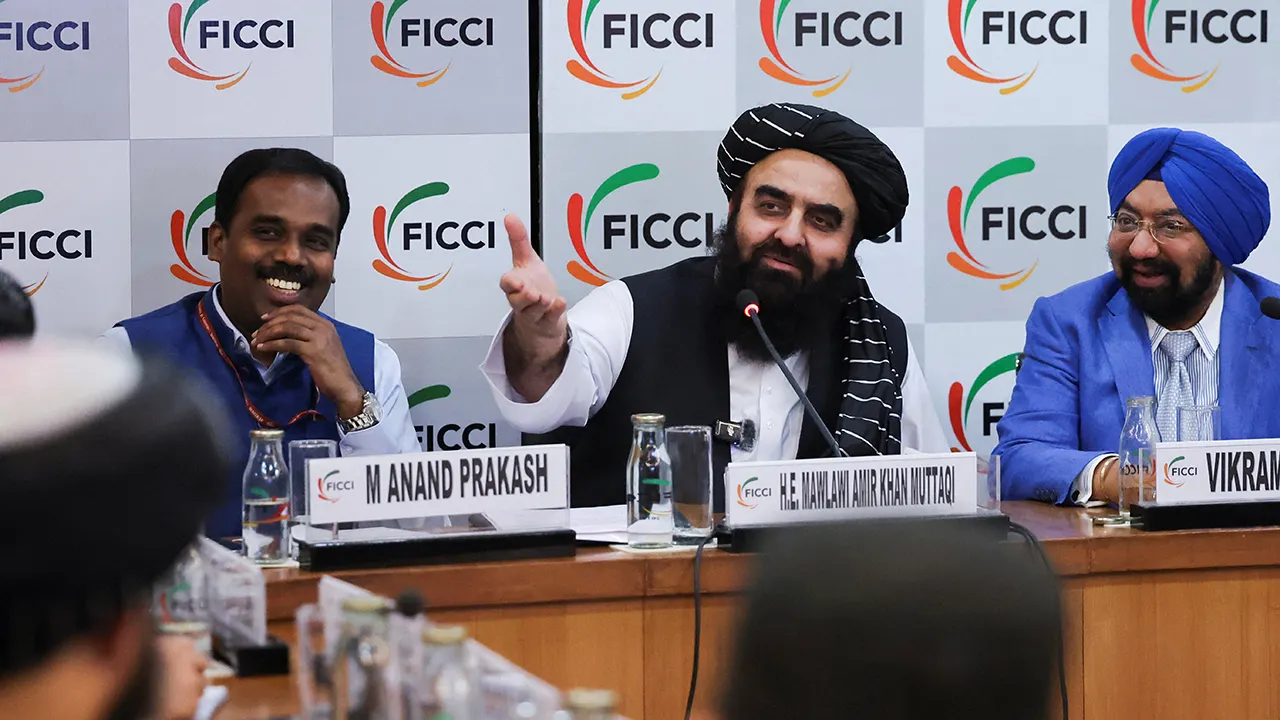
Nearly five years after the Taliban’s takeover of Afghanistan, Kabul has appointed its first envoy to India, marking a significant milestone in diplomatic engagement between the two countries.
Noor Ahmad Noor, a Taliban-appointed diplomat, has assumed responsibility as Chargé d’Affaires at the Afghan Embassy in New Delhi, the first such posting to India since the Taliban returned to power more than four years ago. The move signals a strengthening relationship as India’s role in Afghanistan continues to evolve.
This renewed political and economic engagement comes amid escalating cross-border violence between Afghanistan and Pakistan, which has driven relations between the two neighbors to their lowest point in years. Just this week, tensions flared again after a fresh round of deadly strikes and clashes. Nuclear-armed India swiftly condemned Islamabad over the attacks and voiced support for Kabul’s sovereignty.
Against this backdrop of regional hostilities, India stands to gain significant strategic advantages. Experts view India’s reset with the Taliban as a pragmatic approach aimed at countering Pakistani influence while protecting its own security interests in the region.
“This is a classic case of ‘the enemy of my enemy is my friend,'” explained Sid Dubey, a visiting professor at Bennett University in India. “The only thing the two parties are mutually aligned on is Pakistan and the enmity both have toward the Islamic Republic.”
Kabul’s deteriorating relationship with Islamabad plays heavily into India’s strategic calculations. For decades, Pakistan sought what it termed “strategic depth” in Afghanistan, supporting Taliban factions to ensure a friendly government next door. Now, as tensions escalate over border disputes, closer coordination between India and Afghanistan stretches Pakistan’s capacity to manage conflicts on multiple fronts.
The situation also presents India with an opportunity to extend its influence in the region at the expense of another rival, China. Though Pakistan physically separates India and Afghanistan, this emerging strategic alignment between New Delhi and Kabul holds particular significance in the regional power balance.
“Afghanistan is cursed by its geography and proximity to foreign powers who will always meddle,” Dubey noted, as regional fault lines continue to deepen. “And with virtually no American influence on the Taliban government anymore, Delhi feels secure in going ahead with its own India-centric Afghan policy.”
Like most nations, India does not formally recognize the Taliban regime. Nevertheless, both countries have taken a series of quiet but significant steps to strengthen ties over the past year. Several high-level diplomatic interactions have been characterized as groundbreaking, with cooperation expanding across healthcare, humanitarian aid, cultural exchanges, and economic projects.
According to Dubey, there’s another strategic motivation behind Delhi’s engagement. “India supports all this in the hope or understanding that one day, if needed, India can use Afghanistan as a platform to strike Pakistan.”
For its part, Kabul is embracing this new era of cooperation, welcoming stronger ties with India while Pakistan views these developments with deep suspicion. Engagement with India also offers the Taliban a measure of international legitimacy that it has struggled to achieve since taking power.
Afghanistan remains one of the world’s poorest and least developed countries, heavily dependent on external assistance. India’s humanitarian aid and economic support provide tangible benefits to a nation still grappling with the aftermath of decades of conflict and instability.
If sustained, India’s growing engagement with the Taliban could fundamentally reshape regional dynamics. A weakened Pakistan-Taliban relationship undercuts Islamabad’s long-standing influence in Kabul, altering the established balance of power. It also complicates China’s strategic calculations as Beijing weighs its own security concerns in the region.
Looking ahead, should Washington again expand its involvement in Afghanistan, New Delhi could potentially serve as a key intermediary, leveraging its strengthening relationship with Kabul alongside its increasingly robust partnership with the United States.
The appointment of an Afghan envoy to India represents more than a diplomatic formality—it signals a significant shift in South Asian geopolitics. As traditional alliances fracture and new partnerships form, the strategic chessboard of the region continues to evolve, with implications that extend far beyond the borders of Afghanistan, Pakistan, and India.
For now, both New Delhi and Kabul appear to find mutual benefit in their growing relationship, even as regional tensions continue to simmer and the humanitarian situation in Afghanistan remains dire.
Fact Checker
Verify the accuracy of this article using The Disinformation Commission analysis and real-time sources.

10 Comments
The appointment of a Taliban envoy to India is a significant milestone that reflects the shifting regional alliances. This move could open up new economic and political opportunities, but it will also require delicate diplomacy given the complex history between the various parties involved.
You make a good point. India will need to balance its interests and relationships in the region, while also being mindful of the potential risks and security implications of this new diplomatic channel with the Taliban.
This diplomatic milestone between the Taliban and India is interesting, given the complex regional dynamics. It will be important to watch how this relationship evolves and what strategic advantages India may gain in the process.
Agreed, the shifting alliances in the region are quite intriguing. India will likely try to balance its interests and influence, while navigating the delicate situation with its neighbor Pakistan.
This is an interesting development in the regional power dynamics, as India looks to strengthen its ties with the Taliban government in Afghanistan. It will be worth monitoring how this relationship unfolds and what impacts it may have on the broader regional security landscape.
Absolutely, the regional security implications of this diplomatic move are crucial. India will need to carefully navigate its relationships with both the Taliban and Pakistan to protect its interests.
This diplomatic development between the Taliban and India is intriguing, particularly in the context of the ongoing tensions between Afghanistan and Pakistan. It will be important to closely monitor how this relationship evolves and what strategic advantages India may be able to gain in the region.
Agreed, the regional dynamics are quite complex, and India will need to tread carefully as it navigates this new diplomatic landscape. The potential economic and political opportunities, as well as the security implications, will be crucial factors to consider.
The appointment of a Taliban envoy to India is a notable development, particularly in light of the recent cross-border tensions between Afghanistan and Pakistan. This move could open up new economic and political opportunities for all parties involved.
You raise a good point. India will likely seek to leverage this new diplomatic channel to advance its strategic interests in the region, while also maintaining a careful balancing act.