


Listen to the article
Afghanistan and Pakistan Exchange Heavy Border Fire in Escalating Conflict
Afghanistan and Pakistan exchanged significant cross-border fire on Thursday, marking a serious escalation in hostilities along their shared 1,615-mile frontier. The clashes, which reportedly lasted more than two hours, have threatened a ceasefire agreement that had been in place since 2025.
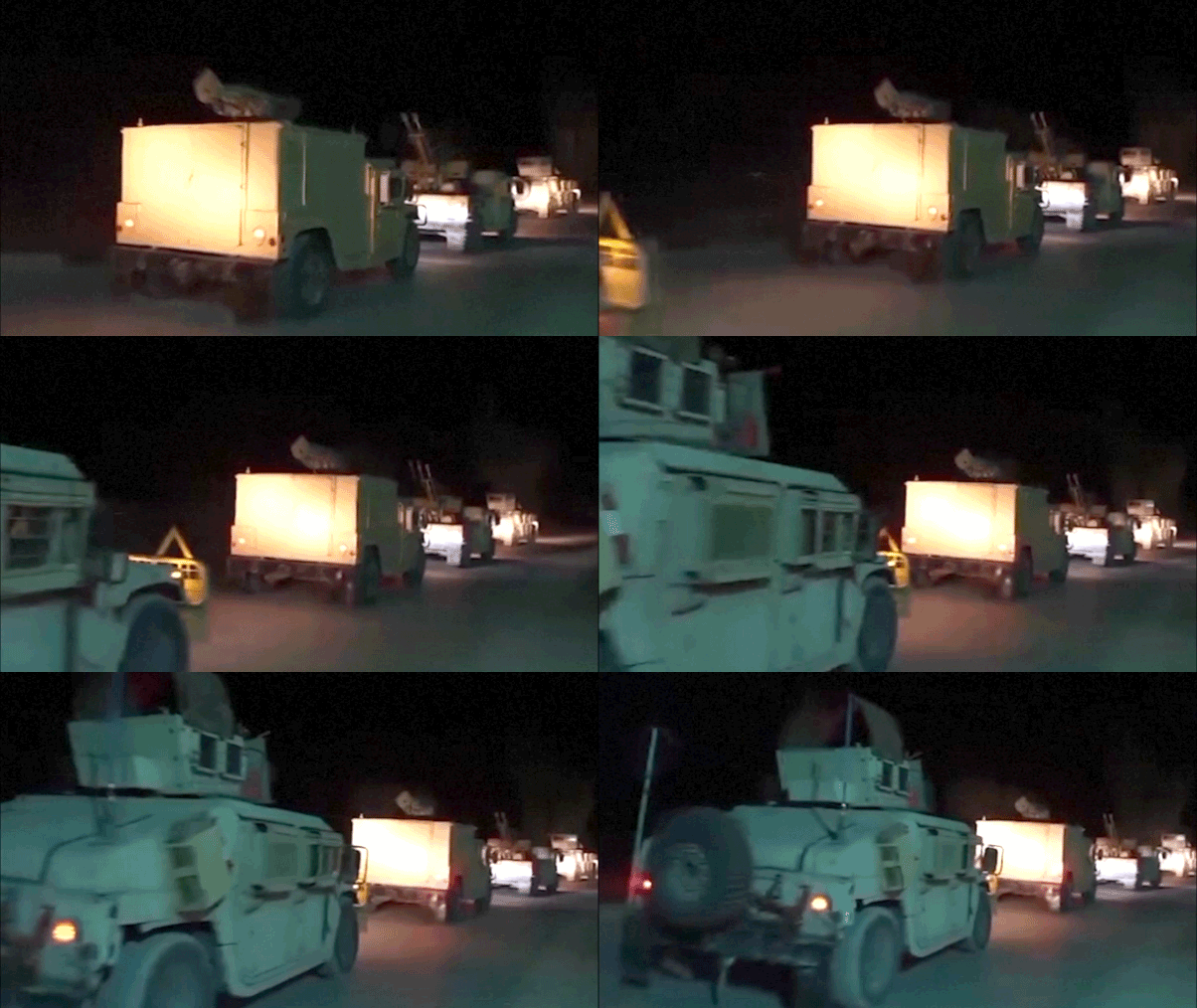
The Taliban claimed it launched “extensive preemptive operations” against Pakistani military positions in response to airstrikes carried out by Pakistan earlier in the week. Taliban spokesperson Zabihullah Mujahid announced on social media that “specialized laser units” were operating at night as part of their offensive.
“In response to repeated provocations, extensive preemptive operations have been launched against Pakistani military positions along the Durand Line,” Mujahid wrote on X, referring to the colonial-era border between the two nations.
The escalation follows Pakistani airstrikes inside Afghanistan earlier this week that Taliban officials say killed at least 18 people. Pakistan has insisted these strikes targeted militant hideouts and has rejected claims that civilians were harmed in the operations.
Both sides have issued contradictory statements about Thursday’s exchange. The Taliban claimed to have killed “numerous” Pakistani soldiers and taken others captive, while also reporting that Pakistani forces had “bombed some places in Kabul, Kandahar, and Paktia,” though allegedly without causing casualties.
Pakistan’s Ministry of Information and Broadcasting rejected the Taliban’s account, instead describing the incident as an “unprovoked action” by Taliban forces that received an “immediate and effective response” from Pakistani security forces. Pakistani officials claimed their counterattack resulted in “heavy casualties on the Afghan side with multiple posts and equipment destroyed.”
Pakistani security sources told Reuters that 22 Taliban personnel were killed and several quadcopters shot down during the engagement, though these claims could not be independently verified.
The border tensions reflect deeper security concerns between the neighboring countries. Pakistan has repeatedly accused the Taliban of harboring militants from Tehrik-i-Taliban Pakistan (TTP), commonly known as the Pakistani Taliban, who have been responsible for a surge in violence and suicide attacks within Pakistan.
Just one day before February’s airstrikes, Pakistani officials claimed to possess “irrefutable evidence” that militants were launching attacks from Afghan territory. The Afghan Taliban has consistently denied these accusations.
The current fighting is particularly significant as it threatens to unravel diplomatic efforts that had led to the 2025 ceasefire. The heavily militarized border region has long been a flashpoint between the two countries, with disputes over territory and security arrangements predating the Taliban’s return to power in Afghanistan in 2021.
Regional analysts fear this escalation could destabilize an already volatile area, potentially drawing in other powers with interests in the region. Both countries face significant domestic challenges, with Afghanistan struggling under Taliban rule and international isolation, while Pakistan grapples with political instability and economic difficulties.
International organizations are monitoring the situation closely, with concerns that continued military exchanges could trigger a humanitarian crisis in border communities already affected by decades of conflict. So far, there have been no reports of large-scale civilian displacements, but that could change if hostilities intensify.
As both sides maintain their contradictory narratives about who initiated the conflict, diplomatic channels remain crucial to preventing further escalation along this historically contentious frontier.
Fact Checker
Verify the accuracy of this article using The Disinformation Commission analysis and real-time sources.

11 Comments
The use of advanced military technology by the Taliban is a worrying development. I hope both sides can exercise restraint and focus on finding a peaceful resolution to this conflict. Continued hostilities will only lead to more destruction and suffering for the people of the region.
This situation is a complex one, with historical tensions and competing claims over the Durand Line border. I wonder if there are any opportunities for third-party mediation or regional cooperation to help de-escalate the situation and find a lasting solution.
It’s unfortunate to see the ceasefire agreement between Afghanistan and Pakistan breaking down. This will likely have significant regional implications, potentially disrupting trade, security, and humanitarian efforts. I hope both governments can find a way to restore stability along the border.
This conflict is deeply concerning, as it has the potential to destabilize an already fragile region. I hope the international community can step in to mediate and prevent further escalation. The civilian populations on both sides of the border are likely bearing the brunt of this violence.
You’re absolutely right. The civilians caught in the crossfire are the ones who suffer the most in these types of conflicts. A diplomatic solution is desperately needed to protect innocent lives.
The use of airstrikes by Pakistan and the Taliban’s retaliation with ‘specialized laser units’ is a worrying development. I hope both sides can exercise restraint and focus on finding a peaceful resolution to this conflict. Further escalation will only lead to more bloodshed.
The Taliban’s claim of using ‘specialized laser units’ as part of their offensive operations is quite alarming. This suggests they have access to advanced military technology, which could further inflame the conflict. I wonder what the international community’s response will be to this latest flare-up.
This is a concerning development, as the conflict between Afghanistan and Pakistan has the potential to spill over and impact the wider region. I wonder what the implications will be for regional security and economic cooperation if this situation continues to deteriorate.
You raise a good point. Regional instability and deteriorating security could have far-reaching consequences, potentially disrupting trade, investment, and humanitarian aid efforts. A diplomatic solution is urgently needed to prevent further escalation and protect civilian lives.
The breakdown of the ceasefire agreement is deeply concerning. I hope the international community can put pressure on both Afghanistan and Pakistan to return to the negotiating table and find a diplomatic solution. Continued hostilities will only serve to destabilize the region further.
This is a troubling development. Tensions between Afghanistan and Pakistan have been simmering for years, and it’s concerning to see such a serious escalation in cross-border hostilities. I hope both sides can deescalate the situation quickly and find a diplomatic solution.