


Listen to the article
Study Confirms Subway Riders’ Complaints About Heat Are Justified
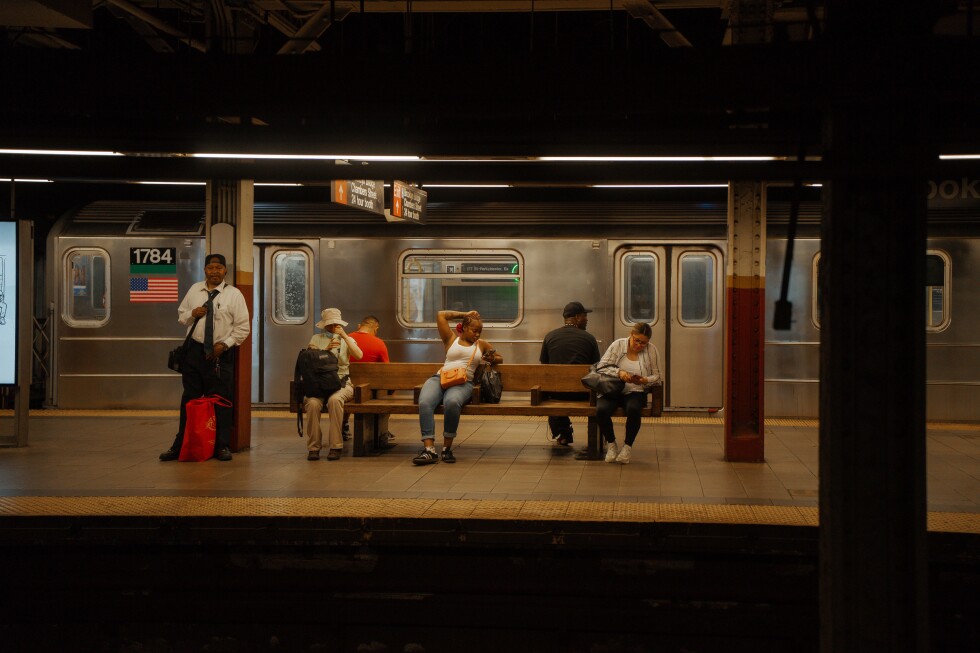
As temperatures climb above ground, a new study reveals subway passengers in major cities are increasingly uncomfortable with the heat below ground—and social media data proves it.
The research published Tuesday in the journal Nature Cities analyzed over 85,000 posts on X (formerly Twitter) and Google Maps reviews between 2008 and 2024, focusing on thermal discomfort in subway systems in New York, Boston, and London. Northwestern University researchers specifically searched for heat-related keywords like “hot” and “warm,” filtering out unrelated uses such as “hot dog.”
The findings confirm what many commuters have long suspected: subway systems get uncomfortably hot during warm months, and climate change is making the problem worse.
“People generally expect underground spaces to be naturally cooler, but our data shows that’s increasingly not the case,” said Giorgia Chinazzo, assistant professor in Northwestern’s Department of Civil and Environmental Engineering and co-author of the study.
The research established a clear correlation between rising outdoor temperatures and heat complaints. For each 1-degree Fahrenheit (0.56-degree Celsius) increase in surface temperature, complaints rose 10% in Boston, 12% in New York, and a substantial 27% in London. This is particularly concerning given that Earth’s average temperature has already warmed by 1 degree Fahrenheit between 2008 and 2024, according to NOAA data.
Interestingly, the timing of complaints revealed behavioral patterns. “Over weekends, people complained less,” noted Chinazzo. One explanation might be differences in clothing choices between workdays and weekends, with business attire potentially exacerbating heat discomfort.
The study has implications for public transit systems worldwide as global temperatures continue to rise. Transit authorities may need to invest in cooling technologies, improved ventilation systems, or schedule adjustments to maintain comfortable conditions for riders.
Flavio Lehner, an assistant professor at Cornell University not involved in the study, pointed out some limitations in the research approach. “While the methodology follows templates of previous studies linking environmental conditions to human behavior using social media data, it’s limited to only three transit systems,” Lehner said. He added that controlling for factors influencing social media behavior can be challenging.
University of Washington professor Kris Ebi raised another important concern: the actual impact of subway heat is likely more severe than the study suggests since vulnerable populations are underrepresented on social media platforms. This includes elderly riders, those with medical conditions, and economically disadvantaged groups who may lack consistent internet access.
Despite these limitations, Ebi believes the large sample size “provides compelling evidence that cities should be planning for measures to keep people safe during hot weather.” This could include installing fans, operating cooling systems at strategic times, or providing drinking water during heat waves.
Transit authorities already face challenges from extreme heat. In July 2022, London’s King’s Cross station distributed water bottles to passengers during an unprecedented heat wave that disrupted rail service. Such measures may become routine rather than exceptional as climate change intensifies.
The subway temperature issue represents a growing challenge for urban planners and transit officials. As cities work to reduce carbon emissions by encouraging public transportation use, ensuring those systems remain comfortable becomes increasingly important.
“We’re all experiencing rising temperatures above ground, which are reflected underground and in increasing complaints,” said Chinazzo. “Mitigation and adaptation strategies will be much more implemented in the future. We need new technologies, tools, and methodologies that people can use to face these temperature changes that everyone is experiencing nowadays—and it will be worse in the future.”
Fact Checker
Verify the accuracy of this article using The Disinformation Commission analysis and real-time sources.

7 Comments
Interesting study. I wonder how the rising temperatures will impact subway ridership and commuter behavior in the long run. Seems like a growing issue that transit agencies will have to address.
You’re right, the heat could become a major deterrent for subway use, especially in the summer months. Transit agencies will need to find ways to improve cooling and ventilation.
It’s good to see data backing up the common frustration of sweaty, stifling subway rides. Hopefully this prompts action to improve cooling and ventilation in these systems.
I’ve definitely experienced the oppressive heat in subway systems during the summer. It’s amazing how much hotter it can feel underground compared to the surface. Glad to see this issue getting more attention.
Absolutely, the heat in subway tunnels can be brutal. Seems like an underappreciated challenge that needs more investment and innovation from transit providers.
Subway heat is a real quality of life issue for urban commuters. This research provides useful evidence that transit agencies should take seriously as they plan for the future.
This is an important study highlighting a growing challenge for cities with aging subway infrastructure. Curious to see what solutions transit agencies come up with to keep passengers comfortable as temperatures rise.