


Listen to the article
Desperate Flight from a City Under Siege: A Sudanese Doctor’s Harrowing Escape
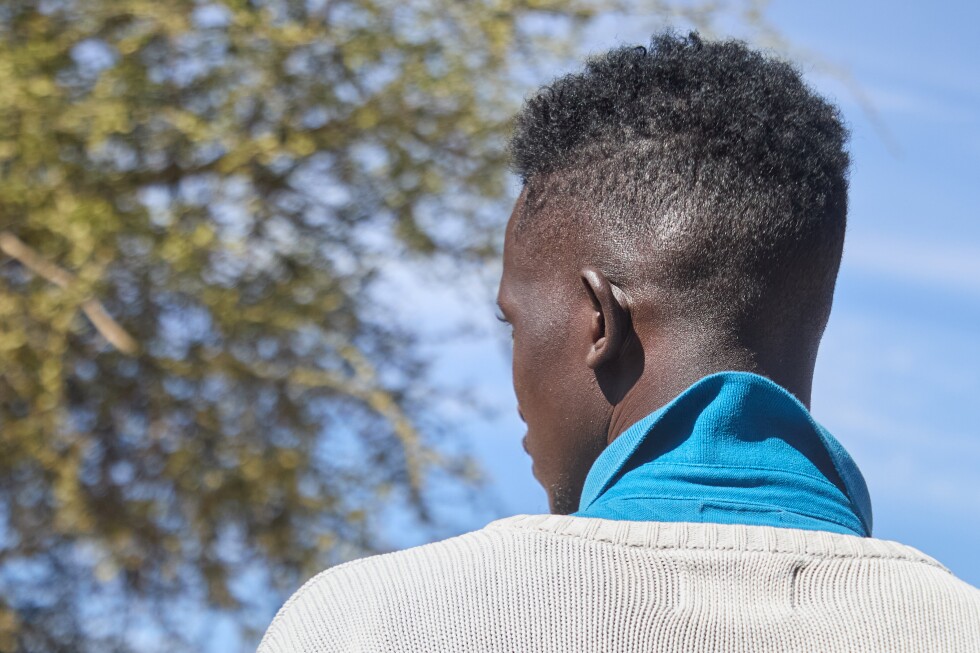
Dr. Mohamed Ibrahim ran frantically through the streets of el-Fasher, dodging gunfire as the capital of Sudan’s North Darfur province fell to paramilitary fighters. Bodies littered the streets while smoke and flames engulfed buildings across the city.
“All around we saw people running and falling to the ground,” the 28-year-old physician recalled of the assault that began October 26 and continued for three days.
After 18 months of fighting, the Rapid Support Forces (RSF) had finally overrun the Sudanese army’s last stronghold in the Darfur region. The brutal takeover has only recently come into focus, with United Nations officials describing the city as a “massive crime scene.” The exact death toll remains unknown, but thousands of civilians were killed in what officials believe was an orchestrated campaign of violence.
UN representatives estimate only 40% of el-Fasher’s 260,000 residents managed to escape the onslaught alive. When humanitarian teams finally accessed the city in late December, they found it largely deserted, with minimal signs of life amid widespread destruction.
The RSF, which evolved from Sudan’s notorious Janjaweed militias, had been an ally of the military when it toppled Sudan’s civilian-led government in the 2021 coup. But the relationship quickly deteriorated into rivalry and then all-out war. By October, the two forces had been fighting fiercely for more than two years in Darfur, a region already notorious for genocide and other atrocities dating back to the early 2000s.
El-Fasher’s strategic importance made it a prime target. As the RSF—accused by the Biden administration of committing genocide in the ongoing conflict—surrounded the city, civilians were reduced to eating animal fodder as food supplies dwindled. Ibrahim’s family fled after shelling destroyed their home in April, but the doctor stayed behind to work at the Saudi Maternity Hospital, one of the few medical facilities still functioning.
Ibrahim was treating patients early on October 26 when the shelling intensified. “It was obvious that the city was falling,” he said. Around 7 a.m., he and another doctor decided to flee on foot toward a nearby army base.
Their timing proved critical. Just an hour later, RSF fighters stormed the hospital, killing a nurse and wounding three others. Two days later, the militants returned in a more devastating attack, killing at least 460 people and abducting six health workers, according to the World Health Organization.
What should have been a quick journey to the military installation became a nine-hour ordeal as Ibrahim navigated a city under siege. He darted between buildings and sometimes jumped between rooftops to avoid detection. At one point, he hid inside an empty water tank, listening to the screams of civilians being hunted by gunmen as shelling continued without pause for two hours.
He passed dozens of bodies along his route before finally reaching the military base around 4 p.m. Thousands of people—mostly women, children, and the elderly—had sought refuge there. Many were injured, and Ibrahim used torn clothing to dress their wounds as best he could.
By 8 p.m., Ibrahim joined about 200 others attempting to reach Tawila, a town 43 miles away that had swelled with tens of thousands of people fleeing the violence. The group encountered massive trenches—10 feet deep—that RSF fighters had dug to tighten their blockade of el-Fasher. Many people turned back, unable to climb the steep walls. Their fate remains unknown.
At the final trench, those ahead of Ibrahim came under fire as they climbed out. He and his colleague lay flat until the shooting subsided, then emerged to find five people dead and many wounded.
The survivors walked for hours toward Tawila. Around noon on October 27, they were stopped by RSF fighters who separated Ibrahim, his colleague, and three others from the group. The militants chained them to motorcycles and forced them to sprint behind as they drove to an RSF-controlled village.
“I didn’t want to tell them I was a doctor, because they exploited doctors,” Ibrahim said. “But my friend admitted he was a doctor, so I had to.”
The fighters immediately demanded ransom, initially setting the price at $20,000 per doctor. When Ibrahim laughed at the amount—an impossibly large sum in a country where monthly salaries range from $30 to $50—the militants beat him with rifles. After hours of abuse, Ibrahim’s colleague eventually negotiated the ransom down to $8,000 each.
With little choice, Ibrahim called his family to arrange the payment. After the money was transferred, the doctors were blindfolded and placed in a truck with fighters who claimed to be taking them to Tawila. Instead, they were abandoned in RSF-controlled territory, raising fears they would be recaptured. Eventually, they spotted tracks from horse-drawn carts and followed them to safety.
When they finally reached Tawila, Ibrahim reunited with other survivors, including a colleague from the Saudi hospital who had seen video of the doctors’ capture on social media and assumed they had been killed.
“He embraced me and we both wept,” Ibrahim said. “He didn’t imagine I was still alive. It was a miracle.”
The RSF did not respond to requests for comment about the attack or Ibrahim’s account. Meanwhile, international agencies continue to document the atrocities in what has become one of Africa’s most devastating ongoing humanitarian crises, with millions displaced and countless lives lost in Sudan’s brutal civil war.
Fact Checker
Verify the accuracy of this article using The Disinformation Commission analysis and real-time sources.

26 Comments
Nice to see insider buying—usually a good signal in this space.
Good point. Watching costs and grades closely.
Good point. Watching costs and grades closely.
Nice to see insider buying—usually a good signal in this space.
Good point. Watching costs and grades closely.
Exploration results look promising, but permitting will be the key risk.
Good point. Watching costs and grades closely.
Production mix shifting toward World might help margins if metals stay firm.
Interesting update on Takeaways from AP’s report on a Sudanese doctor’s escape from a Darfur city under rebel attack. Curious how the grades will trend next quarter.
Good point. Watching costs and grades closely.
Good point. Watching costs and grades closely.
Exploration results look promising, but permitting will be the key risk.
Good point. Watching costs and grades closely.
Good point. Watching costs and grades closely.
Uranium names keep pushing higher—supply still tight into 2026.
Good point. Watching costs and grades closely.
The cost guidance is better than expected. If they deliver, the stock could rerate.
Good point. Watching costs and grades closely.
Good point. Watching costs and grades closely.
Silver leverage is strong here; beta cuts both ways though.
I like the balance sheet here—less leverage than peers.
Good point. Watching costs and grades closely.
Good point. Watching costs and grades closely.
If AISC keeps dropping, this becomes investable for me.
Good point. Watching costs and grades closely.
Good point. Watching costs and grades closely.