


Listen to the article
Taiwan’s President Affirms “Rock Solid” U.S. Relations Following Trump-Xi Call
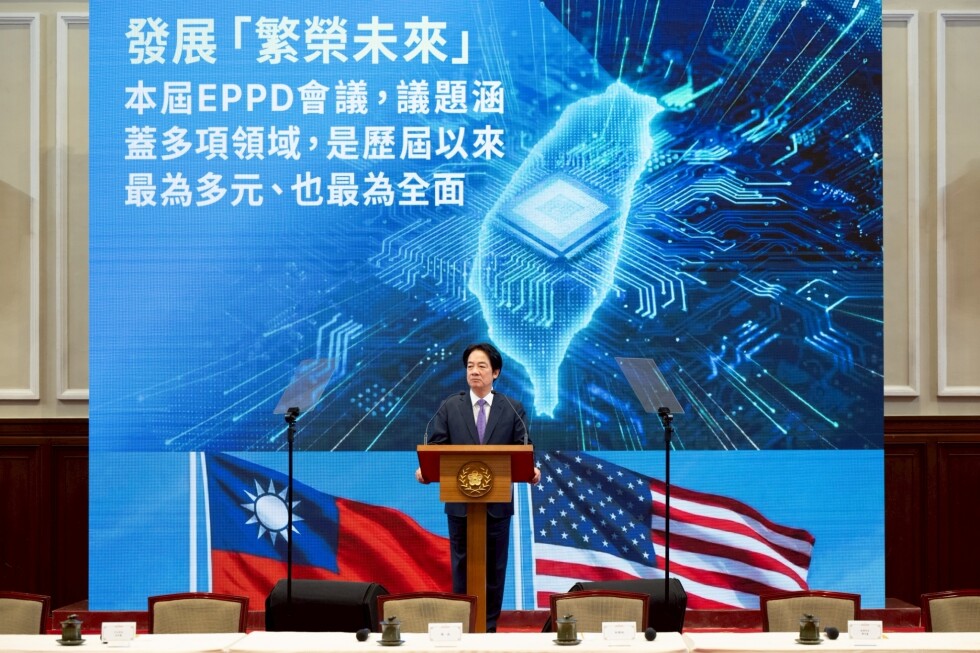
Taiwan’s President Lai Ching-te reassured his nation Thursday that relations with the United States remain “rock solid,” just hours after a high-profile phone conversation between U.S. President Donald Trump and Chinese leader Xi Jinping that included discussions about the island’s future.
“The Taiwan-U.S. relationship is rock solid, and all cooperation projects will continue uninterrupted,” President Lai told reporters while visiting textile merchants in western Taiwan, emphasizing continuity in the crucial partnership.
The call between Trump and Xi marked their first direct communication since November, with the Chinese readout revealing that Xi urged Trump to exercise caution regarding U.S. arms sales to Taiwan. Beijing has consistently opposed such military support, viewing it as interference in what it considers an internal matter.
Taiwan exists in a complex geopolitical position as a self-governed democracy that China claims as its own territory, threatening to annex by force if necessary. While the United States maintains a policy of “strategic ambiguity” and does not officially recognize Taiwan as an independent country, it serves as the island’s most important unofficial ally and primary weapons supplier.
The stakes in this triangular relationship rose substantially in December when the U.S. State Department proposed an unprecedented $11.1 billion arms package for Taiwan. The proposal includes advanced missiles, artillery systems, and drones—military hardware that would significantly enhance Taiwan’s defensive capabilities against potential Chinese aggression. The package awaits Congressional approval.
Beijing’s response to the proposed arms sale was swift and forceful. China conducted extensive military exercises around Taiwan in late December, deploying air force, navy, and missile units in a clear demonstration of its military capabilities and resolve.
Domestically, Taiwan faces its own political challenges regarding defense preparations. The opposition Kuomintang (KMT) party, which now controls parliament, has blocked President Lai’s budget plans, including a proposed $40 billion special defense budget. The opposition has instead pushed for significantly reduced defense expenditures, complicating Taiwan’s efforts to strengthen its military posture amid growing regional tensions.
President Lai has advocated increasing defense spending to 3.3% of Taiwan’s gross domestic product, a proposal that has encountered resistance not only from political opponents but also from segments of the Taiwanese population concerned about economic impacts.
Meanwhile, Trump characterized his conversation with Xi as “excellent” and “thorough” in a post on his Truth Social platform late Wednesday. He also mentioned looking forward to visiting China in April, which would mark his first trip there during his current term in office.
The call appeared to cover economic matters as well, with Trump noting that China is considering purchasing 20 million tons of U.S. soybeans in the current season—a substantial increase from the 12 million tons purchased in the previous season. This potential agricultural deal could represent a significant boost for American farmers and signal warming trade relations between the world’s two largest economies.
The discussion comes at a critical time for all three parties involved. Taiwan recently inaugurated President Lai, whom Beijing considers a “dangerous separatist.” The United States continues navigating its complex role as both Taiwan’s defender and a major economic partner with China. And China maintains its unwavering position that Taiwan must eventually reunite with the mainland under Beijing’s control.
As regional tensions continue to simmer, the diplomatic and military calculations made in Washington, Beijing, and Taipei will shape the security landscape of East Asia for years to come.
Fact Checker
Verify the accuracy of this article using The Disinformation Commission analysis and real-time sources.

16 Comments
I’m curious to see how the Biden administration handles the Taiwan issue. Maintaining stability in the Taiwan Strait will be a key foreign policy challenge.
That’s a good point. The new administration will have to carefully navigate Taiwan policy while managing the complex US-China relationship.
The Taiwan-US relationship is indeed ‘rock solid’ as President Lai described. Both sides have strong incentives to maintain stability and continuity in their partnership.
Agreed. Taiwan’s geopolitical significance means the US can’t afford to jeopardize its ties with the island, even as it manages relations with China.
It’s reassuring that Taiwan-US ties remain strong despite the Trump-Xi call. Taiwan’s democracy and autonomy are important geopolitical counterweights in the region.
Absolutely. Taiwan’s strategic location and democratic institutions make it a vital partner for the US in the Asia-Pacific.
Consistent US support for Taiwan is crucial, but the Biden team will need to be cautious about escalating tensions with China over this issue.
Good point. Finding the right balance between supporting Taiwan and avoiding direct confrontation with China will be tricky.
The US-Taiwan relationship is indeed rock solid, as President Lai emphasized. Both sides have an interest in preserving the status quo and avoiding any unilateral changes.
Agreed. China’s opposition to US arms sales to Taiwan is understandable, but the US has to balance its commitments to Taiwan’s defense.
It’s good to see Taiwan and the US maintaining strong ties despite the complex geopolitical situation. Consistent cooperation is crucial for stability in the region.
Absolutely. The US needs to keep walking the line of supporting Taiwan while avoiding direct confrontation with China.
It’s encouraging to see Taiwan’s president emphasizing the durability of US-Taiwan ties. Maintaining that close cooperation will be vital in the years ahead.
Absolutely. The US has to keep walking a fine line, supporting Taiwan’s autonomy without provoking a direct confrontation with China.
Taiwan’s president is right to highlight the ‘rock solid’ nature of US-Taiwan relations. Sustaining that partnership will be a key priority for the Biden administration.
Agreed. The US has to carefully manage its commitments to Taiwan while avoiding actions that could escalate tensions with China.