


Listen to the article
Syrian Army’s Advance into Kurdish Territory Leads to Fragile Ceasefire Amid International Concerns
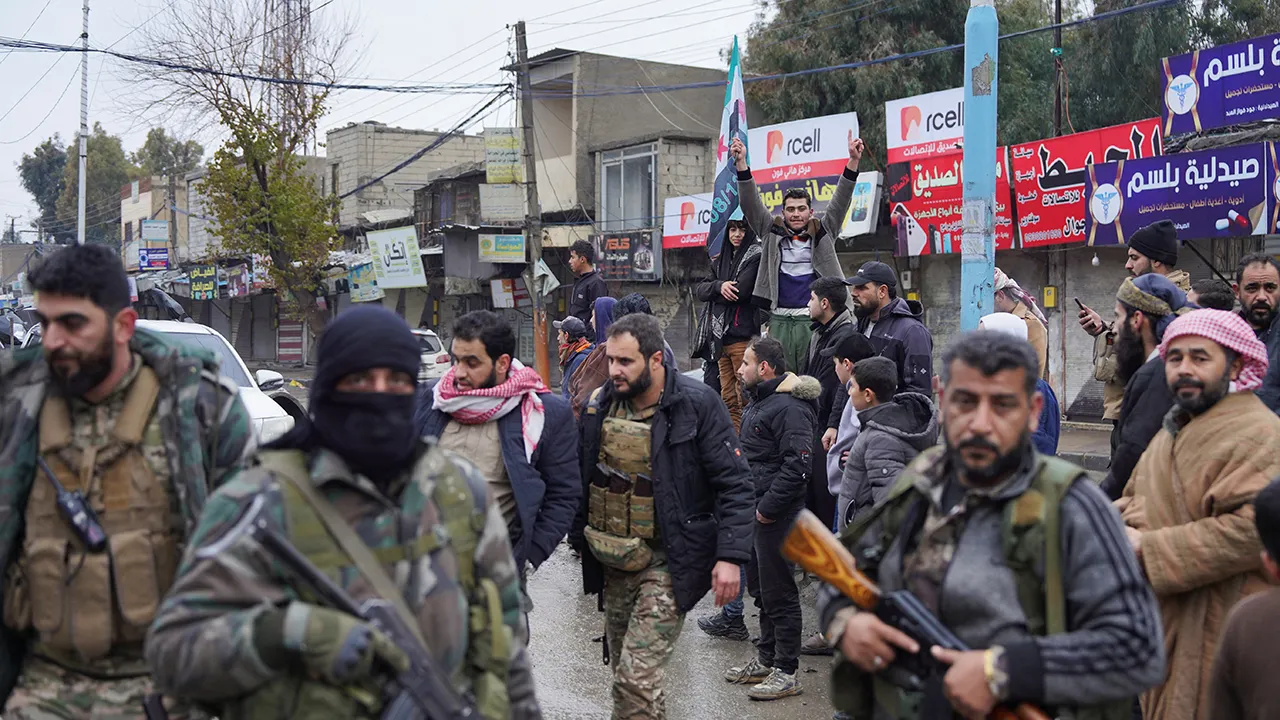
The Syrian army’s swift conquest of territories previously held by the U.S.-allied Syrian Democratic Forces (SDF) culminated Sunday in a tenuous ceasefire agreement, drawing sharp criticism from U.S. officials and regional experts concerned about the actions of President Ahmed al-Sharaa’s forces.
Senate Foreign Relations Committee Chairman Jim Risch, R-Idaho, issued a cautious statement regarding the situation, telling Fox News Digital: “The Syrian government’s decree to respect Kurdish rights is a good sign, but the conduct of its forces on the ground must match.” Risch emphasized that continued division and violence in Syria would primarily benefit dangerous actors like ISIS and Iran, who exploit the country as “a breeding ground for international terrorism.”
Despite the announced ceasefire, reports from the region indicate ongoing skirmishes between Syrian government forces and SDF fighters. This raises questions about the durability of the agreement and the commitment of al-Sharaa, a former U.S.-designated terrorist with ties to ISIS and al-Qaeda.
The offensive, which began Saturday, allowed government troops to capture significant territory on both sides of the Euphrates River, including Syria’s largest oil and gas fields. These areas had been under the semi-autonomous Kurdish authorities’ control for nearly a decade.
People’s Protection Units (YPG) commander Sipan Hamo, whose forces are part of the SDF, expressed skepticism about the peace process. He denied Kurdish separatist ambitions but called for more decisive U.S. intervention, stating, “Our greatest hope is that there will be a tangible outcome, especially from the coalition and the United States, meaning that they will intervene more forcefully in the existing problems than what they are currently doing.”
U.S. Ambassador to Turkey and Special Envoy for Syria, Tom Barrack, attempted to portray the agreement in positive terms on social media, describing it as a partnership between “two great Syrian leaders” who share “the vision of liberating their country and people from tyranny.” He added that al-Sharaa had affirmed Kurds as “an integral part of Syria.”
However, Kurdish officials seem less confident about the promises. In a rare interview from Hasakeh province, Hamo placed responsibility for the current situation squarely on Western nations, particularly the United States: “We believe that the responsibility for everything currently happening inside Syria lies with the Western countries, and especially the United States of America.”
Concerns about the treatment of minority groups under al-Sharaa’s leadership have intensified following reports of government forces desecrating Kurdish monuments and allegedly releasing ISIS prisoners. Kurdish Affairs analyst Mutlu Civiroglu shared footage purportedly showing al-Sharaa supporters toppling “a statue of a female Kurdish fighter” in Tabqa, a town that Kurdish fighters, backed by the U.S., had liberated from ISIS in May 2017.
“Al-Sharaa’s confrontations with Kurdish forces, following earlier pressure on Alawite and Druze areas, reinforce doubts about the interim government’s legitimacy and its ability to represent Syria’s diverse population,” Civiroglu told Fox News Digital. He suggested that al-Sharaa may be “abusing the political space that was meant to support stability rather than deepen tensions.”
Max Abrahms, a counterterrorism expert and professor at Northeastern University, emphasized the critical role Kurdish forces played in fighting ISIS: “The YPG and then SDF were America’s primary counterterrorism forces against Islamic State in Syria during the war. Unlike the so-called ‘rebels,’ our Kurdish warrior friends exhibited both capability and moderation.”
The situation remains fluid, with the international community watching closely to see whether the ceasefire will hold and if al-Sharaa’s government will uphold its promises to respect Kurdish rights. For now, the future of Kurdish-controlled territories and the U.S. relationship with its longtime allies in the fight against ISIS hangs in the balance.
Fact Checker
Verify the accuracy of this article using The Disinformation Commission analysis and real-time sources.

10 Comments
The situation in Syria is deeply concerning. While a ceasefire is a positive step, the Senator is right to demand concrete actions from the regime to protect Kurdish rights and avoid further escalation.
The fragility of this ceasefire is worrying. The Syrian regime’s past record on human rights and territorial aggression makes me question whether they can be trusted to uphold their commitments this time.
I share your skepticism. Sustained international monitoring and consequences for violations will be essential to ensuring this ceasefire leads to meaningful progress.
This is a delicate moment. The Senator is right to call for actions matching the words. Syria’s history of broken promises means the international community must remain vigilant and apply pressure to keep the ceasefire in place.
While a ceasefire is welcome news, the situation in Syria remains extremely volatile. The territorial gains by the Syrian army are concerning and raise doubts about the regime’s true intentions.
Absolutely. The involvement of groups like ISIS and Iran further complicates matters. Durable peace in Syria will require addressing these complex regional dynamics.
Cautious optimism on the ceasefire, but the proof will be in the actions on the ground. Syria’s history of broken promises makes me skeptical unless we see sustained de-escalation and protection of Kurdish rights.
Agreed. The Syrian regime’s past conduct gives little reason for confidence. Ongoing monitoring and pressure will be critical to ensure this ceasefire holds.
Cautious optimism is warranted, but the proof will be in the regime’s conduct on the ground. Past behavior suggests they may not uphold their promises, so continued pressure and vigilance from the international community is critical.
Absolutely. The involvement of groups like ISIS and Iran adds further complexity. Durable peace will require a multifaceted approach to address the various regional dynamics at play.