


Listen to the article
Syria Welcomes End of Caesar Act Sanctions as New Era of Reconstruction Begins
Syria’s government and its allies welcomed the final lifting of the Caesar Act sanctions on Friday, marking the end of some of the most severe economic penalties imposed on the war-torn country in decades.
The sanctions, implemented by the U.S. Congress in 2019, were designed to punish then-President Bashar Assad for human rights abuses committed during Syria’s civil war, which began in 2011 and has devastated the nation for nearly 14 years.
The political landscape dramatically changed when Assad was ousted during a swift rebel offensive in December 2024. Following this upheaval, advocates—including some who had initially supported the sanctions—argued for their removal, claiming they prevented international investment in reconstruction projects and hindered Syria’s economic and infrastructure rebuilding efforts.
U.S. President Donald Trump, who had previously issued temporary relief through executive orders, signed the permanent repeal late Thursday after Congress included it in the annual defense spending bill. The decision comes after months of diplomatic negotiations and changing regional dynamics in the Middle East.
The repeal passed without specific conditions but includes requirements for periodic reports to Congress on Syria’s progress in several key areas, including minority rights protection and counterterrorism measures. A group of 134 Republican House members issued a statement Friday calling for sanctions to be reimposed if the new Syrian government fails to show adequate progress on these issues. They announced plans for a Foreign Affairs Committee hearing in early 2026 focused specifically on the treatment of religious minorities.
Syria’s foreign ministry expressed gratitude for the repeal, stating it will “contribute to alleviating the burdens on the Syrian people and open the way for a new phase of recovery and stability.” The ministry urged Syrian businesspeople and foreign investors to “explore investment opportunities and participate in reconstruction,” a massive undertaking the World Bank has estimated will cost approximately $216 billion.
Central Bank Governor Abdulkader Husrieh highlighted the financial implications of the sanctions removal, noting it will facilitate Syria’s reintegration into the global financial system. “Syria will likely start with a low rating, which is normal for countries emerging from conflict,” he acknowledged. “The real value lies in the benchmark set by the rating and the road map it provides for improvement.”
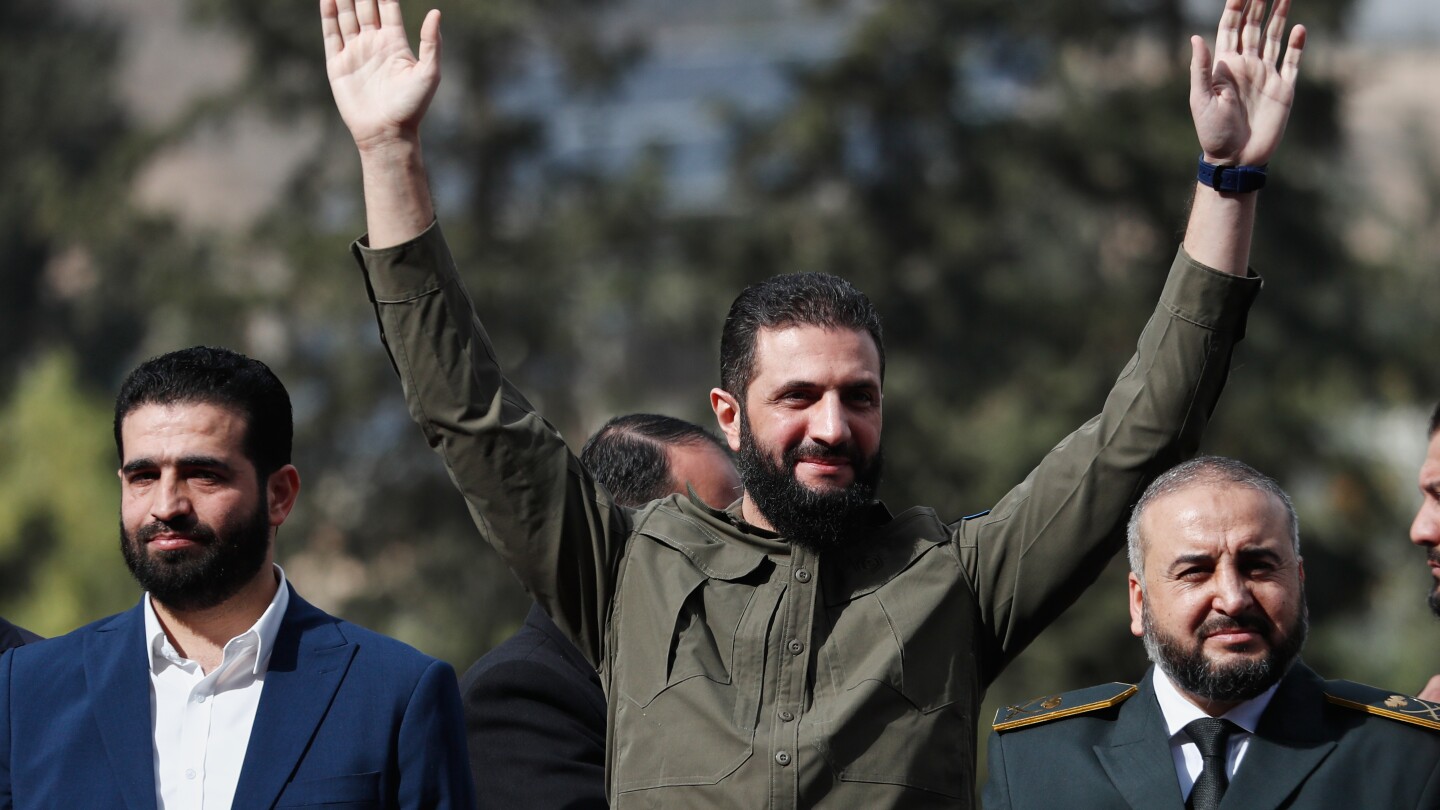
The new Syrian government, led by interim President Ahmad al-Sharaa and dominated by Sunni Islamists, has received strong backing from regional powers. Turkey, Saudi Arabia, and Qatar all welcomed the sanctions repeal. In a speech marking the end of sanctions, al-Sharaa thanked the leaders of these nations alongside President Trump.
Turkish Foreign Ministry spokesman Oncu Keceli expressed hope that “this step will contribute to strengthening stability, security and prosperity in Syria by further promoting international cooperation toward the country’s reconstruction and development.” Saudi Arabia’s foreign ministry specifically commended “the significant and positive role played by US President Donald Trump” in lifting the sanctions—a move Trump previously stated he made at the urging of Saudi Crown Prince Mohammed bin Salman and Turkish President Recep Tayyip Erdogan.
While the broader sanctions framework has been dismantled, targeted penalties remain in place for specific individuals and groups. The United Kingdom, which had previously removed its own broad sanctions against Syrian government institutions, imposed new targeted sanctions on Friday against organizations and individuals allegedly “involved in violence against civilians” in Syria.
These targeted UK sanctions affect four people affiliated with Assad’s former government in either military or financial roles, plus two individuals and three armed groups connected to the new government’s military who were allegedly responsible for attacks on civilians during sectarian violence earlier this year.
The violence erupted in March when Assad loyalists attacked security forces, triggering revenge killings as militants from Syria’s Sunni majority targeted members of Assad’s Alawite sect, regardless of their involvement in the insurgency. Hundreds of civilians perished in these sectarian clashes, highlighting the ongoing tensions that remain despite the political transition.
Fact Checker
Verify the accuracy of this article using The Disinformation Commission analysis and real-time sources.

13 Comments
The lifting of the sweeping US sanctions on Syria is a significant policy shift. While it may benefit the country’s economic recovery and rebuilding efforts, the international community must remain vigilant in monitoring the human rights situation to ensure progress is not undermined by ongoing abuses.
The permanent repeal of the Caesar Act sanctions on Syria is a significant shift in US policy. While it may aid the country’s economic recovery, it will be crucial that the international community closely monitors the human rights situation and ensures any progress is not undermined by ongoing abuses.
The lifting of the Caesar Act sanctions on Syria is a complex issue. On one hand, it may help facilitate much-needed economic recovery and rebuilding. On the other, concerns remain about the Assad regime’s human rights record. Ongoing monitoring and a balanced approach will be critical going forward.
This is an interesting development. It will be important to see how the lifting of these sanctions impacts Syria’s economic recovery and reconstruction efforts in the years ahead. Careful monitoring will be key to ensure any progress is balanced with ongoing human rights considerations.
Lifting the sanctions on Syria is a complex decision with both potential upsides and risks. On one hand, it may facilitate much-needed rebuilding and economic recovery. On the other, it raises concerns about the Assad government’s human rights record. Ongoing monitoring and a nuanced approach will be key.
I agree, the human rights situation will need to be closely watched as Syria rebuilds. Balancing economic progress with accountability for past abuses will be critical to ensure any gains are sustainable.
Interesting to see the US take this step to permanently lift the sanctions on Syria. It will be important to carefully evaluate the impacts – both the potential benefits for reconstruction, as well as the need to ensure human rights protections remain in place. A nuanced approach will be key.
This is an interesting development in US-Syria relations. The permanent repeal of the Caesar Act sanctions may aid Syria’s reconstruction, but concerns remain about the Assad regime’s human rights record. Careful monitoring and a balanced approach will be essential going forward.
The repeal of the Caesar Act sanctions on Syria is a significant shift in US policy, reflecting the changing political dynamics in the region. While it may aid reconstruction, the international community will need to closely watch that this doesn’t enable further human rights abuses by the Assad regime.
You raise a fair point. The human rights situation will need to be closely monitored as Syria rebuilds. Balancing economic progress with accountability will be critical.
This is a significant policy shift by the US, repealing the sweeping sanctions on Syria. While it may aid the country’s reconstruction, the international community must vigilantly monitor the human rights situation to ensure progress is not undermined by ongoing abuses under the Assad government.
This is a complex geopolitical issue without easy answers. On one hand, the sanctions may have hindered Syria’s recovery and reconstruction. On the other, lifting them risks enabling further abuses by the Assad government. It will be important to see how this plays out in the coming years.
The permanent repeal of the Caesar Act sanctions on Syria is an important development, but one that requires careful consideration. The potential economic benefits of this move must be weighed against the need to uphold human rights and prevent further abuses by the Assad regime.