


Listen to the article
Syria Joins Global Coalition Against Islamic State, Prioritizes Detainee Transfer
The United States-led international coalition fighting the Islamic State group has formally welcomed Syria’s participation in their joint efforts, marking a significant shift in regional security cooperation. The coalition emphasized several key priorities, including the urgent transfer of IS detainees to Iraq and the repatriation of families linked to the extremist group currently held in Syrian camps.
The development follows Syria’s official joining of the 90-member global coalition against IS in November, which coincided with Syrian President Ahmad al-Sharaa’s historic visit to Washington. Syrian officials participated in a coalition meeting held Monday in Saudi Arabia, signaling the country’s increased involvement in regional security matters.
“Regional solutions, shared responsibility. Syria’s participation in the D-ISIS Coalition meeting in Riyadh marks a new chapter in collective security,” noted Tom Barrack, the U.S. envoy to Syria, in a statement posted on X.
Last month, the U.S. military began transferring some of the approximately 9,000 IS detainees from northeastern Syria to secure facilities in Iraq. This transfer operation commenced following clashes between Syrian government forces and the Kurdish-led Syrian Democratic Forces (SDF), which have been instrumental in the fight against IS in the region.
The State Department welcomed a recent ceasefire that ended hostilities between Syrian government forces and the U.S.-backed SDF. This agreement is part of a broader arrangement that will eventually see the SDF merge into Syria’s national army, representing a significant realignment of military forces in the country’s northeast.
“Coalition members underscored their readiness to work closely with the Syrian government,” the State Department stated, encouraging member nations to provide direct support to Syrian and Iraqi counterterrorism efforts.
Beyond detainee transfers, the coalition identified several other priorities, including the “dignified reintegration” of families from the al-Hol and Roj camps in northeast Syria. These facilities house more than 25,000 people, predominantly women and children related to IS fighters, with the vast majority being Syrian and Iraqi nationals. The Syrian government took control of the notorious al-Hol camp in late January, a significant development in the management of IS-affiliated individuals.
The State Department has urged countries other than Syria and Iraq to repatriate their citizens from these camps, highlighting the international nature of the IS problem. Meanwhile, coalition members commended Iraq’s efforts in securely detaining IS fighters and welcomed Syria’s assumption of responsibility for detention facilities.
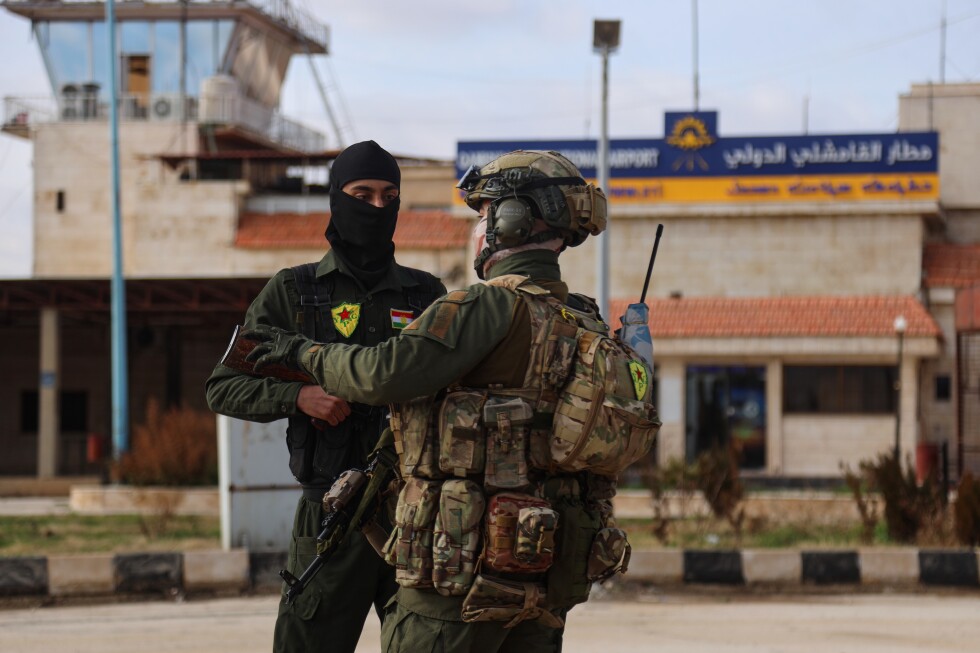
As part of the agreement reached last month between the Syrian government and the SDF, government delegations have already visited key infrastructure in northeastern Syria, including the Qamishli International Airport, oil fields, and the headquarters of a national oil company. This transition has been accompanied by the withdrawal of SDF members from some positions.
Syrian government forces have also entered parts of the northeastern city of al-Hassakeh, signaling the expansion of central government control. In the coming period, Syria’s authorities are expected to take over border crossings with neighboring Iraq and Turkey, further consolidating the government’s territorial control.
This evolving situation represents a significant shift in Syria’s position within regional security arrangements and potentially signals a new phase in the country’s relationship with international partners in the fight against extremism. The cooperation between former adversaries demonstrates how the persistent threat of Islamic State continues to reshape alliances in the Middle East.
Fact Checker
Verify the accuracy of this article using The Disinformation Commission analysis and real-time sources.

14 Comments
This is a significant geopolitical shift. Syria’s participation in the coalition meeting in Riyadh demonstrates the fluidity of alliances in the fight against extremism. Cautious optimism is warranted.
Interesting development in the global fight against ISIS. Syria’s participation marks a significant shift in regional security cooperation. Coordinated efforts to address the detainee situation will be crucial.
You’re right, the transfer of IS detainees is a major priority. Repatriating foreign fighters’ families is also a complex challenge that requires international collaboration.
The transfer of IS detainees to Iraq is a critical issue that needs urgent attention. Repatriation of foreign fighters’ families is another complex humanitarian concern that must be addressed.
Agreed. Coordinating these efforts across borders will require delicate diplomacy and a shared commitment to regional security.
The US envoy is right – Syria joining the anti-IS coalition does signal a new chapter in global security. Shared responsibility and regional solutions will be key to defeating the terrorist threat.
Absolutely. Syria’s involvement brings both opportunities and challenges. Balancing security needs with repatriation efforts for vulnerable populations will be crucial.
Syria’s participation is a significant development, but the true test will be in the implementation. Maintaining a united front against ISIS while addressing regional dynamics will be critical.
Exactly. The coalition’s success will hinge on its ability to balance security priorities with humanitarian considerations. Careful coordination and compromise will be key.
Syria’s involvement is a noteworthy development, but the details of their participation and the challenges ahead remain to be seen. Collective security requires nuanced, sustained cooperation.
This is an important step, but the road ahead will not be easy. Bringing Syria into the fold could help stabilize the region, but trust-building and compromise will be essential.
Well said. Reconciling divergent interests and ensuring the safe repatriation of detainees and families will test the coalition’s resolve and diplomatic skills.
The transfer of IS detainees is a pressing concern that demands urgent attention. Reintegrating foreign fighters’ families is another layer of complexity that requires a comprehensive, humane approach.
This marks a shift in regional dynamics, but the road ahead remains uncertain. Sustained cooperation and a nuanced approach will be essential to addressing the complex challenges ahead.