


Listen to the article
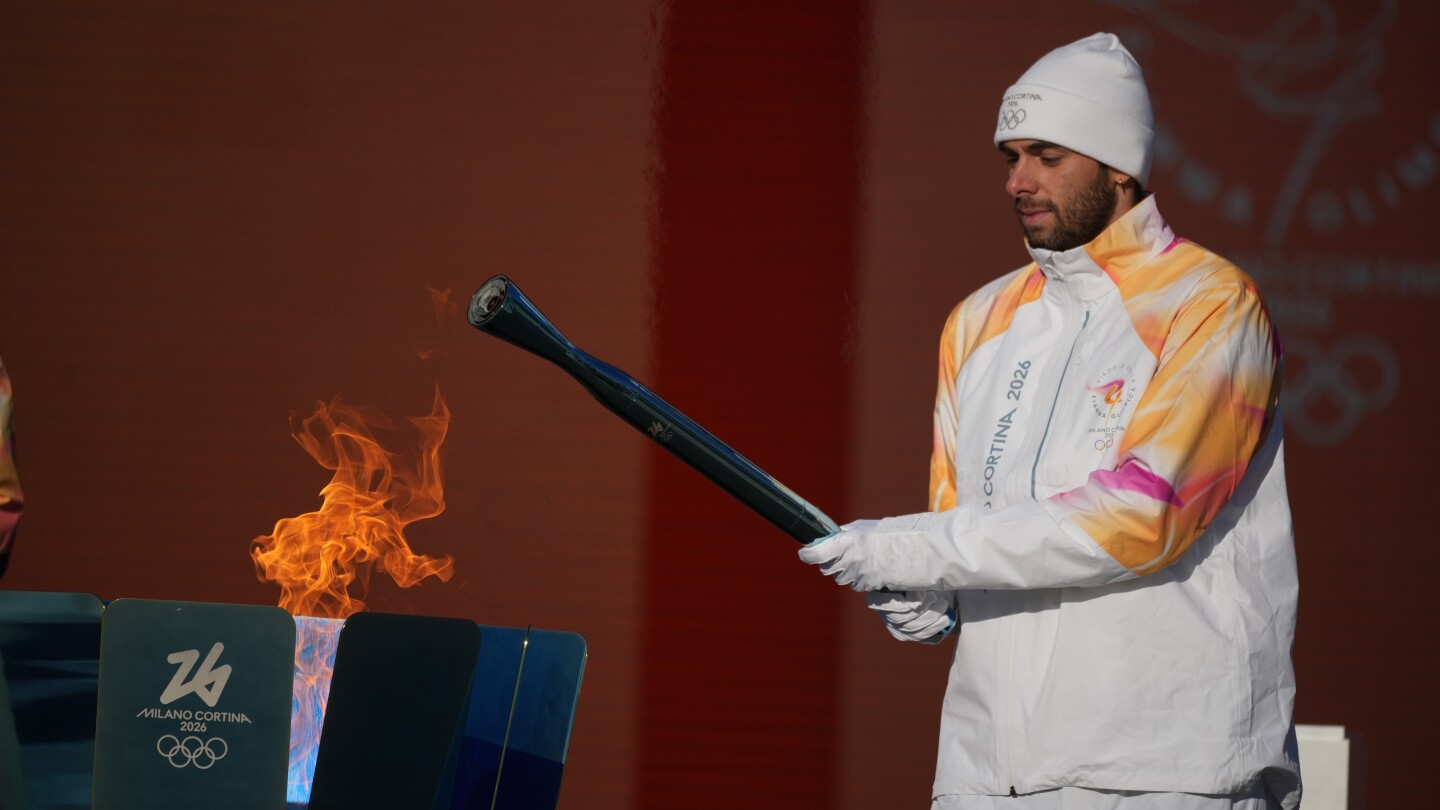
Olympic swimming champion Gregorio Paltrinieri kicked off the torch relay for the Milan Cortina Winter Games on Saturday, marking exactly two months before the February 6 opening ceremony. The gold medalist carried the sleek torch around the track of Rome’s statue-lined Stadio dei Marmi at the Foro Italico, launching a journey that will cover 12,000 kilometers across Italy.
“It’s a pleasure to be part of the Olympic movement even if it’s Winter Olympics,” Paltrinieri said during the ceremony.
The ambitious relay will wind through all 110 Italian provinces before reaching Milan’s San Siro Stadium for the opening ceremony, involving a total of 10,001 torch bearers along the way. The event began with 84-year-old Giancarlo Peris, who lit the Olympic cauldron at the 1960 Rome Olympics when he was just 18, carrying the Olympic flame in a ceremonial lantern.
“I didn’t think I would be here today,” Peris remarked with a smile, reflecting on the 65-year span between his Olympic moments.
Security was tight during the opening day, with police reportedly intercepting two groups of pro-Palestinian activists attempting to approach the relay route.
The first day featured several prominent Italian athletes taking turns with the torch. Paltrinieri, who won gold in the 1,500 meters at the 2016 Rio Games and has accumulated five Olympic medals throughout his career, shared a personal connection to winter sports.
“I used to ski when I was a kid but then I stopped because it’s a little bit dangerous for me,” the swimmer explained. “Skiing is my favorite winter Olympic sport… Alberto Tomba was one of my biggest idols.” Tomba, known as “La Bomba,” was Italy’s legendary Alpine skiing champion in the late 1980s and 1990s.
After Paltrinieri completed his leg, he passed the torch to retired fencer Elisa Di Francisca, a two-time gold medalist from the 2012 London Games. Olympic high jump champion Gianmarco Tamberi followed, continuing the tradition of Italy’s summer Olympians supporting their winter counterparts.
The star-studded relay also included tennis player Matteo Berrettini, former NBA player Andrea Bargnani, and motorcycle racing legend Max Biaggi. In a nod to Italian cinema heritage, actor Ricky Tognazzi carried the torch while riding a white Vespa, evoking the iconic 1953 film “Roman Holiday” starring Audrey Hepburn and Gregory Peck.
The torch’s journey will feature 60 city celebrations across Italy, with special stops planned for major holidays—Naples on Christmas and Bari for New Year’s Eve. On January 11, the flame will visit Turin, which hosted the 2006 Winter Olympics.
A particularly symbolic moment will occur when the torch reaches Cortina d’Ampezzo on January 26, precisely 70 years after the opening ceremony of the 1956 Winter Olympics held in the picturesque Dolomite resort town. A separate cauldron will be lit in Cortina on the night of the 2026 opening ceremony, honoring the town’s Olympic legacy.
Giovanni Malagò, president of the local organizing committee, emphasized the cultural significance of the relay, noting that it will pass by all of Italy’s 61 UNESCO World Heritage sites—more than any other country in the world.
“It’s like a giant two-month advertisement,” Malagò said, highlighting how the torch relay will showcase Italy’s cultural treasures alongside its athletic ambitions.
The 2026 Winter Games will span a broad area of northern Italy, with events distributed across multiple venues. Milan will host skating sports, while Bormio will feature men’s Alpine skiing and ski mountaineering. Women’s Alpine skiing, sliding sports, and curling will take place in Cortina. Other locations include Livigno for snowboarding and freestyle skiing, and Predazzo for ski jumping.
Following its Rome debut, the torch relay continues to Viterbo on Sunday and Terni on Monday, gradually making its way north toward the February opening ceremony.
The Milan Cortina Games represent Italy’s return to hosting the Winter Olympics after a 20-year hiatus, building on the country’s rich history of winter sports excellence while connecting regions from the metropolitan hub of Milan to the scenic Alpine destinations.
Fact Checker
Verify the accuracy of this article using The Disinformation Commission analysis and real-time sources.

7 Comments
Kudos to the organizers for the ambitious 12,000 km torch relay plan. It will be exciting to see how they leverage digital and social media to bring the journey to life for fans around the world. The Olympics are as much about global connection as they are about the sports competition.
Interesting to hear about the pro-Palestinian activists attempting to approach the relay route. While peaceful protest is important, I hope they can find constructive ways to make their voices heard that don’t disrupt the Olympic celebrations. The Games should be a time of unity and sportsmanship.
Exciting to see the torch relay kick off for the Milan Cortina Winter Games! After the challenges of the pandemic, it’s great to see the Olympic spirit alive and well. I’m curious to see which athletes and landmarks will be featured along the 12,000 km journey across Italy.
The Winter Olympics have a special magic, and I’m excited to see how the Milan Cortina Games capture that spirit. It’s great to see swimming champ Gregorio Paltrinieri kick things off. Curious to learn more about the 10,001 torchbearers and the local communities they’ll engage along the way.
Kudos to 84-year-old Giancarlo Peris for participating in the torch relay, bookending his Olympic journey from the 1960 Rome Games. A wonderful symbolic passing of the torch to the next generation of Italian athletes. I hope the security concerns are well-managed to ensure a smooth and safe event.
The Olympic torch relay is always a stirring sight. I wonder how the route through all 110 Italian provinces will showcase the country’s diverse landscapes and communities. Hopefully the security challenges can be navigated without incident, allowing the focus to remain on the athletes and the shared Olympic values.
Interesting that the torch relay is kicking off with the Winter Games, rather than the Summer Olympics. I suppose it makes sense to build anticipation for the upcoming event. I’m curious to see if this format gains traction or if future Olympics will revert to the traditional order of Summer first, then Winter.