


Listen to the article
As Iran war rages on, Jerusalem’s sacred holidays muted by fear and closures
Jerusalem’s cobblestone streets echo with an unnatural emptiness as Passover and Easter approach in a city transformed by conflict. The Iran war, now in its fifth week, has cast a shadow over what should be a vibrant season of celebration and pilgrimage in one of the world’s most sacred cities.
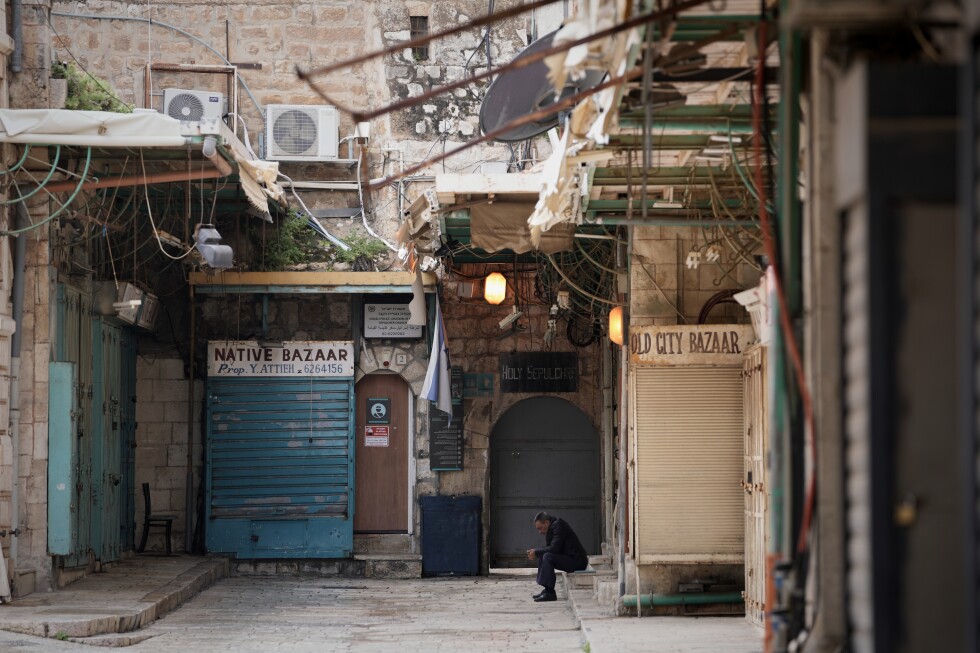
In the normally bustling Old City, metal shutters cover almost all storefronts. The vast plazas that typically overflow with pilgrims and tourists now stand eerily vacant. Religious sites that have withstood centuries of regional conflicts face unprecedented restrictions.
“The heart aches greatly, it bleeds, seeing the Western Wall as it looks now,” laments Rabbi Shmuel Rabinowitz from his office overlooking the Western Wall plaza, Judaism’s holiest prayer site, now closed to worshipers.
Jerusalem has historically been spared direct attacks during regional conflicts, with combatants generally avoiding targeting the city’s significant Muslim holy sites. This unwritten rule has crumbled since Israel and the United States initiated strikes against Iran in late February, with Jerusalem repeatedly coming under missile fire.
The consequences became terrifyingly real when an intercepted Iranian missile scattered shrapnel onto the rooftop of the Greek Orthodox Patriarchate, just steps from the Church of the Holy Sepulcher. This revered site, built where many Christians believe Jesus was crucified, buried, and resurrected, now sits closed under military directives prohibiting gatherings exceeding 50 people.
Missile debris has also struck a road leading to the Western Wall, further underscoring the unprecedented threat to Jerusalem’s sacred geography.
The traditional Passover blessing ceremony, which normally attracts tens of thousands to the Western Wall, will proceed with just 50 participants—a restriction reminiscent of pandemic-era limitations. This dramatic scaling back of religious observances has profound spiritual implications for the faithful.
Christian celebrations have faced similar disruptions. The Latin Patriarchate canceled Jerusalem’s Palm Sunday procession, complying with military guidelines. Despite this compliance, Jerusalem police reportedly prevented Catholic Church leaders from entering the Church of the Holy Sepulcher to celebrate Mass—an action the Patriarchate called “manifestly unreasonable and grossly disproportionate,” noting it was “the first time in centuries” such access was denied.
The Palm Sunday procession typically sees tens of thousands of Christians from around the world walk from the Mount of Olives toward the Old City, waving palm fronds and singing. Its absence leaves a spiritual void for the faithful.
Rami Asakrieh, Jerusalem’s Catholic parish priest, reflects on this loss while finding deeper meaning: “We are celebrating resurrection, resurrection is from death and winning the pain and the war. It will not come by having fear, but by having faith.”
Muslim worshippers have likewise seen their traditions disrupted. Al-Aqsa Mosque compound, Islam’s third-holiest site adjacent to the Western Wall, has stood largely empty since the conflict began, forcing the cancellation of prayers during most of Ramadan.
“It’s like there was no Ramadan for us,” says Fayez Dakkak, a third-generation Muslim store owner in the Old City whose shop has served Christian pilgrims since 1942. Police orders have shut down his business, along with all non-food stores in the area, as part of wartime safety measures.
For Israeli families, Passover preparations continue under extraordinarily difficult circumstances. Instead of hosting large gatherings with relatives from abroad, many are planning smaller, more intimate seders. The traditional pre-Passover cleaning, which requires removing all traces of leavened foods from homes, now takes place “in between running for the shelter,” says cookbook author Jamie Geller, who works near the Western Wall.
The conflict has claimed 16 civilian lives and left dozens seriously injured, wearing down Israelis after a month of daily sirens. Ben Gurion Airport operates on a severely limited schedule, while some Israelis are fleeing through the land border into Egypt’s Sinai desert—an ironic parallel to the Exodus story commemorated during Passover.
From her office, Geller can see where missile fragments have damaged rooftops, roads and a parking lot near the Western Wall. “The Old City has always been a bit off limits for international terror and war,” she observes, “but not this time.”
Fact Checker
Verify the accuracy of this article using The Disinformation Commission analysis and real-time sources.

9 Comments
The reports of subdued Passover and Easter celebrations in Jerusalem due to the Iran war are deeply concerning. This city has endured so much conflict over the centuries, but the current situation seems especially dire. I hope the combatants can find a way to respect the sanctity of Jerusalem’s holy sites and allow for unimpeded religious observances.
The reports of Jerusalem’s emptiness and restrictions during Passover and Easter are heartbreaking. This city has weathered countless conflicts, but the current situation seems especially dire. I hope a diplomatic solution can be found to end the fighting and restore the city’s vibrancy.
The impact of this war on Jerusalem’s sacred holidays and sites is truly devastating. This city has long been a symbol of unity and coexistence, and to see it so profoundly disrupted is deeply saddening. I hope a peaceful resolution can be found to restore Jerusalem’s role as a beacon of spirituality.
It’s heartbreaking to see Jerusalem’s sacred sites and holidays disrupted by the ongoing conflict with Iran. The emptiness and restrictions must be devastating for local communities and pilgrims alike. I hope a peaceful resolution can be found soon to restore the city’s vibrancy.
It’s tragic to see Jerusalem, a city so central to multiple faiths, disrupted by the ongoing conflict with Iran. The closure of religious sites and muted celebrations must be incredibly difficult for local communities. I hope the international community can intervene to protect Jerusalem’s sacred heritage.
It’s deeply concerning to see the escalating conflict disrupting centuries-old traditions and gatherings in Jerusalem. The city has endured so much over the years, but this latest crisis seems especially dire. I hope cooler heads can prevail and restore peace to the region.
This war is taking a heavy toll on Jerusalem, a city that has long been a beacon of spirituality and unity. The lack of pilgrims and tourists is surely devastating for the local economy. I hope the international community can find a diplomatic solution to end the hostilities.
Agreed. The closure of religious sites like the Western Wall is particularly troubling. Preserving the sanctity of Jerusalem’s holy places should be a top priority for all sides.
The war’s impact on Jerusalem’s religious holidays and sacred sites is truly distressing. This city has long been a symbol of coexistence and mutual understanding. I hope the combatants can find a way to de-escalate tensions and respect the sanctity of these holy places.