


Listen to the article
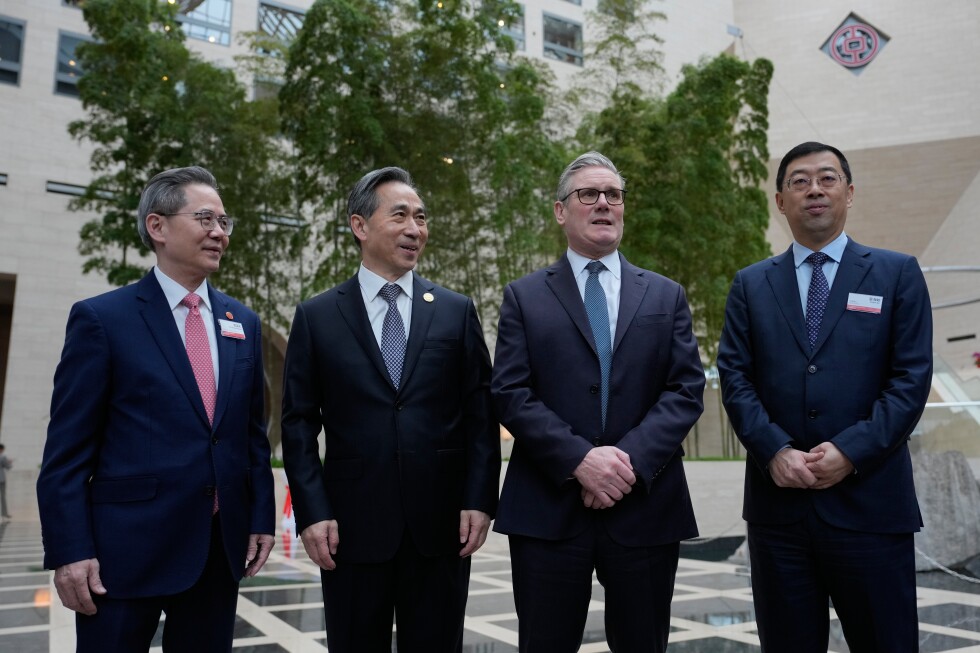
UK Prime Minister Keir Starmer arrived in Shanghai on Friday, continuing his high-profile visit to China aimed at strengthening economic ties between the two nations, despite potential opposition from U.S. President Donald Trump.
The visit marks the first trip by a British prime minister to China in eight years and comes with a delegation of more than 50 British business leaders seeking opportunities in the world’s second-largest economy. Starmer’s trip began Thursday in Beijing, where he met with Chinese President Xi Jinping in talks that both sides described as productive.
Hours before Starmer’s arrival in Shanghai, Trump signaled possible opposition to any deal between China and the United Kingdom. When asked about Starmer’s visit, Trump said, “Well, it’s very dangerous for them to do that,” before quickly shifting his criticism toward Canada, which has also recently sought to improve relations with Beijing.
Responding to Trump’s remarks, Starmer downplayed concerns, suggesting the criticism was directed more at Canada than Britain. “I don’t think it’s wise for the United Kingdom to stick its head in the sand,” Starmer told Sky News. “China is the second biggest economy in the world. Along with Hong Kong, it’s our third-biggest trading partner.”
The Labour leader emphasized that Washington had been informed of his trip and its objectives beforehand, noting that Trump himself has expressed plans to visit China next spring. Starmer added that the trip has already “opened up lots of opportunities for jobs and wealth creation” for British businesses.
A significant diplomatic achievement from the Beijing meetings was Xi’s agreement to lift travel restrictions previously imposed on several British lawmakers. These restrictions were implemented after the UK joined the European Union, Canada, and the United States in sanctioning four Chinese officials over human rights abuses against Uyghur Muslims in Xinjiang.
“This has been a cause of concern in Parliament and for parliamentarians for some time, and that is why I raised it on this visit,” Starmer told ITV News. “The response from the Chinese is that the restrictions no longer apply and President Xi has told me that means all parliamentarians are welcome to visit.”
The Chinese Foreign Ministry confirmed the agreement, stating that both sides committed to normal exchanges between their legislatures. However, it remains unclear whether the UK offered any concessions in exchange for lifting these sanctions.
Several previously sanctioned British lawmakers, including former Conservative leader Iain Duncan Smith, swiftly rejected any deal that might have used their status as a “bargaining chip.” In a joint statement, seven current and former parliamentarians declared they “would rather remain under sanction indefinitely than have our status used to justify lifting British sanctions on those officials responsible for the genocide in Xinjiang.”
Starmer’s China outreach comes amid a broader pattern of Western leaders seeking improved relations with Beijing. Both Starmer and Canadian Prime Minister Mark Carney have visited China recently as their nations look to diversify trade relationships, particularly as global markets face uncertainty from Trump’s protectionist policies and tariffs.
For the UK, which is still adjusting to post-Brexit economic realities, strengthening trade with China represents a significant opportunity. China and Hong Kong together constitute Britain’s third-largest trading partner, making economic engagement a priority for Starmer’s government despite geopolitical tensions.
The timing of these diplomatic overtures is particularly notable as many Western nations reassess their economic relationships with China amid concerns over human rights issues, market access limitations, and Beijing’s growing global influence. Starmer’s pragmatic approach reflects the delicate balance Western leaders must strike between economic imperatives and values-based foreign policy.
As Starmer continues his visit in Shanghai, the financial heart of China, he will likely focus on securing concrete business opportunities while navigating the complex diplomatic landscape shaped by U.S.-China rivalry and ongoing human rights concerns.
Fact Checker
Verify the accuracy of this article using The Disinformation Commission analysis and real-time sources.

24 Comments
Starmer’s comments about not ignoring China seem pragmatic, but the details of any deals will be crucial in determining their merits and potential risks.
The geopolitical tensions between the UK, China, and the US add an extra layer of complexity to these economic negotiations.
The UK’s approach to China is a nuanced issue with valid arguments on both sides. Starmer’s pragmatic stance of not ignoring China seems reasonable, but the execution will be key.
Navigating the geopolitical tensions between the UK, China, and the US will require skilled diplomacy and a clear-eyed assessment of the UK’s national interests.
Trump’s warning about the UK’s outreach to China is understandable given the ongoing geopolitical rivalry, but the UK has to make its own choices based on its national interests.
The UK will need to carefully weigh the risks and benefits of deeper ties with China, while also maintaining good relations with the US and other Western allies.
The UK’s outreach to China is a significant development that could have far-reaching implications. It will be important to see how this unfolds and what trade-offs may be involved.
Trump’s warning highlights the geopolitical tensions at play, but the UK has to make its own decisions based on its national priorities.
Starmer’s pragmatic approach of not ignoring China seems sensible, but the details of any deals will be crucial in determining their merits and alignment with the UK’s broader interests.
Navigating the complex web of relationships between the UK, China, and the US will require skilled diplomacy and a clear-eyed assessment of the UK’s strategic priorities.
Interesting to see the UK and China trying to strengthen economic ties, despite potential opposition from Trump. Curious to see how this plays out and what sort of deals could be struck.
The UK can’t afford to ignore China given its economic importance, but it will need to balance relations carefully to avoid antagonizing the US.
Strengthening economic ties with China could bring benefits for the UK, but the government will need to carefully consider the potential risks and political implications.
Trump’s warning highlights the ongoing geopolitical rivalry, but the UK has to make its own decisions about how to engage with China and other major economies.
It’s a complex issue with valid concerns on both sides. The UK will have to navigate this carefully to protect its interests while also managing international relationships.
Starmer’s pragmatic approach of not ignoring China seems sensible, but the details of any deals will be crucial in determining their merits.
Starmer’s comments about not sticking one’s head in the sand over China seem reasonable. The UK needs to engage with major economies like China, while also navigating geopolitical tensions.
It will be a delicate balancing act, but the UK can’t afford to completely isolate itself from China either economically or diplomatically.
Strengthening economic ties with China could be beneficial for the UK, but the government will need to carefully weigh the potential risks and rewards.
Navigating the delicate balance between China and the US will be a key challenge for the UK as it pursues its own strategic interests.
The UK’s approach to China is a complex issue with valid concerns on both sides. It will be interesting to see how Starmer and his team manage this sensitive situation.
Regardless of Trump’s warnings, the UK has to make its own decisions about its economic and diplomatic relationships with China.
It’s understandable that Trump would be concerned about the UK’s outreach to China, but the UK has to make decisions based on its own national interests.
Balancing relationships with China and the US will be a delicate task for the UK government as it seeks to strengthen its economic position.