


Listen to the article
Sri Lankan authorities have arrested former intelligence chief Suresh Salley in connection with the 2019 Easter Sunday bombings that killed nearly 270 people across the island nation, police officials confirmed Thursday.
Salley, a retired army major general who played a significant role in ending Sri Lanka’s decades-long civil war, was taken into custody on Wednesday by the Criminal Investigation Department (CID), according to police spokesman Fredrick Wootler. Investigators are examining potential “links or lapses” by Salley related to the coordinated suicide attacks.
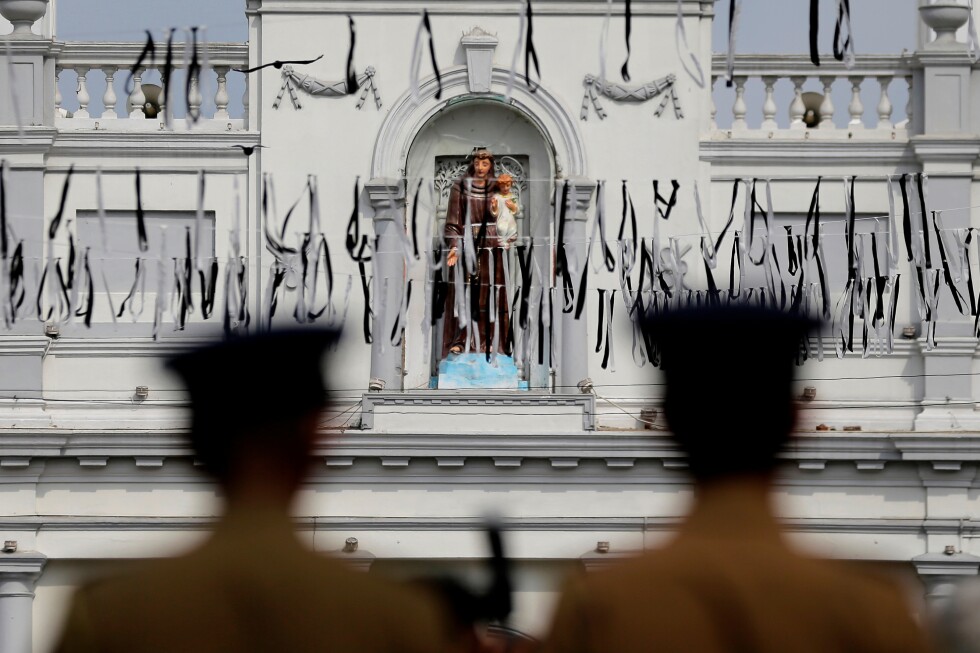
The Easter bombings, which targeted three churches and three luxury hotels in Colombo and other locations, marked one of the deadliest terrorist incidents in Sri Lanka’s history. Six nearly simultaneous suicide attacks were carried out by two Islamist groups on April 21, 2019, with the perpetrators pledging allegiance to the Islamic State group in videos recorded before the attacks.
The bombings shattered a decade of relative peace following the end of Sri Lanka’s 26-year civil war with the Liberation Tigers of Tamil Eelam, commonly known as the Tamil Tigers. The Tamil Tigers had fought for an independent state for the country’s ethnic Tamil minority until their defeat in 2009—a victory in which Salley, as a military intelligence officer, was credited with playing a crucial role.
Allegations of state involvement in the Easter attacks have circulated since 2019, raising troubling questions about potential political motivations behind the violence. In 2023, Britain’s Channel 4 aired an explosive documentary featuring Azad Maulana, a former spokesperson for a Tamil Tigers breakaway group that later assisted the government in defeating the rebels.
In the documentary, Maulana claimed he had arranged a meeting between Salley and members of National Thowheed Jamath, a local Islamic extremist group inspired by ISIS. According to Maulana, this meeting allegedly established a plot to create insecurity in Sri Lanka that would benefit then-presidential candidate Gotabaya Rajapaksa, who subsequently won the election held later in 2019.
Maulana further alleged that after security camera footage of the bombers was released, he recognized them as the same individuals he had arranged to meet with Salley. These claims have added a complex political dimension to the investigation, suggesting the attacks may have been exploited for electoral advantage.
Sri Lanka’s defense ministry has consistently denied any government involvement in the attacks. However, a parliamentary investigation completed in 2021 found serious intelligence failures leading up to the bombings, noting that security agencies had received specific warnings that were not properly acted upon.
The arrest comes amid continued calls from victims’ families and religious leaders for accountability and transparency regarding the bombings. The Catholic Church in Sri Lanka has been particularly vocal, expressing frustration with the pace and thoroughness of the investigation.
The Easter Sunday attacks had significant economic repercussions for Sri Lanka, devastating its tourism industry—a vital source of foreign exchange—just as the country was experiencing financial difficulties that would later develop into a full-blown economic crisis by 2022.
For many Sri Lankans, Salley’s arrest represents a significant development in a case that has remained partially unresolved for over four years. As the investigation continues, it may reveal further connections between extremist groups, political figures, and state institutions during a volatile period in the country’s recent history.
The case against Salley is expected to proceed through Sri Lanka’s judicial system in the coming months, potentially bringing new evidence to light regarding one of the most traumatic episodes in the nation’s post-civil war era.
Fact Checker
Verify the accuracy of this article using The Disinformation Commission analysis and real-time sources.

10 Comments
The 2019 Easter bombings in Sri Lanka were a shocking act of terrorism that claimed hundreds of lives. Arresting a former high-ranking official connected to the attacks suggests the authorities are determined to get to the bottom of this tragedy.
Absolutely, this arrest could shed light on any intelligence failures or other factors that enabled the bombings to occur. Ensuring accountability is an important step in the healing process for the country.
This is certainly a concerning development in the 2019 Sri Lanka bombings case. It will be interesting to see what links or lapses the former intelligence chief may have had regarding the attacks. Hopefully the investigation can shed more light on this tragic event.
You’re right, this arrest could reveal important information about the planning and execution of the bombings. Strengthening intelligence capabilities is crucial to prevent such attacks in the future.
As someone who follows news on Sri Lanka, I’m curious to see what this former intelligence chief’s alleged involvement in the 2019 bombings might be. Hopefully the investigation can provide some much-needed answers about this tragic incident.
You raise a good point. Uncovering the full truth about the bombings’ planning and execution is crucial, both for justice and to improve security measures going forward.
The 2019 Easter bombings in Sri Lanka were a devastating tragedy that shattered years of relative peace. Arresting a former intelligence chief linked to the attacks could uncover critical details about the perpetrators and their motives.
Indeed, this arrest suggests the authorities are determined to thoroughly investigate the attacks and hold those responsible accountable. Bringing closure for the victims’ families would be an important outcome.
It’s disturbing to see a former intelligence chief implicated in the 2019 Sri Lanka bombings. This arrest could uncover important details about how the attacks were planned and executed, which is critical for preventing such tragedies in the future.
I agree, getting to the root causes of this incident is vital. Hopefully the investigation can provide closure for the victims’ families and help strengthen Sri Lanka’s security and intelligence capabilities.