


Listen to the article
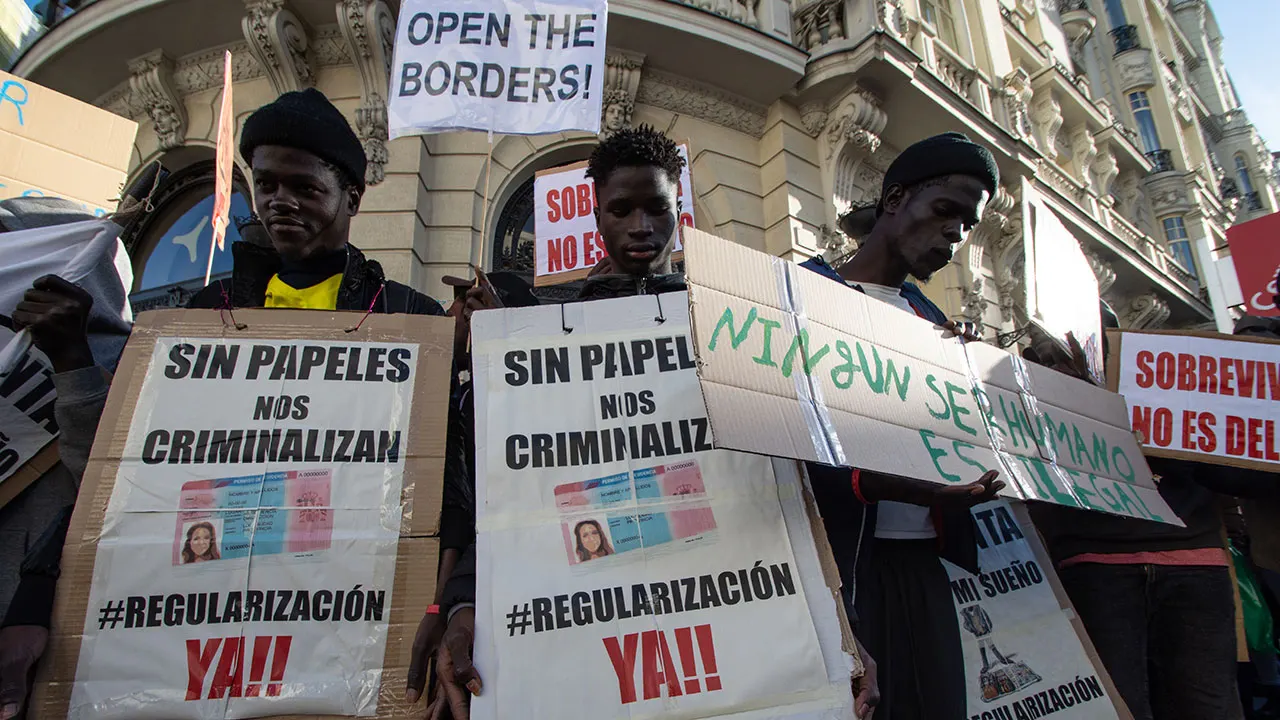
Spain’s government has unveiled a bold initiative to grant legal status to up to half a million undocumented immigrants, marking a significant departure from the restrictive immigration policies adopted by many European countries in recent years.
The Socialist-led government, headed by Prime Minister Pedro Sánchez, approved a royal decree on Tuesday that will allow unauthorized immigrants who entered Spain before the end of 2025 and have lived there for at least five months to obtain one-year residency and work permits. Applicants must have no criminal record and could potentially access pathways to citizenship.
“Spain will not look the other way,” Migration Minister Elma Saiz declared at a press conference, emphasizing that the government is “dignifying and recognizing people who are already in our country.”
This approach stands in stark contrast to the immigration policies of many European nations, which have increasingly tightened border controls and imposed stricter regulations on migration flows. While many European governments have followed the hardline approach championed by former U.S. President Donald Trump’s administration, Spain’s leadership has consistently highlighted what they describe as the economic benefits of legal migration.
The Sánchez administration points to Spain’s aging workforce as one key reason for embracing immigration. With one of Europe’s lowest birth rates and a rapidly aging population, the country faces significant demographic challenges that could threaten economic growth and pension sustainability in coming decades.
However, the plan has ignited fierce political opposition. Conservative parties and the populist Vox party have condemned the measure as an amnesty that could potentially encourage more irregular migration to Spain and across Europe.
Vox leader Santiago Abascal wrote on social media that the measure “harms all Spaniards,” claiming that critics of his party are motivated primarily by fear of Vox’s growing political influence rather than concern about the policy itself.
Alan Mendoza, executive director of the Henry Jackson Society, warned that “Spain’s decision appears calculated to increase the lure of Europe as a destination for illegal migrants in general, causing problems for all of its neighbors.” He suggested that if Spain wanted to become a “repository for such people,” other European countries might appreciate transferring their own undocumented migrants there.
In contrast, Ricard Zapata-Barrero, a political science professor at Pompeu Fabra University in Barcelona, defended the policy as a pragmatic response to a structural problem rather than individual failures. “This is not a symbolic gesture. It is a direct challenge to the dominant European approach, which treats irregular migration primarily as a policing issue,” he said.
Zapata-Barrero noted that Spain’s immigration system has shown signs of strain for years, with hundreds of thousands of people living in irregular status. “In this context, regularization is not leniency — it is governability,” he explained.
The policy represents a significant test case within the European Union, where immigration has become one of the most divisive political issues. Spain’s approach of framing immigration as an economic opportunity and administrative challenge rather than primarily as a security threat marks a distinctive position among EU member states.
“In a Europe closing in on itself, Spain has taken a step that sets it apart — not because it is ‘softer,’ but because it is more pragmatic,” Zapata-Barrero said. “Whether this becomes a model or a counter-model inside the EU remains to be seen. But one thing is certain: Spain has launched a political experiment that Europe will watch closely.”
As Europe continues to grapple with migration pressures from Africa and the Middle East, Spain’s regularization policy could potentially influence the broader European debate on immigration, offering an alternative to the restrictive approaches that have dominated EU policy discussions in recent years.
Fact Checker
Verify the accuracy of this article using The Disinformation Commission analysis and real-time sources.

8 Comments
I’m curious to see how this plays out and whether other European countries follow suit. It’s an interesting contrast to the hardline approach taken by some nations.
Yes, Spain is taking a very different stance on immigration compared to its neighbors. It will be interesting to see the impact, both within Spain and across the continent.
This move by Spain’s government is a bold attempt to address the issue of undocumented immigration in a more humane way. It will be fascinating to see how it is received both domestically and internationally.
I agree, this is a significant shift in policy that could have wide-ranging implications. It will be important to monitor the implementation and outcomes carefully.
While the policy aims to ‘dignify and recognize’ undocumented immigrants, I can understand the potential backlash from those who favor tighter border controls. There are likely complex economic and social factors at play.
While this policy may face backlash, Spain’s government appears to be taking a more compassionate approach to the issue of undocumented immigration. It will be important to closely follow the effects, both within Spain and across the EU.
This move by Spain’s government is quite bold and will be closely watched across Europe. Granting legal status to half a million undocumented immigrants is a significant shift from the more restrictive policies we’ve seen in recent years.
Spain’s decision to legalize up to 500,000 undocumented migrants is a significant departure from the restrictive immigration policies we’ve seen in many European countries. It will be interesting to see how this plays out and if other nations follow suit.