


Listen to the article
South Korea’s justice minister announced plans Thursday to expand legal remedies for victims of state-led abuses, including foreign adoptees who suffered under what he described as “forced child trafficking” during the country’s military rule.
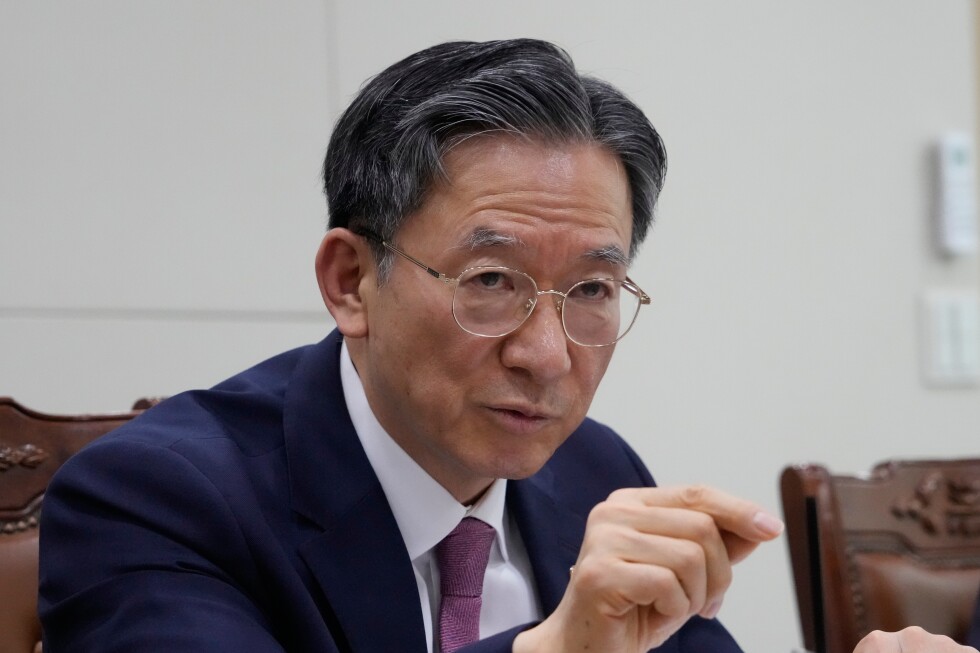
Justice Minister Jung Sung-ho, speaking at a roundtable with journalists in Gwacheon, pledged that the government would largely refrain from appealing rulings in cases where victims seek compensation for government wrongdoing.
“Once the truth commission firmly establishes the basic facts regarding the abuses, we intend to cooperate to ensure the process moves swiftly,” Jung said.
His comments represent an unusually direct acknowledgment of South Korea’s troubled adoption history. Hundreds of Korean adoptees living in Western countries have already requested investigations into their cases through a fact-finding commission that was relaunched in February after its previous mandate expired last November.
The earlier Truth and Reconciliation Commission concluded that the South Korean government bore responsibility for an adoption program plagued by fraud and malfeasance. The commission found that state-authorized private agencies systematically manipulated children’s origins as part of government efforts to cut welfare costs during the country’s military rule.
Between the 1970s and early 2000s, South Korea sent thousands of children annually to the United States, Europe, and Australia, with numbers peaking at more than 6,000 per year during the 1980s. The military government at that time viewed population growth as a threat to economic development and used international adoption as a means of population control.
These findings align with previous investigations by The Associated Press and PBS Frontline, which documented how South Korea’s government collaborated with Western nations and adoption agencies to send approximately 200,000 Korean children overseas, despite evidence that many were obtained through corrupt or illegal means.
President Lee Jae Myung issued a formal apology for South Korea’s adoption problems last October, marking a significant step in the country’s acknowledgment of these historical wrongs.
Jung’s ministry announced last week it would stop using statute of limitations defenses in more than 800 cases covered by a new law that took effect in February. This law gives victims of government abuses a three-year window to sue for damages even after standard time limits have expired. The justice minister indicated this approach would extend to adoptee lawsuits in the future.
Some adoptees have already begun seeking compensation. Yooree Kim, sent to a French family in 1984 without her biological parents’ consent and who reports suffering abuse from her adoptive family, has filed for compensation under the state compensation act. However, her claim, along with others, has been stalled for over six months despite the ministry’s four-week decision timeline, according to attorney Choi Jung Kyu, who represents several adoptees.
When questioned about these delays, Jung promised to instruct officials to address them but rejected calls for a separate expedited compensation process.
The justice minister also addressed South Korea’s problems with human trafficking and forced labor, particularly on salt farms and among migrant workers—issues that have drawn international criticism. The U.S. Trump administration recently launched investigations into dozens of countries, including South Korea, for allegedly failing to curb forced labor. Last year, the U.S. blocked imports from a major South Korean salt farm accused of using slave labor, marking the first time a trade partner had imposed such sanctions over labor abuses on South Korea’s southwestern island salt farms.
Jung promised intensified efforts to “uproot” trafficking and labor abuses, including directing prosecutors to pursue harsher penalties for violations and strengthening oversight of companies employing foreign workers.
“We cannot monitor every corner of the private sector, but I think we are capable of supervising these matters more thoroughly than almost any other country,” Jung stated, signaling a commitment to address both historical and ongoing human rights concerns.
Fact Checker
Verify the accuracy of this article using The Disinformation Commission analysis and real-time sources.

15 Comments
As someone who follows international human rights issues, I’m hopeful that this development in South Korea can set a positive precedent for addressing past abuses and protecting vulnerable populations.
Well said. Addressing historical wrongs and safeguarding the rights of all citizens should be a top priority for any government.
The adoption program’s history of fraud and malfeasance is deeply disturbing. I hope the fact-finding commission can uncover the full truth and pave the way for meaningful reforms.
Absolutely. Transparency and accountability are essential to ensure this never happens again.
As someone with a general interest in global human rights issues, I’m encouraged to see South Korea taking these steps. Protecting the most vulnerable in society is crucial.
The forced child trafficking and abuse of the adoption program is a disturbing revelation. I’m glad to see the government taking steps to provide remedies for the victims.
As someone with an interest in international adoption policies, I’m glad to see South Korea taking steps to address this dark chapter. Protecting the rights of vulnerable children should be a top priority.
Well said. Adopting children across borders is a complex issue, and it’s critical that proper safeguards and oversight are in place.
This is an important development, and I hope it leads to real, meaningful change. The victims of these abuses deserve justice and closure.
This is an important development in addressing a dark chapter in South Korea’s history. I hope the government follows through on its commitment to provide justice for the victims.
Absolutely. Transparency and accountability will be key to ensuring meaningful change and preventing similar abuses in the future.
This is an important step in addressing the troubling history of forced child adoptions in South Korea. It’s crucial that the government works to provide justice and remedies for the victims of these abuses.
Agreed. The government’s acknowledgment of responsibility is a positive sign, and the victims deserve fair compensation and closure.
It’s good to see the South Korean government acknowledging its responsibility in this troubling situation. Providing legal remedies for the victims is a necessary step.
Agreed. Addressing the past and preventing future abuses should be the top priorities.