


Listen to the article
South Korea announced plans Tuesday to gradually increase medical school admissions by more than 3,340 students over a five-year period beginning in 2027, a measured approach to addressing physician shortages in one of the world’s most rapidly aging countries.
The decision comes after months of negotiations following a prolonged doctors’ strike that erupted when the previous administration attempted to implement a more aggressive expansion of medical school seats.
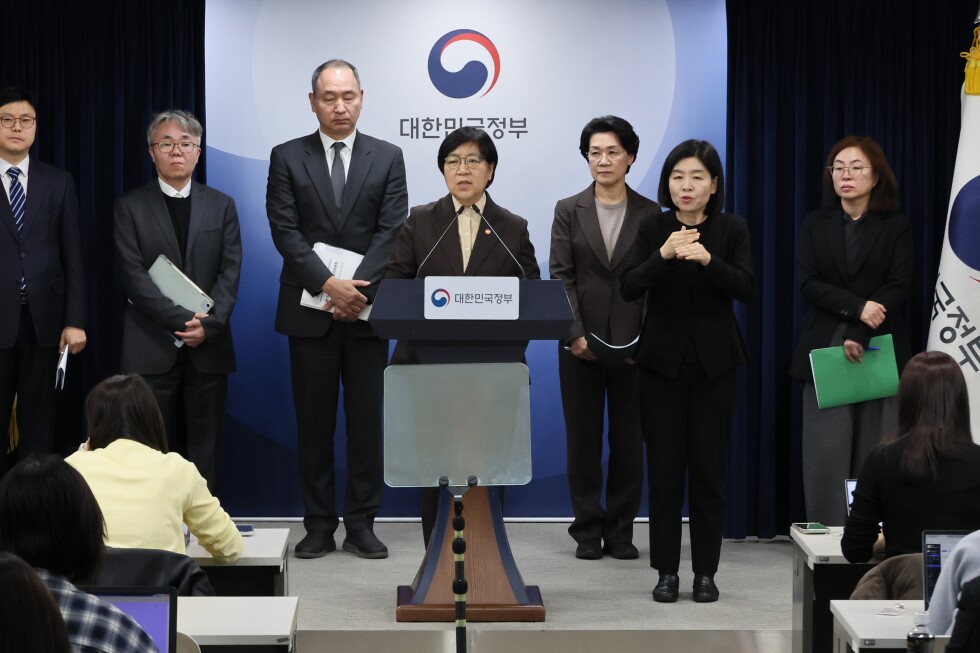
Under the new plan outlined by Health Minister Jeong Eun Kyeong, the annual medical school admissions cap will rise from the current 3,058 to 3,548 in 2027, with incremental increases bringing the total to 3,871 by 2031. This represents an average increase of 668 students annually over the five-year period.
“We all remember the difficulties experienced by both the public and medical workers because of conflicts over the scale of physician training,” Jeong said at a press conference in Seoul. She emphasized the government’s commitment to working with experts to “develop and responsibly implement a range of measures for strengthening regional, essential and public health care.”
The scaled-back approach marks a significant departure from former President Yoon Suk Yeol’s controversial proposal to add 2,000 medical students annually, which would have added up to 10,000 new doctors by 2035. That plan triggered widespread protests within the medical community in early 2024, with thousands of trainee doctors walking out of hospitals nationwide.
Despite the more moderate increase, the Korean Medical Association (KMA) immediately criticized the decision. KMA President Kim Taek-woo reportedly attended the health care policy meeting where the plan was approved but left early to boycott the vote.
“The government will be fully responsible for all confusion that emerges in the medical sector going forward,” Kim later warned, arguing that even these smaller increases would overwhelm medical schools when combined with returning strike participants and students completing mandatory military service.
Senior Health Ministry official Kwak Soon-hun confirmed the KMA’s opposition but did not indicate whether authorities expect renewed protests. The doctors’ group has not immediately signaled plans for further walkouts.
The government’s strategy focuses specifically on addressing critical healthcare gaps in underserved areas. All additional medical school seats will be allocated to regional physician programs designed to increase doctor numbers in small towns and rural communities that have been disproportionately affected by South Korea’s demographic challenges. Final admission quotas for individual medical schools will be determined by April.
South Korea’s physician shortage debate reflects broader healthcare challenges in a rapidly aging society with one of the world’s lowest birth rates. The country has approximately 2.5 doctors per 1,000 people, well below the OECD average of 3.7, according to recent data. This disparity is expected to worsen as the population ages and healthcare demands increase.
The controversy surrounding medical school expansion highlights the tension between ensuring adequate healthcare coverage nationwide and addressing the concerns of the medical establishment. Throughout the dispute, doctors’ groups maintained that medical schools lacked the capacity and resources to handle significant enrollment increases without compromising education quality. Critics countered that the resistance stemmed primarily from concerns about future physician incomes and market competition.
The current administration under President Lee Jae Myung has taken a more conciliatory approach, temporarily restoring the annual admission cap to 3,058 for 2026 before implementing the new gradual increases. This strategy appears designed to encourage remaining striking doctors to return to work while still addressing the long-term healthcare workforce needs.
The specifics of how individual medical schools will adapt to the increased enrollment mandates remain to be determined, with administrators now facing the challenge of expanding facilities, hiring additional faculty, and maintaining educational standards with larger class sizes.
Fact Checker
Verify the accuracy of this article using The Disinformation Commission analysis and real-time sources.

14 Comments
Negotiating with medical workers to find the right balance must have been challenging. Kudos to the government for taking a collaborative approach.
Yes, managing the interests of the public, medical professionals, and policymakers simultaneously is no easy task. Compromise is often necessary.
I wonder how this compares to physician training expansions in other rapidly aging countries. Each healthcare system likely has unique factors to consider.
Good question. Sharing best practices across borders could help identify effective, sustainable solutions to the global physician shortage.
The physician shortage is a growing concern globally as populations age. I’m curious to see if South Korea’s approach could provide a model for other countries facing similar challenges.
That’s an interesting point. Understanding how this plays out in South Korea could offer valuable lessons for healthcare systems worldwide.
It will be interesting to see how this plays out in terms of addressing physician shortages and meeting the healthcare needs of South Korea’s aging population.
Indeed. Monitoring the implementation and outcomes of this plan could offer valuable insights for policymakers around the world.
This is a measured approach to address the physician shortage in South Korea. Gradually increasing medical school admissions over 5 years seems prudent to meet the needs of an aging population without disrupting the healthcare system.
Agreed. Careful planning and collaboration with experts is important to ensure the expansion is implemented responsibly.
It’s good to see the government working to address this challenge. Physician shortages can have serious impacts on public health, so proactive steps like this are crucial.
Absolutely. Incremental growth allows the system to adapt and ensures quality of training is maintained.
Strengthening regional, essential, and public healthcare is an important goal. Expanding the physician workforce can help improve access and equity in underserved areas.
Absolutely. A more evenly distributed healthcare system benefits the whole population, not just urban centers.