


Listen to the article
South Korea has relaunched its Truth and Reconciliation Commission to investigate past human rights violations, with a particular focus on uncovering widespread fraud in the country’s foreign adoption program that sent thousands of children overseas.
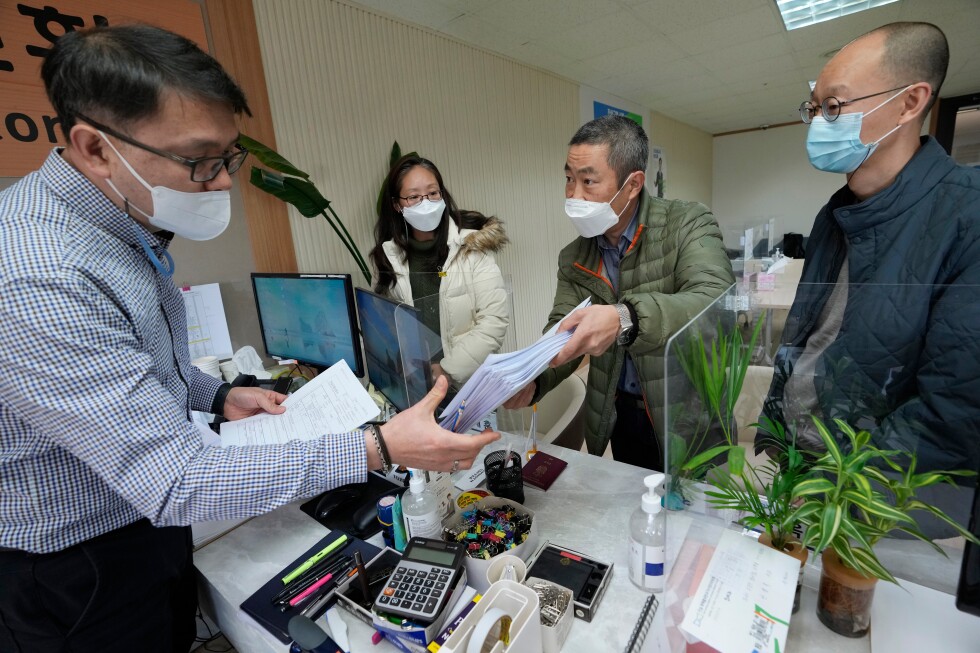
The commission, which began accepting new cases on Thursday, will pick up more than 2,100 unresolved complaints from its predecessor, including 311 submissions from Korean adoptees whose cases were either deferred or incompletely reviewed when the previous commission abruptly halted its adoption investigation in April last year.
Adoption advocacy groups report significantly higher interest among adoptees this time around, with hundreds already seeking investigations. Many of these new applicants come from the United States, which received the majority of South Korean children during the past seven decades but was underrepresented in the previous inquiry.
Despite the official relaunch, former commission investigators caution that actual probes might not begin until May or June. The commission currently lacks a chairperson and investigative teams, and is temporarily being managed by civil servants tasked with receiving and registering cases.
The new commission was established under legislation passed in January that expanded its investigative mandate. Beyond adoption irregularities, it will examine other human rights abuses potentially attributable to the government, including civilian killings during the Korean War, repression under military dictatorships from the 1960s to 1980s, and long-term abuses at welfare facilities.
Applications for investigation must be submitted by February 25, 2028, under the commission’s initial three-year mandate, though extensions of up to five years are possible. Korean adoptees living abroad can submit applications through South Korean embassies or consulates in their countries of residence.
South Korea’s foreign adoption program peaked in the 1980s when the country sent more than 6,000 children annually to Western nations. The military government that ruled South Korea during this period viewed population growth as an economic threat and used adoptions to reduce social welfare costs, contributing to what is now considered the world’s largest diaspora of adoptees.
The previous commission’s investigation, though limited in scope, produced a significant interim report that concluded the South Korean government bears responsibility for an adoption system plagued by fraud and abuse. Private agencies routinely manipulated children’s backgrounds and origins to expedite adoptions, often at the government’s behest to reduce welfare expenses.
These findings aligned with investigations by The Associated Press and PBS Frontline, which documented how South Korea, Western nations, and adoption agencies collaborated to supply approximately 200,000 Korean children to overseas parents despite evidence that many were obtained through corrupt or illegal means.
During peak adoption years in the 1970s and 1980s, thousands of children were falsely listed as abandoned to make them eligible for adoption under Western laws, although records indicate most had known relatives. Adoption agencies paid hospitals and orphanages for children, and in some cases switched children’s identities when a child died, was too ill to travel, or was reclaimed by birth parents. Western governments, prioritizing their domestic demand for adoptable children, overlooked signs of widespread fraud and sometimes pressured South Korea to maintain the flow of adoptions.
In response to the previous commission’s findings, South Korean President Lee Jae Myung issued a rare apology in October and later announced plans to phase out the country’s remaining foreign adoptions by 2029. This announcement came as UN human rights investigators expressed “serious concern” over Seoul’s failure to ensure truth-finding and reparations for past adoption violations. South Korea approved just 24 overseas adoptions in 2025.
Boonyoung Han, co-leader of the Danish Korean Rights Group, reported that more than 300 new cases were submitted to the commission on its opening day. Of these, 118 came from adoptees in Denmark, while 73 were from the United States—the second-largest group.
Former commission investigators emphasize that a comprehensive review of adoption problems would require greater focus on U.S. adoptions, where citizenship issues affecting adoptees have raised concerns amid stricter deportation policies. U.S. adoptees represented only 45 of the complaints received by the previous commission.
The new commission has stronger investigative powers than its predecessor, including the authority to seek search warrants through prosecutors if individuals or institutions refuse to provide evidence. Some adoptees hope to use the commission’s findings to pursue damages suits against the South Korean government or adoption agencies—actions that would otherwise be difficult under South Korean civil law, which places the burden of proof entirely on plaintiffs.
Fact Checker
Verify the accuracy of this article using The Disinformation Commission analysis and real-time sources.

8 Comments
This is a complex and sensitive issue that deserves thorough investigation. I’m glad to see South Korea relaunching the commission to address these past human rights violations in the adoption system.
Agreed. Providing a platform for adoptees to share their stories and seek answers is crucial. Hopefully the commission can uncover the full extent of the fraud and take steps to prevent such abuses in the future.
Uncovering the truth behind adoption fraud is an important step towards justice and accountability. I hope the truth commission can shed light on these concerning practices and help adoptees find closure.
While the relaunch is a positive step, the delays in actually starting the investigations are concerning. I hope the commission can be quickly staffed and resourced to ensure timely and thorough examinations.
It’s encouraging to see the increased interest and participation from adoptees, especially those in the US who were underrepresented previously. Their voices and experiences must be central to this inquiry.
Adoption fraud is a troubling issue that can have profound and lasting impacts on individuals and families. I’m glad to see South Korea taking this seriously and giving adoptees a chance to seek the truth.
Yes, uncovering the truth is the first step towards addressing these past wrongs and providing some measure of justice and closure for the victims. It’s a complex process but an important one.
The South Korean government’s commitment to investigating these past human rights violations in the adoption system is commendable. Transparency and accountability are crucial in cases like these.