


Listen to the article
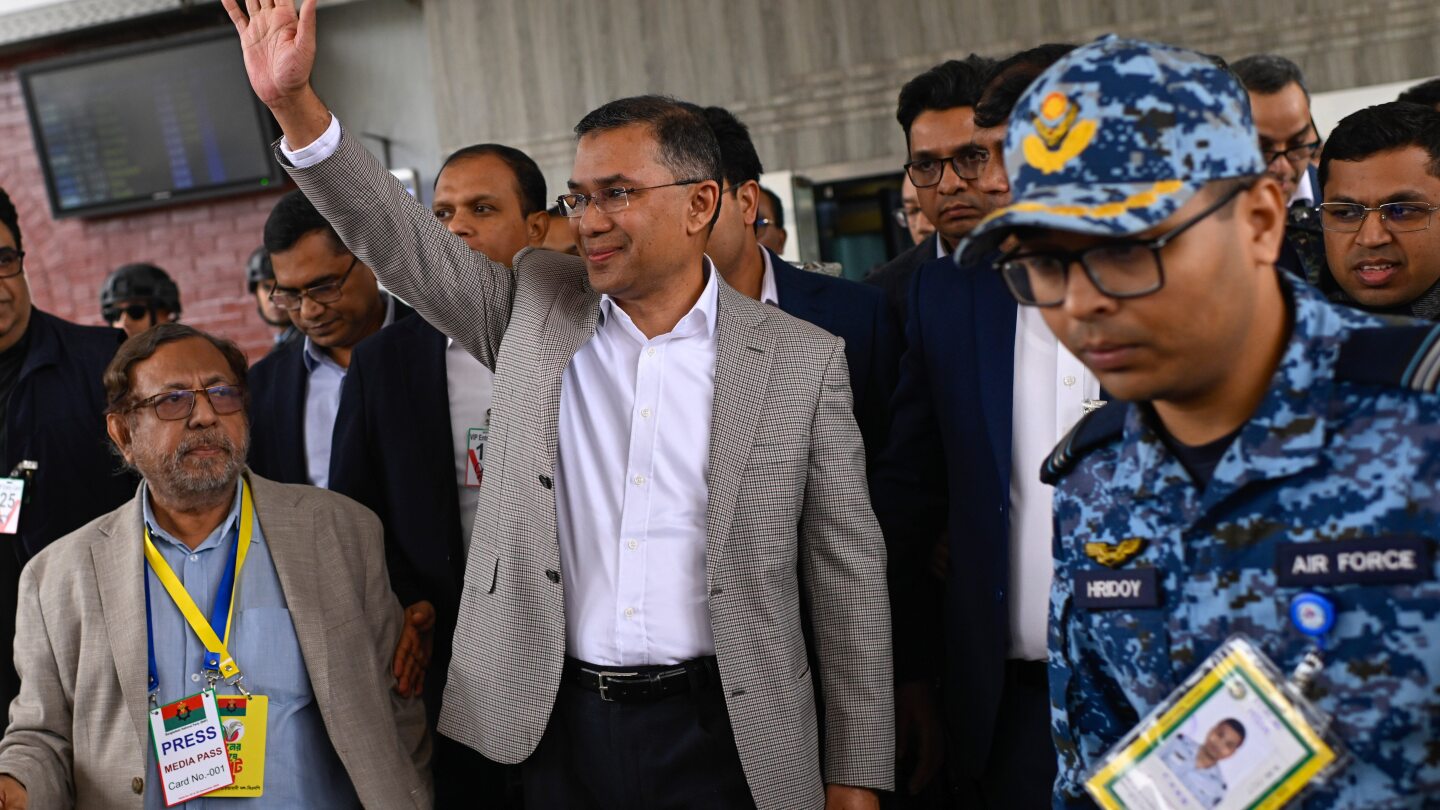
Tarique Rahman, son of former Bangladeshi Prime Minister Khaleda Zia, returned to his homeland Thursday after more than 17 years of self-imposed exile in London, drawing massive crowds of supporters in Dhaka as he positions himself as a frontrunner in upcoming elections.
Rahman, who serves as acting chairman of the Bangladesh Nationalist Party (BNP), one of the country’s two major political parties, arrived at Hazrat Shahjalal International Airport amid tight security. His homecoming carries significant political weight ahead of national elections scheduled for February 12 under the current interim government.
Supporters gathered in unprecedented numbers, creating a human sea that stretched approximately two kilometers from the airport to a reception venue. The turnout was so immense that Rahman’s journey to the makeshift stage took nearly four hours as his bus struggled to navigate through the crowds.
Addressing his supporters, Rahman pledged to establish a safe Bangladesh for all citizens while upholding communal and religious harmony. “I have a plan for the people of my country. Let us build a safe Bangladesh,” he declared to cheering crowds. “We want peace, peace, peace… we will build a Bangladesh that a mother dreams of.”
Rahman’s exile began in 2008 when he left for London to seek medical treatment after reportedly being tortured while in custody during a military-backed government that ruled Bangladesh from 2006 to 2008. Despite his physical absence, Rahman has maintained his political influence by regularly joining party meetings and rallies online from London, effectively keeping the BNP united under his leadership.
Following his public address, Rahman planned to visit his critically ill mother, former Prime Minister Khaleda Zia, who led a coalition government from 2001 to 2006. Zia, who entered politics after her husband, former military chief and President Ziaur Rahman, was assassinated in 1981, is considered one of two pivotal figures in Bangladesh’s political landscape alongside Sheikh Hasina.
Hasina, who ruled Bangladesh for 15 years until 2024, was recently sentenced to death in absentia on charges related to the crackdown on the mass uprising that ended her rule. She currently resides in India, which has not approved extradition requests.
Bangladesh is navigating a critical political transition under the interim government led by Nobel Peace Prize laureate Muhammad Yunus, who faces significant challenges in maintaining law and order while working to restore democratic processes. The Yunus administration has come under criticism from international human rights organizations, including Human Rights Watch and Amnesty International, which have expressed concerns about democratic backsliding.
Liberals within Bangladesh have raised alarms about press freedom and minority rights, accusing the interim government of allowing a visible rise in Islamist influence. While Rahman initially supported Yunus when he assumed leadership, the relationship between his party and the interim government has grown increasingly strained.
During Hasina’s 15-year rule, Rahman was convicted in several criminal cases. However, appeals courts under the Yunus government have since acquitted him of all charges, including alleged involvement in grenade attacks on a Hasina rally in 2004.
Rahman’s return represents a significant shift in Bangladesh’s political dynamics as the nation of more than 170 million people prepares for its first post-Hasina election. His leadership of the BNP positions him as a key figure in determining the country’s political future amid ongoing concerns about democratic stability and religious harmony in the South Asian nation.
Fact Checker
Verify the accuracy of this article using The Disinformation Commission analysis and real-time sources.

10 Comments
Given Bangladesh’s significant role in global supply chains for commodities, energy, and minerals, the upcoming elections will be closely watched. Whoever leads the country will need to balance economic interests with social stability and environmental sustainability.
Exactly. Bangladesh faces many complex challenges, but getting the right policies in place for its natural resources could be transformative if done responsibly. The next few years will be pivotal.
It will be interesting to see if Rahman’s return and potential leadership can help resolve some of the long-standing political tensions in Bangladesh. Restoring communal harmony and peace as he pledged will be a major challenge.
The return of Rahman after so long in exile is a major political event that could reshape Bangladesh’s future. His ability to unite his party and build a broad-based coalition will be crucial, especially on issues of economic development and resource management.
With Bangladesh’s strategic location and growing economy, its political landscape is certainly worth watching for those in the mining, commodities, and energy sectors. Stability and rule of law are key for sustainable development of the country’s natural resources.
Agreed. Bangladesh could be an important supplier of critical minerals and energy resources if it can maintain political and economic stability. Investors will be closely monitoring the situation.
Interesting to see Rahman return after so long in exile. Will be curious to see how he positions himself and his party in the lead-up to the upcoming elections. His pledge to ‘build a safe Bangladesh’ is a lofty goal, but the details will be key.
Absolutely, the political dynamics in Bangladesh will be important to watch. His reception by such large crowds suggests he still has strong support, but governing effectively will be the real challenge.
The mining and commodities sectors will be keeping a close eye on any political developments in Bangladesh, as it’s a significant producer of important resources like coal, natural gas, and other minerals. Stability and predictable policies are crucial for attracting investment.
You make a good point. Bangladesh’s natural resources could be a boon if managed responsibly, but political turmoil could disrupt supply chains and investment. Careful oversight and transparency will be essential.