


Listen to the article
Iran Grapples with Chaos and Uncertainty Following Khamenei’s Death
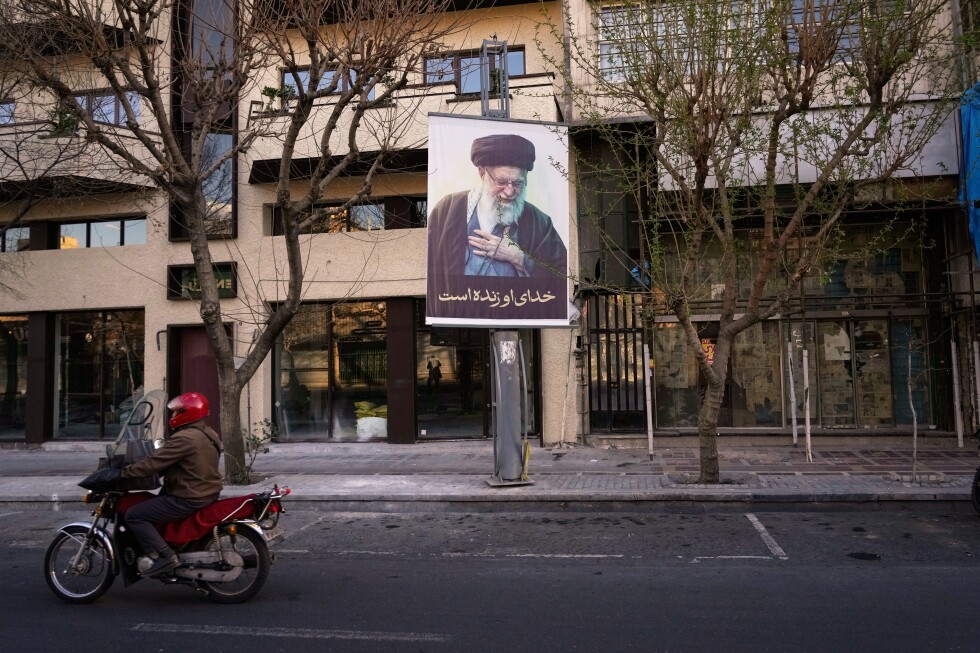
Amid ongoing U.S. and Israeli airstrikes, Iranians are experiencing a complex mixture of emotions following the death of Supreme Leader Ayatollah Ali Khamenei and several top military officials. The strikes, which continued for a second day on Sunday, have left many celebrating in private while publicly expressing fear over the nation’s uncertain future.
“Inside, we are in party mode,” said one man in northern Tehran who expressed joy over Khamenei’s death. Speaking through messaging apps, he added, “But unless we are safe from them, people are not celebrating publicly because they are ruthless and even more vengeful.”
Iranian authorities swiftly moved to project an image of stability and public support, organizing large gatherings in several cities to mourn the leader state media has declared a martyr. Verified footage showed tens of thousands filling main squares in Isfahan and Yazd, waving Iranian flags and chanting anti-American slogans.
Despite calls from U.S. President Donald Trump for Iranians to “seize their government,” many who participated in previous anti-government protests remain cautious. The state’s security forces maintain a firm grip on the population, particularly through the Basij paramilitary group that was instrumental in suppressing last month’s demonstrations.
Golshan Fathi, a Tehran resident, noted the heavy presence of Basij forces in the capital’s streets. A doctor in the northern city of Rasht reported seeing Basij members forcibly remove a man from his car after he honked his horn in celebration. Fathi described Iranian society as currently living “between hope and fear.”
The divisions within Iran run deep. Last month, hundreds of thousands marched across the country chanting “Death to Khamenei” in what likely represented the largest protests ever against the clerical regime established in 1979. Though security forces violently suppressed these demonstrations, resentment toward the government persists. Simultaneously, a significant portion of the population remains loyal to the system for religious, social, or economic reasons.
Iran’s leadership has moved quickly to demonstrate continuity. President Masoud Pezeshkian announced that a leadership council had already begun its work, while the foreign minister stated a new supreme leader would be chosen within “one or two days.” Parliament speaker Mohammad Bagher Qalibaf addressed the nation on state television, emphasizing that the government and military do not depend on individuals.
“We prepared ourselves for these moments and set plans for all scenarios,” Qalibaf said, “even for after the martyrdom of our dear Imam Khamenei.”
When state media announced Khamenei’s death early Sunday, celebrations erupted in some areas. Verified videos showed people dancing and cars honking their horns in the streets of Karaj, near Tehran. Residents reported hearing cheers and celebratory chants from windows and rooftops in Tehran and Rasht.
“It was one of the best nights, if not the best night, of our lives,” the Rasht doctor said. “It was actually my first time ever smoking a cigarette… We didn’t sleep at all. And we don’t even feel tired.”
As the bombardment continues, Iranians are facing the stark reality of living under attack with no clear end in sight. Blasts in Tehran sent plumes of smoke over an area containing government buildings. Iranian authorities report that more than 200 people have been killed in the strikes, including at least 165 in an attack on an all-girls school in the country’s south.
Tehran residents rushed to supermarkets on Sunday, emptying shelves of essentials like bottled water, bread, eggs, and milk. Long lines formed at gas stations across the capital, suggesting fears of fuel shortages or plans to flee the city. State television showed heavy traffic on major highways as families attempted to reach northern provinces, while others chose to remain at home, believing it to be safer.
Meanwhile, Iran has been firing missiles at an expanding list of targets in Israel and Gulf Arab states in retaliation, while Israel has pledged “non-stop” strikes against Iran’s leaders and military installations.
Despite some optimism about potential change, many Iranians remain skeptical about the possibility of substantial transformation. “I don’t think that the people have their determination in their own hands yet,” the doctor in Rasht observed. “This is a foreign war at the end of the day. But if the regime is so weakened and then another call for protests is made, this is another story.”
Reza Mehrabi, 67, cautioned that celebrations might be premature, recalling similar jubilation after the 1979 revolution when the Shah was deposed. “I saw some people were happy about the losses, but when I remember the 1979 revolution and its aftermath, I need more consideration to understand if the nation and the country is on the right path.”
Experts note that despite widespread grievances, Iranians face significant obstacles in organizing large-scale resistance. “The reality is, the Iranian people don’t have the means to displace the Islamic Republic on their own,” said Esfandyar Batmanghelidj of Johns Hopkins University. He predicted that while the strikes might embolden some, many will remain wary of protesting given the regime’s demonstrated willingness to use violence against demonstrators.
The coming days will be critical in determining whether Iran maintains stability or descends further into chaos, as the world watches a nation caught between celebration and fear.
Fact Checker
Verify the accuracy of this article using The Disinformation Commission analysis and real-time sources.

12 Comments
While the celebrations in private suggest a desire for change, the public displays of support orchestrated by the regime are a stark reminder of the control they still wield. The path forward will require navigating a delicate balance of forces.
Ultimately, the Iranian people’s wellbeing should be the priority. Hopefully, a resolution can be found that addresses their legitimate concerns and aspirations without further escalating the conflict.
Fascinating to see the mix of emotions and reactions within Iran. The state’s efforts to control the narrative will be an important factor in how this all plays out. Hoping for a peaceful resolution that addresses the people’s concerns.
The uncertainty is palpable, and the potential for further unrest and conflict is concerning. Let’s hope cooler heads prevail and a path forward can be found that respects the Iranian people’s aspirations.
The continued U.S. and Israeli airstrikes add an extra layer of complexity to the situation. Iranians must be caught between a desire for change and concern over the potential for escalation and further violence.
It’s a delicate balance the Iranian government has to strike – projecting stability while addressing the underlying unrest. The next few weeks will be crucial in determining the country’s direction.
The death of the supreme leader is a significant event, and the diverse reactions within Iran reflect the complex dynamics at play. It will be crucial to closely monitor the situation and see how the power structures evolve in the coming period.
The role of external actors like the U.S. and Israel will also be important to watch. Their actions could either exacerbate tensions or potentially create openings for constructive dialogue and change.
A complex situation in Iran after the supreme leader’s death. Celebrations in private, but fear of the regime’s retaliation prevents open displays. Curious to see how the power dynamics unfold in the coming days.
It’s understandable that Iranians are cautious about publicly celebrating given the regime’s reputation for cracking down. The uncertainty must be palpable.
The regime’s efforts to project stability and public support through mass gatherings seem like an attempt to maintain control. But the underlying fear and uncertainty suggest deeper cracks in the system.
Trump’s call for Iranians to ‘seize their government’ is an interesting move, but it remains to be seen if the population has the will and means to act on it.