


Listen to the article
Severe Weather Batters Balkans, Causing Widespread Disruption and Power Outages
Powerful storms swept across the Balkans on Friday, bringing dangerous winds, heavy rain, and snow that left thousands without electricity and forced school closures across parts of Slovenia, Croatia, and Bosnia-Herzegovina.
In Slovenia, authorities issued emergency weather alerts for dozens of municipalities in the northern and northwestern regions as wind speeds reached an alarming 141 kilometers per hour (87 mph) in some areas, according to reports from the public broadcaster RTV SLO.
Emergency crews worked through the night to clear roads blocked by fallen trees and debris. The severe weather conditions left more than 15,000 residents without power in affected areas. Unusually wintry conditions, including snowfall, were reported even in some lower-lying southern parts of the Alpine nation.
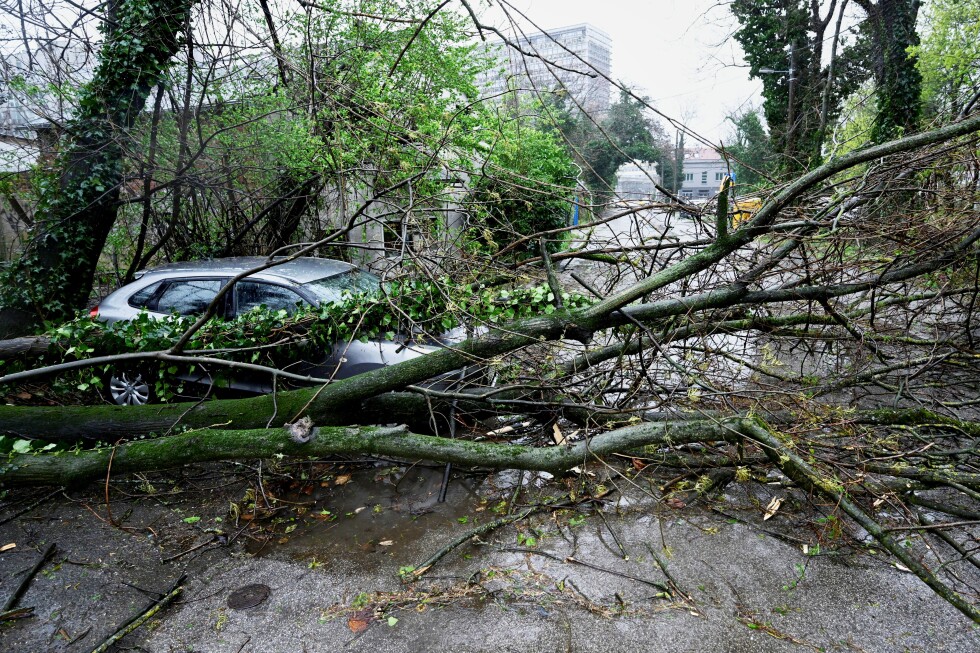
The Croatian capital of Zagreb experienced particularly destructive weather, with fierce winds tearing through the city Thursday afternoon and continuing overnight. The storm uprooted trees, damaged tram infrastructure, and tore off roofs across the metropolis. City officials suspended classes in all primary and secondary schools on Friday as the dangerous conditions persisted.
“Such lasting, strong, stormy wind is not common for the Zagreb area,” said meteorologist Petra Mikus Jurković, noting that wind speeds occasionally reached up to 120 kilometers per hour (74 mph).
Zagreb’s mayor Tomislav Tomasevic urged residents to remain indoors to avoid potential injuries from flying debris. Despite these precautions, city authorities reported that several people suffered minor injuries during the storm. Photos circulating on local media and social networks showed uprooted trees blocking streets and damaging parked vehicles throughout the capital.
Transportation networks throughout the region experienced significant disruption. In northwestern Croatia, snow and powerful winds created hazardous driving conditions, leading to numerous traffic accidents, according to warnings from HAK, the country’s automobile club. Portions of a key motorway connecting Zagreb to the Adriatic coast were either restricted or completely closed, with snow-covered roads reducing visibility to dangerous levels.
The situation proved equally challenging in northwestern Bosnia, where authorities closed roads to heavy vehicles due to heavy snowfall. The combination of power outages and dangerous conditions prompted local officials to suspend school classes until the situation improves. Additional alerts were issued regarding swelling rivers that threatened to overflow their banks in the coming days, potentially creating new hazards for residents.
This extreme weather event adds to a pattern of increasingly severe and unpredictable weather phenomena across Europe. Climate experts point to such extreme weather conditions as consistent with the effects of climate change, which is altering traditional weather patterns and increasing the frequency and intensity of storms across the continent.
The current weather system is expected to continue affecting the region through the weekend, with emergency services remaining on high alert. Authorities are urging residents to stay informed about changing conditions and to take necessary precautions to ensure their safety.
For the affected countries, which are still recovering from previous extreme weather events in recent years, these storms represent not only an immediate challenge but also underscore the growing need for improved infrastructure and emergency response systems to handle increasingly volatile climate conditions.
Fact Checker
Verify the accuracy of this article using The Disinformation Commission analysis and real-time sources.

8 Comments
Unusually wintry weather in southern parts of Slovenia is a troubling sign. As the climate continues to change, we may see more unpredictable and extreme weather patterns that strain local infrastructure and resources. Proactive planning is crucial.
Extreme weather events like this are becoming more common due to climate change. It’s concerning to see the damage caused by the high winds and snowfall in the Balkans. I hope the power can be restored quickly and that any injuries are minor.
The snowfall and high winds sound quite dangerous. Closing schools was the right call to protect students and staff. I hope the emergency crews are able to clear the debris and restore power quickly to minimize disruption.
This is a sobering example of how climate change is impacting communities around the world. Severe weather events like this are likely to become more frequent, so governments need to take steps to build resilience and prepare for the future.
The disruption to schools, power, and transportation must have been very challenging for residents. I hope the authorities are able to quickly restore essential services and provide any necessary aid to affected households.
This is a stark reminder of the need for better infrastructure and emergency preparedness in the face of increasingly severe weather patterns. Hopefully the affected communities can recover swiftly from the disruption.
Yes, investing in resilient infrastructure is crucial. Strengthening the power grid, improving storm drainage, and ensuring schools and other critical facilities can withstand extreme conditions should be priorities.
Wow, those wind speeds are incredibly strong. It’s no surprise the storm caused so much damage, with roofs being torn off and power outages. I hope the clean-up and recovery efforts go smoothly in the affected areas.