


Listen to the article
International Ski Federation Debunks Reports of Unusual Performance Enhancement Techniques
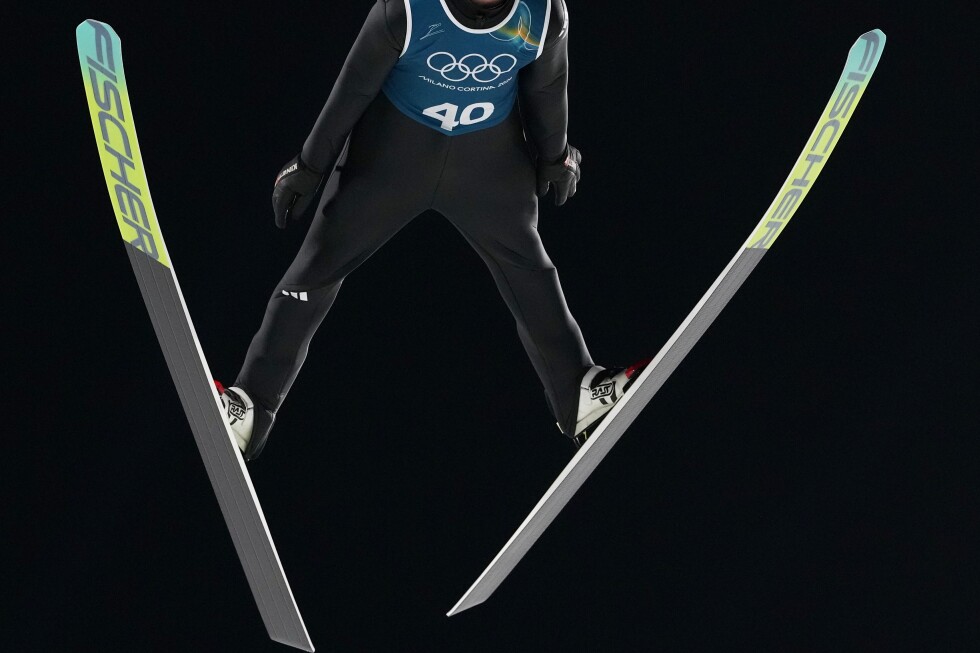
The international governing body for skiing has firmly rejected reports claiming that ski jumpers are using unconventional methods to enhance their performance ahead of the Winter Olympics. The Federation Internationale de Ski (FIS) dismissed as a “wild rumor” allegations that athletes were manipulating their groin area to gain competitive advantages.
The controversy began when German tabloid Bild published a report last month suggesting some ski jumpers were injecting hyaluronic acid into their genitals or using specialized sheaths before undergoing equipment checks. According to the report, such practices would allow jumpers to wear larger suits during competition, potentially providing additional lift and distance.
“This wild rumor started off a few weeks ago from pure hearsay,” FIS spokesman Bruno Sassi told The Associated Press on Friday. “There has never been any indication, let alone evidence, that any competitor has ever made use of a hyaluronic acid injection to attempt to gain a competitive advantage.”
The allegations gained international traction this week after World Anti-Doping Agency (WADA) officials, gathered in Milan to prepare for the 2026 Winter Olympics, indicated they might investigate the matter if it involved potential doping violations.
WADA Director General Olivier Niggli addressed the claims on Thursday, stating: “If anything was to come to the surface, we would look at anything and if it is doping related. We don’t do other means of enhancing performance.”
However, WADA spokesperson James Fitzgerald later clarified that hyaluronic acid—a substance naturally produced in the human body that lubricates joints and is commonly used in cosmetic products—is not included on the organization’s list of banned substances. He referred equipment-related concerns back to the FIS.
The sensationalized reports quickly spread through international media, with some outlets consulting medical experts about the potential implications of such practices. The story’s timing is particularly sensitive for the ski jumping community, which is still reeling from a major cheating scandal that emerged last year.
During the World Championship in Trondheim, Norway, Norwegian team officials were caught manipulating ski suits, resulting in severe consequences. Head coach Magnus Brevik, assistant coach Thomas Lobben, and staff member Adrian Livelten received 18-month bans from the sport for tampering with equipment before the men’s large hill competition.
Two Norwegian athletes, Marius Lindvik and Johann André Forfang, accepted three-month suspensions that allowed them to return to competition this season.
In response to the Trondheim incident, the FIS implemented more stringent equipment controls, including checks before and after jumps and improved three-dimensional measurement systems to evaluate athletes in their uniforms. The governing body has also introduced microchips embedded in suits to prevent manipulation.
The ski jumping competition is one of the most technically regulated events in winter sports, with strict rules governing suit sizing and material properties. Even minor modifications can significantly affect aerodynamics and potentially provide unfair advantages in a sport where victory margins are often measured in fractions of a meter.
As preparations continue for the upcoming Winter Olympics, the FIS appears determined to ensure fair competition through enhanced monitoring while decisively countering what it considers unfounded allegations that could damage the sport’s reputation.
Fact Checker
Verify the accuracy of this article using The Disinformation Commission analysis and real-time sources.

9 Comments
It’s good to see the regulatory body taking these kinds of allegations seriously and providing a clear, factual rebuttal. Maintaining the integrity of the sport should be the top priority.
I’m curious what could have sparked such a strange allegation in the first place. While I’m glad it was debunked, it makes me wonder about the level of scrutiny and misinformation surrounding elite sports.
Tabloid journalism can certainly sensationalize things. But the governing body’s swift response helps uphold transparency and trust in the sport.
Kudos to the ski federation for promptly and clearly debunking this ‘wild rumor.’ Maintaining transparency and credibility is so important, especially for governing bodies overseeing global sporting events.
This is a bizarre rumor, even for the world of competitive sports. I’m glad the regulatory body firmly rejected these claims – it’s important to maintain the integrity and fairness of the sport.
Agreed, the accusations seem quite far-fetched. The officials were right to quickly address and dismiss this ‘wild rumor’.
This just goes to show how quickly rumors can spread, especially in the digital age. I’m glad the ski federation acted quickly to address and shut down this particular ‘wild rumor’.
Absolutely. Proactive communication from governing bodies is crucial to prevent misinformation from taking hold and undermining public trust.
While bizarre, I suppose these kinds of allegations are not entirely unexpected in the high-stakes world of elite sports. The regulatory body’s firm denial is reassuring, though.