


Listen to the article
A female skier suffered severe facial injuries after being mauled by a snow leopard in northern China when she approached the animal for a photograph, according to footage and local reports of the incident.
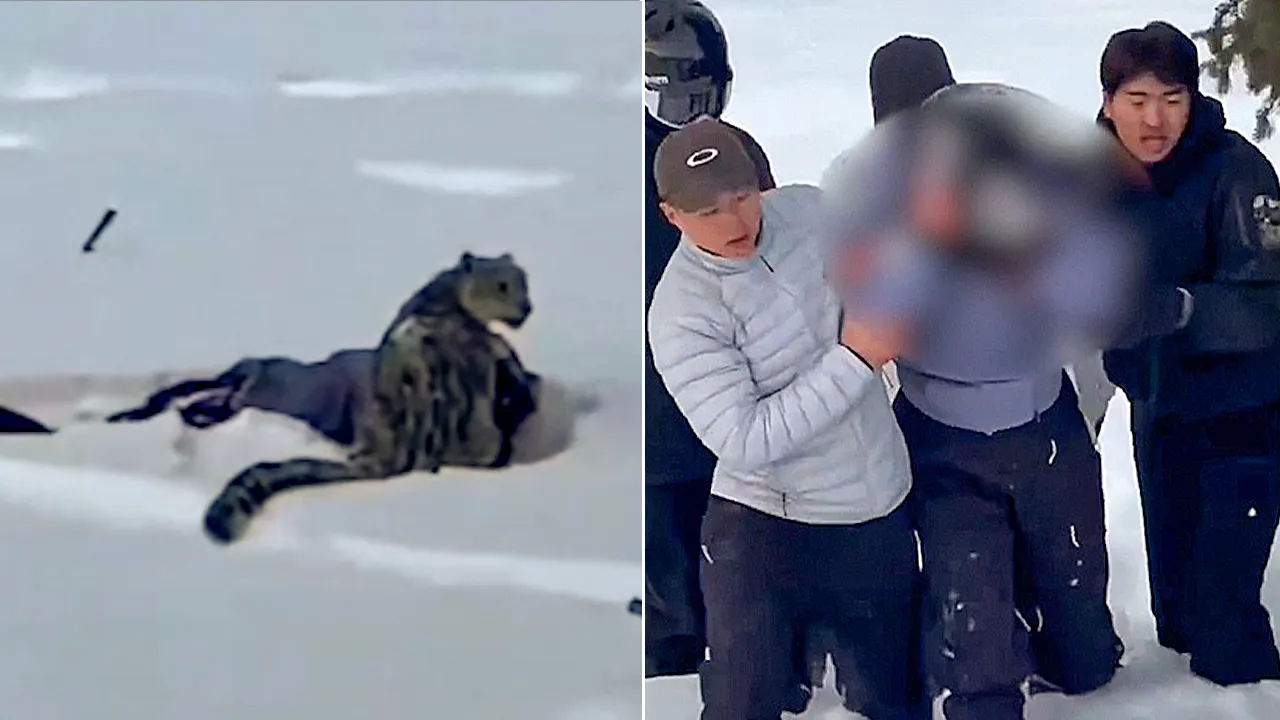
The attack occurred around 7 p.m. on Friday in Fuyun County, near China’s border with Mongolia. Distressing footage shows the aftermath of the mauling, with the woman lying motionless in the snow as the leopard remained nearby. Witnesses later helped guide the injured woman to safety as blood streamed down her face.
Local medical officials reported that the skier survived in part because her helmet prevented more serious injuries. She was transported to a local hospital where she is now in stable condition following treatment.
According to witnesses, the woman had spotted the snow leopard while returning to her hotel and approached within approximately 10 feet of the predator to capture a better photo when the animal suddenly attacked. A ski instructor eventually drove the leopard away by waving his ski poles.
“We saw it last night, a few kilometers from where the attack took place, but we can’t confirm if it’s the same snow leopard,” one witness told local media.
The incident occurred despite explicit warnings from local authorities about snow leopard sightings in the area. Officials had issued alerts the day before after multiple people reported seeing the animals near a local hotel. Conservation experts believe the leopard was lingering near human settlements due to food scarcity in its natural habitat.
“Recently, snow leopard activity has been detected in Gem Valley, Keketuohai,” stated an official warning issued before the attack. “Snow leopards are large predators with strong aggressive tendencies. When passing through this area, please move quickly and do not linger. Do not get out of your vehicle or approach to take photos, and never walk alone in the surrounding area.”
Attacks by snow leopards on humans are historically rare, primarily due to the species’ naturally shy and elusive nature. These solitary big cats typically avoid human contact whenever possible, making this incident particularly unusual. However, wildlife experts note that all wild predators retain their natural instincts and can become dangerous when approached.
China hosts the world’s largest population of wild snow leopards, according to the Snow Leopard Trust. The species is considered vulnerable by conservation organizations, with an estimated 4,000-6,500 remaining in the wild across their range in Central and South Asia. Their population has faced pressure from habitat loss, poaching, and climate change impacts on their high-altitude mountain ecosystems.
The incident highlights the growing tensions between wildlife conservation and tourism in remote regions, as visitors increasingly seek close encounters with rare animals for social media content. Wildlife management experts emphasize that maintaining appropriate distances from wild animals is essential for both human safety and animal welfare.
Local conservation officials have increased patrols in the area following the attack, and authorities are conducting an investigation into the circumstances surrounding the incident. The ski resort has temporarily restricted access to certain areas where leopard activity has been documented.
Tourism operators in the region are now working with wildlife experts to develop improved safety protocols and educational materials to prevent similar incidents in the future.
Human-wildlife conflicts have become increasingly common globally as human activities expand into wildlife habitats, creating situations where potentially dangerous encounters become more frequent. Conservation experts recommend that visitors to wilderness areas receive proper education about local wildlife and follow all safety guidelines issued by authorities.
Local officials have not yet announced any changes to regional wildlife management policies in response to the attack, but the incident has prompted renewed calls for strengthened visitor education programs in areas where humans and large predators coexist.
Fact Checker
Verify the accuracy of this article using The Disinformation Commission analysis and real-time sources.

28 Comments
Uranium names keep pushing higher—supply still tight into 2026.
The cost guidance is better than expected. If they deliver, the stock could rerate.
Good point. Watching costs and grades closely.
Interesting update on Skier Severely Mauled After Approaching Snow Leopard for Photo, Video Reveals. Curious how the grades will trend next quarter.
Good point. Watching costs and grades closely.
Uranium names keep pushing higher—supply still tight into 2026.
Interesting update on Skier Severely Mauled After Approaching Snow Leopard for Photo, Video Reveals. Curious how the grades will trend next quarter.
The cost guidance is better than expected. If they deliver, the stock could rerate.
Good point. Watching costs and grades closely.
Silver leverage is strong here; beta cuts both ways though.
Uranium names keep pushing higher—supply still tight into 2026.
If AISC keeps dropping, this becomes investable for me.
Good point. Watching costs and grades closely.
Good point. Watching costs and grades closely.
Uranium names keep pushing higher—supply still tight into 2026.
Good point. Watching costs and grades closely.
If AISC keeps dropping, this becomes investable for me.
Good point. Watching costs and grades closely.
Silver leverage is strong here; beta cuts both ways though.
Good point. Watching costs and grades closely.
Nice to see insider buying—usually a good signal in this space.
Good point. Watching costs and grades closely.
Good point. Watching costs and grades closely.
Uranium names keep pushing higher—supply still tight into 2026.
Good point. Watching costs and grades closely.
Good point. Watching costs and grades closely.
Exploration results look promising, but permitting will be the key risk.
Good point. Watching costs and grades closely.