


Listen to the article
North Korea Warns of “Terrible Response” to Drone Intrusions Despite South Korean Regret
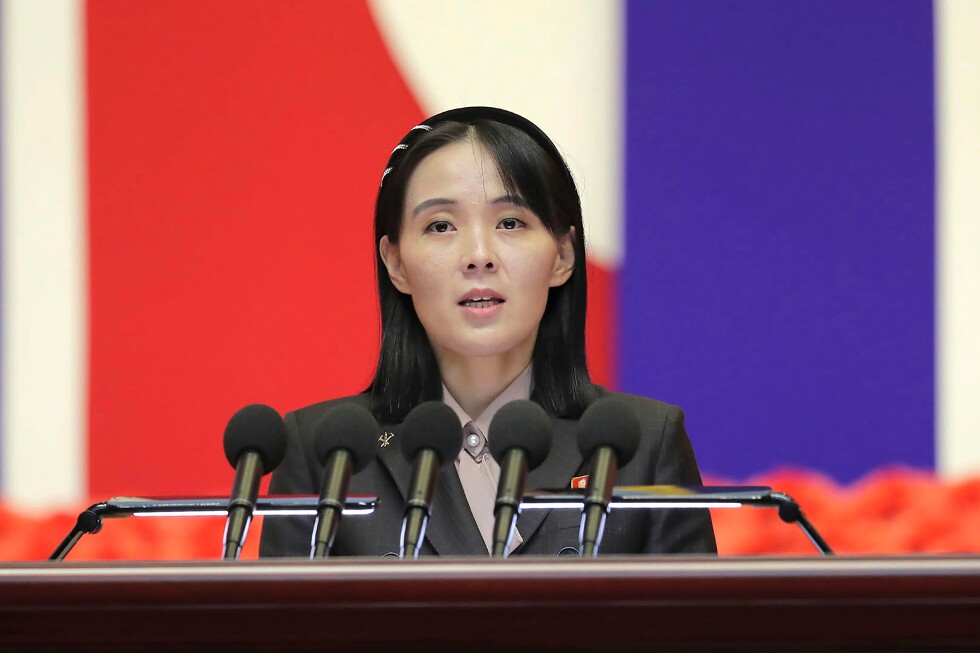
Kim Yo Jong, the influential sister of North Korean leader Kim Jong Un, acknowledged South Korea’s expression of regret over alleged civilian drone flights into North Korean airspace but issued a stark warning that any repeat incidents would trigger severe countermeasures.
In a statement released Friday, Kim characterized South Korean Unification Minister Chung Dong-young’s Tuesday apology as “sensible behavior,” but insisted it fell short as an official government response. She demanded Seoul implement stronger preventative measures to ensure similar intrusions don’t occur in the future.
“I give advance warning that reoccurrence of such provocation as violating the inalienable sovereignty of the DPRK will surely provoke a terrible response,” Kim stated, referring to North Korea’s official name, the Democratic People’s Republic of Korea. “Various counterattack plans are on the table and one of them will be chosen without doubt and it will go beyond proportionality.”
The dispute stems from North Korean accusations last month that South Korea conducted surveillance drone flights in September and again in January. While the South Korean government denies operating any drones during the specified timeframes, law enforcement authorities have launched investigations into three civilians suspected of flying drones into North Korean territory from border regions.
In response to Kim’s statement, South Korea’s Unification Ministry reaffirmed that the alleged drone intrusions contradicted the government’s principles of reducing tensions on the Korean Peninsula. The ministry stated it plans to implement unspecified measures to prevent similar incidents in the future.
Security analysts view North Korea’s heightened focus on the drone issue as part of a broader strategy to intensify anti-South Korean sentiment ahead of the ruling Workers’ Party congress scheduled for late February. This high-profile gathering, the first of its kind in five years, could potentially formalize leader Kim Jong Un’s recent declaration of a hostile “two-state” system on the Korean Peninsula by incorporating it into the party constitution.
The escalating tensions further diminish prospects for diplomatic engagement between the two countries, which have not held public talks since 2019. The drone controversy adds another layer of complexity to already strained inter-Korean relations amid a deepening nuclear standoff.
The situation unfolds as South Korean President Lee Jae Myung recently sought Chinese President Xi Jinping’s assistance as a potential mediator on North Korean issues during talks in Beijing. South Korea has also offered to engage in discussions with North Korea to prevent accidental armed clashes at their heavily fortified border.
The Korean Peninsula remains technically in a state of war as the 1950-53 Korean conflict ended with an armistice rather than a peace treaty. Border incidents, including drone flights, have historically been flashpoints that risked triggering wider military confrontations between the two sides.
North Korea’s strong reaction to the alleged drone incursions reflects the regime’s heightened sensitivity to perceived violations of its sovereignty, particularly at a time when it has been advancing its nuclear and missile capabilities while diplomatically isolating itself further from the international community.
As tensions continue to simmer, the international community remains concerned about the potential for miscalculations that could lead to military escalation on the peninsula, particularly given North Korea’s unpredictable nature and expanding arsenal of conventional and nuclear weapons.
Fact Checker
Verify the accuracy of this article using The Disinformation Commission analysis and real-time sources.

6 Comments
South Korea’s apology was likely a gesture of goodwill, but North Korea seems unsatisfied. With both sides unwilling to back down, this situation could spiral if not handled carefully. Maintaining open communication will be crucial to prevent miscalculation.
Tensions continue to simmer between the two Koreas. North Korea’s harsh rhetoric and warning of a ‘terrible response’ is concerning. I hope diplomatic efforts can de-escalate this drone dispute before it leads to further confrontation.
The drone incursion claims and North Korea’s fiery response underscore the ongoing distrust and volatility between the two Koreas. Calm, diplomatic engagement is needed to prevent this incident from spiraling into a more dangerous confrontation.
Drone incursions are a sensitive issue, especially for North Korea which values its sovereignty. However, Kim Yo Jong’s inflammatory language and threats of retaliation are worrying. Both sides need to exercise restraint to avoid an unintended escalation of tensions.
While North Korea may have legitimate security concerns, its harsh rhetoric and warnings of ‘terrible responses’ are counterproductive. De-escalation and diplomacy should be the priority to resolve this drone dispute peacefully.
This latest dispute highlights the fragile state of inter-Korean relations. Maintaining stability on the Korean peninsula should be the top priority for all involved. Constructive dialogue, not bellicose threats, is the path forward.