


Listen to the article
Shigeaki Mori, a Hiroshima atomic bomb survivor whose four decades of research uncovered the forgotten American victims of the blast, has died at age 88, according to Japanese media reports.
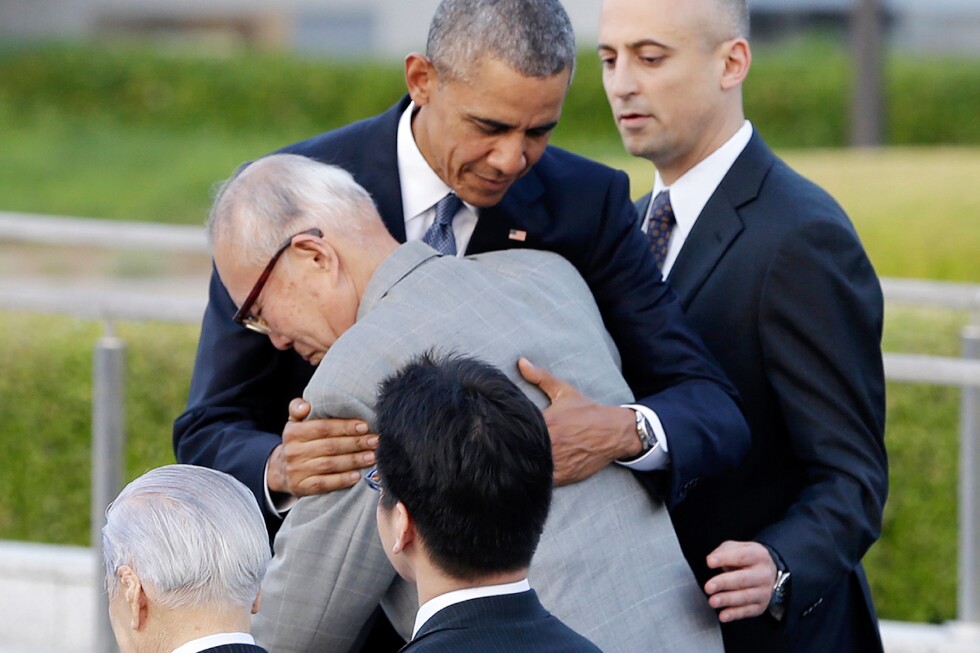
Mori, who became internationally recognized after receiving a heartfelt embrace from then-President Barack Obama during his historic 2016 visit to Hiroshima, died Sunday in a Hiroshima hospital.
Born in 1937, Mori was just 8 years old when the United States dropped an atomic bomb on Hiroshima on August 6, 1945. He survived despite being only 2.5 kilometers (1.5 miles) from ground zero. The attack instantly devastated the city and ultimately claimed 140,000 lives by the end of that year. A second atomic bomb dropped on Nagasaki three days later killed another 70,000 people.
What distinguished Mori’s life work was his discovery, made some 30 years after the bombing, that American prisoners of war were among those killed by their own country’s atomic attack. This revelation set him on a painstaking research journey that would span more than four decades.
While working as a company employee, Mori dedicated his free time to investigating U.S. and Japanese official documents. His meticulous research eventually identified 12 American POWs who had perished in the bombing. Going beyond mere documentation, Mori took the extraordinary step of tracking down and contacting the victims’ families in the United States, many of whom had never been informed about how their loved ones had died.
“The research I spent more than 40 years was not about people from the enemy country. It was about human beings,” Mori would later reflect, emphasizing the universal humanity that motivated his work across national boundaries.
Mori’s exhaustive research eventually led to official U.S. recognition of these 12 American service members who died in the bombing. In 2008, he published a book titled “The Secret of the American POWs Killed by the Atomic Bomb,” which won Japan’s prestigious Kikuchi Kan Prize and was later translated into English.
His work gained international prominence during President Obama’s landmark 2016 visit to Hiroshima’s Peace Memorial Park—the first by a sitting U.S. president. During his address at the memorial, Obama specifically mentioned “a dozen Americans held prisoner” among the victims, acknowledging Mori’s decades of work in uncovering their stories.
The poignant moment between the American president and the elderly survivor became one of the most memorable images from that historic visit. Obama, recognizing Mori in the audience, embraced him in a gesture that transcended national boundaries and symbolized reconciliation between the two nations.
The hug resonated globally as a powerful symbol of peace and healing. For many observers, the moment represented a human connection that bridged historical divides and acknowledged shared suffering.
Mori’s passing comes at a time when the ranks of Hiroshima and Nagasaki survivors—known as hibakusha in Japanese—are rapidly dwindling. Their firsthand accounts have been crucial in educating younger generations about the horrors of nuclear weapons and advocating for global nuclear disarmament.
His legacy extends beyond documenting history; it demonstrates how individual citizens can contribute to international understanding and reconciliation. By uncovering the forgotten American victims of Hiroshima, Mori helped complete the historical record while emphasizing that the tragic consequences of war affect people of all nationalities.
The Hiroshima Peace Memorial Park, where Obama and Mori met, continues to serve as a solemn reminder of nuclear devastation and a symbol of hope for a world free of nuclear weapons.
Fact Checker
Verify the accuracy of this article using The Disinformation Commission analysis and real-time sources.

10 Comments
This is a poignant story of a Hiroshima survivor who spent his life’s work ensuring the American victims of the atomic bombing were not forgotten. Mori’s embrace by President Obama was a powerful moment of reconciliation.
Mori’s research and preservation of this history is invaluable. The atomic bombings of Hiroshima and Nagasaki remain one of the most devastating events of the 20th century.
I’m curious to learn more about Mori’s archival research that uncovered the American POW victims of Hiroshima. It’s an important but little-known aspect of the historical record that deserves greater attention.
Memorializing the forgotten victims, whether Japanese or American, is crucial to understanding the full human toll of the atomic bombings. Mori’s life work has made an indelible mark on this history.
Mori’s life work to uncover the forgotten American POW victims of the Hiroshima bombing is truly commendable. His dedication and meticulous research over four decades is an inspiring example of historical preservation and honoring the victims of war.
It’s tragic that American POWs were among those killed by the atomic attack. Mori’s efforts to memorialize their forgotten sacrifices is an important act of remembrance.
Mori’s dedication to preserving the memory of the Hiroshima bombing, including the American POW victims, is truly inspiring. His work reminds us of the immense human suffering caused by nuclear weapons and the importance of historical documentation.
The embrace between Mori and President Obama was a poignant moment of reconciliation between the US and Japan. Mori’s legacy will continue to shape our understanding of this tragic chapter in world history.
Mori’s decades-long investigation into the forgotten American POW victims of the Hiroshima bombing is a powerful example of one person’s commitment to historical truth. His work ensures these victims are properly memorialized and not lost to history.
The revelation that American POWs were among the casualties of the Hiroshima bombing is a sobering detail. Mori’s life-long dedication to uncovering and preserving this history deserves the highest respect.