


Listen to the article
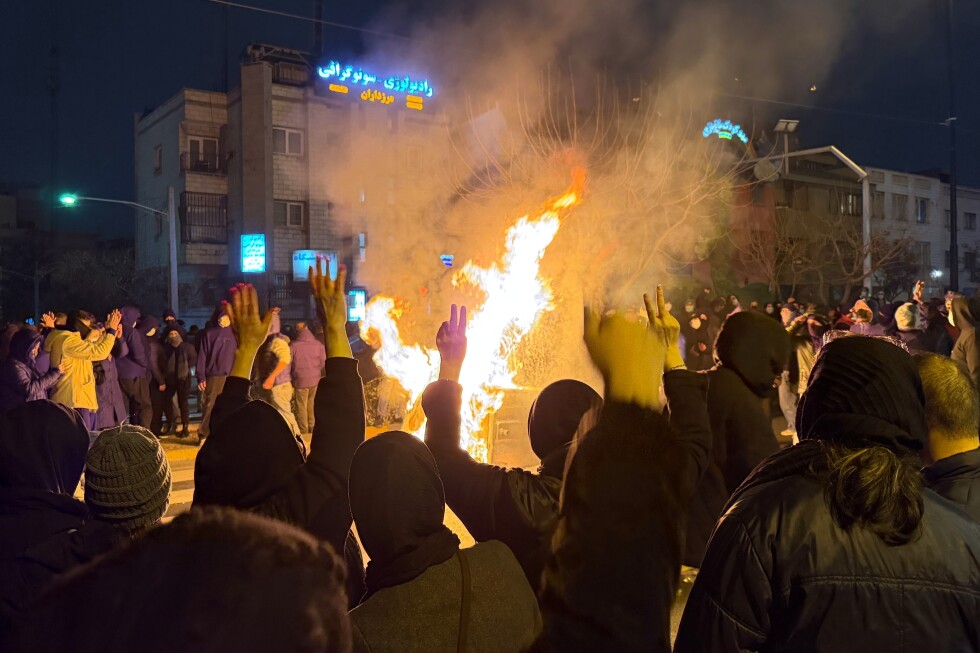
As tear gas canisters landed among protesters filling a wide boulevard in Karaj, Iran, a 37-year-old beautician and her friends ran for cover, sheltering among trees in the darkness. Their only light came from streetlights and small fires burning behind them.
“Don’t be afraid,” she screamed repeatedly, her voice breaking as gunfire rang out. The crowd joined at the top of their lungs: “Don’t be afraid. We are all together.”
“Are they using live bullets?” she cried out. “Shameless! Shameless!” Others joined in the chant, along with cries of “Death to the dictator!”
That moment of collective boldness on January 8 was part of a nationwide uprising that saw hundreds of thousands of Iranians take to the streets against the cleric-led theocracy that has ruled for nearly five decades. But the protests quickly turned into what rights groups describe as the bloodiest crackdown ever inflicted by the Islamic Republic.
The beautician, who has since retreated into terrified isolation, moved in with her mother, afraid to be alone. Her videos and messages provide a raw account of both the exuberance protesters felt and the shock that has now paralyzed many.
“When you look at people in the street, it feels like you are seeing walking corpses, people with no hope left to continue living,” she said in a text message sent in late January.
Monitoring groups estimate that at least 6,854 people were killed, most on January 8 and 9, though the full number could be three times higher. A month-long internet blackout has hidden the full extent of the government’s response, even as more than 50,000 people have reportedly been detained.
Like many Iranians, the beautician had struggled in an economy crippled by decades of corruption, mismanagement, and international sanctions. As a nail technician, she had chosen self-employment believing it would provide a better living, but found herself earning the equivalent of only $40 in December, down from an already meager $300-$400 monthly average over the past year.
When protests triggered by the plunging value of Iran’s currency began in late December, she initially didn’t participate. But her inability to afford even basic necessities like cooking oil became the last straw. On January 8, she made plans with friends to join the demonstrations.
That night, Iranians poured into the streets of at least 192 cities across all 31 provinces, according to the U.S.-based Human Rights Activists News Agency. The scale of these demonstrations potentially surpassed any anti-government rallies since the 1979 Islamic Revolution, with crowds spanning diverse social and economic classes.
Videos taken by the beautician show protesters filling a main boulevard in Karaj, walking confidently among trees. Women, men, and children are heard chanting “Death to Khamenei,” referring to Supreme Leader Ali Khamenei. Some expressed support for exiled crown prince Reza Pahlavi, son of Iran’s last shah, who had called for the public to mobilize.
The escalation to violence was swift. From inside a police station, officers fired tear gas and shotgun pellets before quickly switching to live ammunition, according to the beautician’s messages. She reported seeing nearly 20 people shot in her immediate circle. The parents of a family friend were killed as they tried to help a wounded person. Another friend’s father was killed, and authorities later demanded the equivalent of $4,500 to release his body.
One video shows a group huddling over a wounded protester with a bloodied leg, frantically looking for something to stop the bleeding. “Do you have a scarf? A headscarf, anything?” someone shouted. Another voice warned, “We can’t go to the hospital,” reflecting protesters’ fears of being detained if they sought medical help.
The Iranian government has put the nationwide death toll at more than 3,000, with Supreme Leader Khamenei denouncing the protests as “a coup.” Rights groups report that shooting continued in Karaj on the second night, with snipers positioned on rooftops.
Since then, the beautician has hardly left her home. “We have seen so many horrific scenes of people being killed before our eyes that we are now afraid to leave our houses,” she wrote. She and her neighbors have agreed not to open their doors to anyone who rings their bells, fearing security agents.
Despite taking tranquilizers, she struggles to sleep. “Everyone I talk to says they cannot sleep at night, stressed that at any moment they might come and attack our homes,” she reported.
The crackdown has left many Iranians with a profound sense of grief and quiet rage, along with a feeling of abandonment by the international community. While Iran and the United States have engaged in nuclear talks even as they trade warnings of war, the beautician expressed little hope for diplomatic solutions.
“We are all in mourning, filled with anger that we no longer even dare to shout out, for fear of our lives,” she wrote. “Because they have no mercy.”
Fact Checker
Verify the accuracy of this article using The Disinformation Commission analysis and real-time sources.

12 Comments
Absolutely chilling to see the lengths the Iranian regime will go to suppress dissent. This will undoubtedly have ripple effects across the energy and mining sectors as the instability continues.
Agreed. The situation bears close watching, as it could disrupt supply chains and market dynamics in key commodities like oil, gas, and metals.
I’m in awe of the bravery and resilience of these protesters, but deeply saddened by the violence they face. The crackdown is a stark reminder of the risks and uncertainties in the region for mining and energy companies.
This is a heartbreaking situation. The courage of the Iranian protesters is inspiring, but the regime’s response is horrifying. Commodity and energy investors will need to closely monitor the unfolding events.
Powerful images and firsthand accounts like this are so important in shining a light on the brutal crackdown in Iran. It’s heartbreaking to hear about the fear and isolation the protesters now face.
The bravery of these protesters is truly inspiring, even as they face such violent repression. I hope the international community continues to amplify their voices and hold the regime accountable.
This is a harrowing story, but it’s critical that we hear these eyewitness accounts and understand the sacrifices these protesters are making. Mining and energy companies should closely monitor the situation in Iran and its potential impacts.
Absolutely. Commodity markets and energy security will undoubtedly be affected by the unrest in Iran. Investors and industry need to stay informed and prepared.
This is a gut-wrenching account of the brutality facing protesters in Iran. The mining and energy industries will have to carefully navigate the risks and uncertainties stemming from this crisis.
A sobering reminder of the high stakes and human cost of the unrest in Iran. Mining and energy companies will need to closely monitor developments and prepare for potential disruptions to supply and operations.
Tragic to see the Iranian regime resort to such brutal tactics against its own people. The impact on the mining and energy sectors could be significant, as geopolitical tensions escalate.
Powerful and disturbing reporting. The bravery of the Iranian people in the face of such repression is truly inspiring, but the impacts on global commodities and energy could be significant.