


Listen to the article
Ocean Acidification Threatens Sharks’ Fearsome Teeth, Study Finds
Sharks, the most feared predators of the sea, rely on their continuously regenerating teeth to maintain their position at the top of the marine food chain. But new research suggests that rising ocean acidity levels could compromise these essential hunting tools, potentially disrupting oceanic ecosystems.
A team of German scientists has discovered that increasingly acidic ocean conditions could weaken shark teeth, making them more susceptible to breakage during hunting and feeding. The study, published in the journal Frontiers in Marine Science, represents a concerning development for shark species already facing multiple environmental threats.
“We found there is a corrosion effect on sharks’ teeth,” explained Maximilian Baum, the study’s lead author and marine biologist at Heinrich Heine University Düsseldorf. “Their whole ecological success in the ocean as the rulers of other populations could be in danger.”
The research comes amid growing scientific concern about ocean acidification, a process that occurs when oceans absorb increasing amounts of carbon dioxide from the atmosphere. Human activities, particularly the burning of fossil fuels like coal, oil, and gas, are accelerating this chemical change in marine environments.
According to the National Oceanic and Atmospheric Administration (NOAA), the ocean is expected to become almost 10 times more acidic than its current state by the year 2300 if current trends continue.
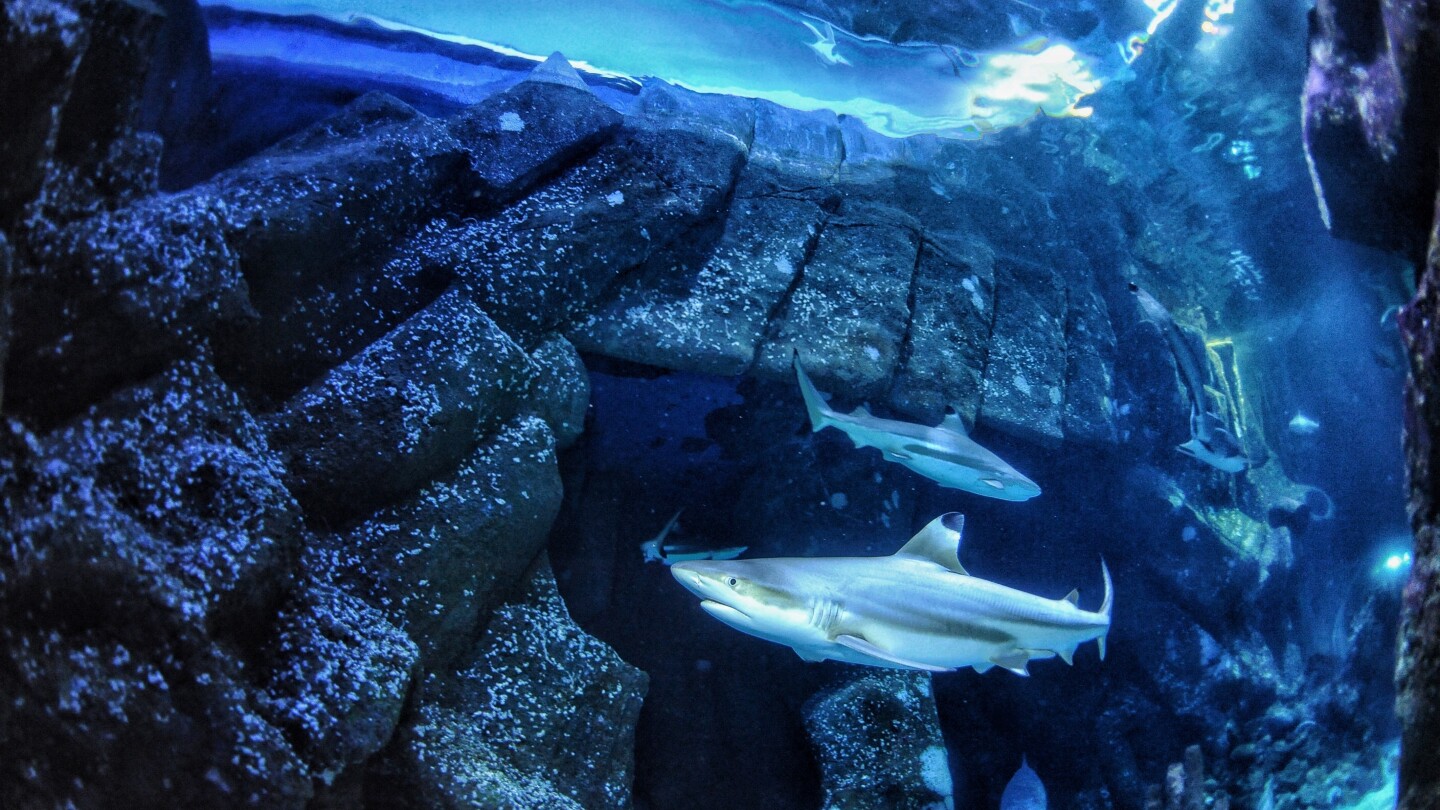
To conduct their study, researchers collected more than 600 discarded teeth from blacktip reef sharks housed in an aquarium. This species, native to the Pacific and Indian oceans, typically grows to about 5.5 feet in length. The scientists then subjected these teeth to water samples simulating both current acidity levels and the projected acidity of 2300.
The results were striking. Teeth exposed to more acidic conditions showed significant structural damage, including cracks, holes, root corrosion, and degradation of the tooth’s fundamental structure.
“Shark teeth are highly developed weapons built for cutting flesh, not resisting ocean acid,” Baum noted. During their lifetime, sharks will go through thousands of teeth, which play a crucial role in regulating populations of fish and marine mammals throughout the world’s oceans.
The findings are particularly concerning given that more than a third of shark species are already threatened with extinction, according to the International Union for Conservation of Nature. However, experts note that the impact of acidification on sharks may unfold gradually rather than precipitously.
Nick Whitney, senior scientist at the Anderson Cabot Center for Ocean Life at the New England Aquarium, who was not involved in the study, points out that shark teeth develop inside the mouth tissue, which will temporarily shield them from changes in ocean chemistry. He also emphasized sharks’ remarkable evolutionary resilience.
“They’ve been around for 400 million years and have evolved and adapted to all kinds of changing conditions,” Whitney said.
Gavin Naylor, director of the Florida Program for Shark Research at the Florida Museum of Natural History, agreed that while ocean acidification is concerning, overfishing currently remains the most significant threat to shark populations worldwide.
Scientists warn that the impacts of ocean acidification extend far beyond sharks. Shellfish like oysters and clams may struggle to build shells in more acidic conditions. Fish scales could also become weaker and more brittle, potentially changing predator-prey dynamics throughout marine ecosystems.
The complex ecological consequences of these changes remain difficult to predict. For example, if fish prey develop weaker scales due to acidification, that might initially benefit sharks despite their compromised teeth. However, the overall disruption to marine food webs could ultimately prove detrimental to many species.
“The evolutionary success of sharks is dependent on their perfectly developed teeth,” Baum emphasized. As climate change continues to alter ocean chemistry, the future of these apex predators—and the marine ecosystems they help regulate—remains uncertain.
Fact Checker
Verify the accuracy of this article using The Disinformation Commission analysis and real-time sources.

12 Comments
Fascinating research on the potential impact of ocean acidification on shark teeth. As apex predators, sharks play a crucial role in maintaining ocean ecosystems, so any threat to their dental health is concerning. I’m curious to learn more about the specific mechanisms by which acidification could weaken shark teeth and how this might ripple through the food chain.
Agreed, this is an important issue that deserves further study. Understanding how ocean acidification could disrupt the delicate balance of marine life is crucial for developing effective conservation strategies.
As an investor in mining and energy-related equities, I’m curious to understand the potential implications of this research for commodity markets. Could weaker shark teeth lead to changes in hunting behavior or ecosystem dynamics that could impact the supply and demand for certain minerals and resources?
That’s an interesting angle to consider. Any major disruptions to marine ecosystems could certainly have ripple effects across various commodity markets. It would be worth keeping an eye on how this research develops and whether it informs any investment decisions.
This is a sobering finding. Sharks are iconic species, and their decline could have far-reaching consequences for ocean health. I wonder what solutions or mitigation strategies might be available to help counter the effects of acidification on shark teeth and other marine organisms.
Protecting shark populations and their habitats will be key. Reducing carbon emissions and addressing the root causes of ocean acidification should also be a top priority for policymakers and conservationists.
This is a concerning development, but not entirely surprising given the broader trends of ocean acidification. I wonder if there are any potential technological or scientific solutions that could help strengthen shark teeth or mitigate the impacts of acidification. Innovative approaches may be needed to protect these vital predators.
Good point. Advances in materials science or even genetic engineering could potentially offer ways to reinforce shark teeth or make them more resilient to acidic conditions. Investing in this kind of research could pay dividends for ocean conservation efforts.
As someone with a background in mining and minerals, I find this research particularly relevant. Sharks are important indicators of ocean health, so any threats to their well-being could have broader implications for the extraction and processing of marine resources. It will be important to closely monitor how this issue evolves.
Absolutely. The sustainability of mineral and energy production from the oceans is closely tied to the overall health of marine ecosystems. Protecting keystone species like sharks should be a priority for the industry.
This is a stark reminder of the cascading effects of climate change and human-induced environmental degradation. While sharks may seem fearsome, they are ultimately vulnerable to the impacts of ocean acidification. I hope this research spurs greater urgency in addressing the root causes of this problem.
Well said. Safeguarding the health of our oceans and the species that depend on them should be a global imperative. Innovative solutions and collaborative efforts will be essential to mitigate the threats posed by acidification and other environmental challenges.