


Listen to the article
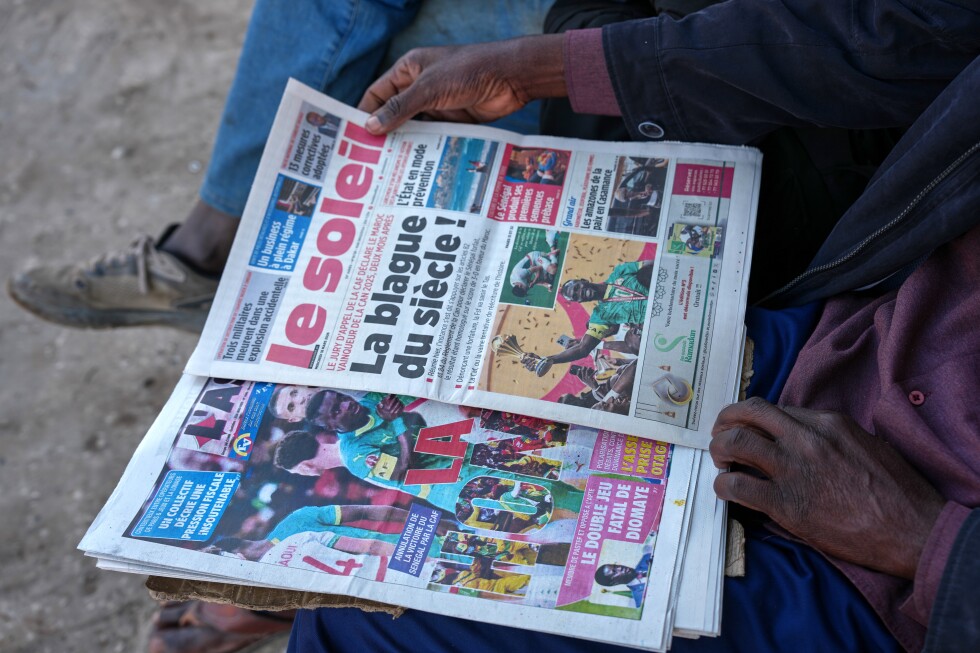
Moroccan celebrations and Senegalese outrage have erupted across both nations after African soccer’s governing body dramatically reversed the result of the African Cup of Nations final, stripping Senegal of its title and awarding it to Morocco two months after the match concluded.
The Confederation of African Football’s (CAF) appeals board ruled Tuesday that Senegal must forfeit the final by a default score of 3-0 after players left the field without referee authorization during a chaotic incident in the original match. The decision has sent shockwaves through the international soccer community and escalated tensions between the traditionally friendly nations.
Senegal’s government responded forcefully on Wednesday, pledging to “pursue all appropriate legal avenues” to challenge the ruling and calling for an international investigation into “suspected corruption” within CAF. The unprecedented reversal has transformed what was already a controversial sporting event into a diplomatic incident.
The disputed final was marred by controversy when most of Senegal’s team temporarily left the pitch for nearly 10 minutes while their fans clashed with stadium stewards. The walkout came after officials disallowed a Senegalese goal and awarded Morocco a contentious penalty. When play eventually resumed, Morocco missed the penalty, and Senegal secured victory by scoring in extra time.
The reversal has strained relations between Morocco and Senegal, two nations with historically strong ties built on shared religious traditions, economic partnerships, and cultural exchanges. Both countries are predominantly Muslim with strong connections through the Tijaniyyah Sufi order, while Moroccan investments in Senegal’s banking and agricultural sectors have been substantial for years.
Adding to the tension, 19 Senegalese fans arrested at the final were sentenced to prison terms of up to a year by a Moroccan court last month on hooliganism charges. The Senegalese government has expressed solidarity with these supporters, further complicating diplomatic relations.
Seydina Issa Laye Diop, president of Senegal’s national team fan group “12th Gaindé,” urged perspective, telling The Associated Press: “If the goal is to preserve friendship, then it must be nurtured. Small gestures can have a big impact. These are things we can move past.”
However, public sentiment in both countries reflects growing animosity. Mariama Ndeye, a student in Dakar, expressed her changing view of Moroccans: “When everything goes well, they call us their brothers. But when things don’t go their way, they start being nasty.”
Similarly in Casablanca, business owner Ismail Fnani acknowledged his perceptions had shifted: “Where there was once sympathy and compassion, now I will treat them as they have treated us.” Not all Moroccans celebrated the decision, though. Mohamed El Arabi, a Casablanca shopkeeper, admitted: “We would have preferred it to stay with Senegal because it doesn’t feel right otherwise.”
Recognizing the potential for escalation, Morocco’s embassy in Dakar issued a statement calling on Moroccans in Senegal to “demonstrate restraint, vigilance, and a sense of responsibility,” emphasizing that “it is only a match, the outcome of which should never justify any form of escalation.”
The controversy has fueled accusations of favoritism toward Morocco within CAF. Critics point to Morocco’s growing influence in African soccer, bolstered by its status as a 2030 World Cup co-host and significant investments in developing its soccer infrastructure. Morocco has emerged as a continental powerhouse in recent years, reaching the World Cup semifinals in 2022 and investing heavily in training facilities and youth development.
CAF President Patrice Motsepe defended the organization against such allegations on Wednesday, insisting: “Not a single country in Africa will be treated in a manner that is more preferential, or more advantageous, or more favorable than any other country on the African continent.”
As legal challenges and diplomatic efforts unfold, the unprecedented decision continues to reverberate across African soccer, raising questions about governance and fairness in the sport while testing the resilience of long-standing international relationships.
Fact Checker
Verify the accuracy of this article using The Disinformation Commission analysis and real-time sources.

9 Comments
This is such an unfortunate situation. Sports should bring countries together, not drive them apart. I hope cooler heads can prevail and the two nations can resolve this dispute amicably.
Agreed. At the end of the day, it’s just a game. Both teams and their fans should be able to celebrate their achievements without this kind of controversy.
This is a concerning development. The reversal of the final result is highly unusual and raises serious questions about the decision-making process within the CAF. I hope the international investigation can get to the bottom of this.
Agreed. The implications extend far beyond just the match itself. The diplomatic tensions between Senegal and Morocco are worrying, and this could have broader repercussions for African football.
Wow, this is a real mess. The back-and-forth over the Africa Cup final result is escalating into a diplomatic crisis between Senegal and Morocco. I’m curious to see how this all plays out and whether Senegal can get the CAF ruling overturned through legal action.
Definitely seems like there’s a lot more to this story than just sports. Allegations of corruption within CAF are serious and warrant a thorough independent investigation.
As someone who follows African football closely, this is a really disappointing turn of events. The Africa Cup of Nations is such a prestigious tournament, and it’s sad to see it embroiled in this kind of controversy. I hope the CAF can restore the integrity of the competition.
As a fan of African soccer, I’m really disappointed to see this happening. The African Cup of Nations is such an important event, and it’s a shame that the final has been tainted by these allegations. I hope the truth comes out and justice is served.
Absolutely. The integrity of the competition is at stake here. The CAF needs to be transparent and ensure that their decisions are fair and impartial.