


Listen to the article
Violence Grips Mexico as Powerful Drug Lord’s Death Sparks Retribution
A stark contrast unfolded in the picturesque town of Tapalpa, Mexico on Monday, just one day after Mexican military forces killed the country’s most powerful drug lord. While tourist shops remained open and some workers continued their routines, the sound of gunfire echoed through the streets, where a dead man lay beside a bullet-riddled vehicle.
Mexican security forces remain locked in battle with cartel gunmen following the death of Nemesio Oseguera Cervantes, known as “El Mencho,” the notorious leader of the Jalisco New Generation Cartel. The killing triggered widespread violence that has put the entire country on edge, with cartel members blocking roads while smoke rose from the outskirts of the town in Jalisco state.
According to authorities, more than 70 people have died since the operation to capture Oseguera Cervantes began. The death toll includes security personnel, suspected cartel members, and civilians, though officials have provided few details about the circumstances surrounding most of these deaths.
Mexican Defense Secretary General Ricardo Trevilla revealed that authorities tracked one of Oseguera Cervantes’ romantic partners to his hideout in Tapalpa. The cartel leader and two bodyguards fled into a wooded area where they were seriously wounded in a firefight. They were taken into custody but died while being transported to Mexico City.
In a separate operation in Jalisco, soldiers killed another high-ranking cartel member who was reportedly coordinating violence and offering more than $1,000 for every soldier killed.
The human cost has been severe. Security Secretary Omar García Harfuch confirmed that 25 members of the Mexican National Guard were killed in six separate attacks. Approximately 30 criminal suspects were killed in Jalisco, and four others in neighboring Michoacan state. A prison guard and an agent from the state prosecutor’s office were also among the dead.
The White House confirmed that the U.S. provided intelligence support for the operation to capture the cartel leader, who was one of the most wanted criminals in both countries. The U.S. State Department had offered a reward of up to $15 million for information leading to Oseguera Cervantes’ arrest.
The Jalisco New Generation Cartel, which began operating around 2009, has become one of Mexico’s fastest-growing criminal networks. It is known for trafficking fentanyl, methamphetamine, and cocaine to the United States and has carried out brazen attacks against Mexican government officials. In February 2025, the Trump administration designated the cartel as a foreign terrorist organization, noting its aggressive tactics against the military, including attacking helicopters and pioneering the use of explosives launched from drones.
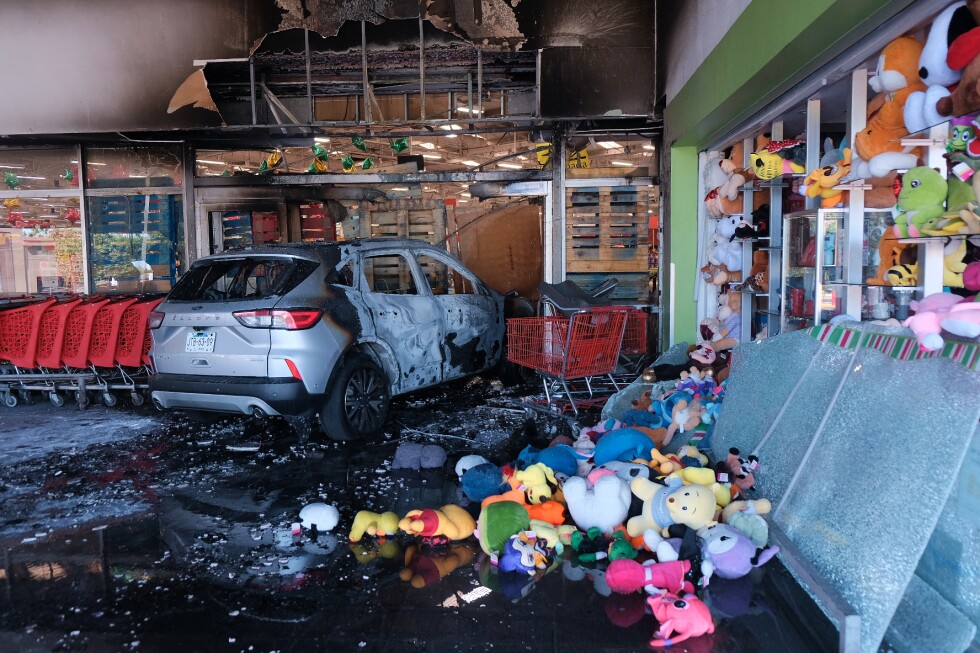
The organization’s response to their leader’s death has been fierce and widespread, with members erecting more than 250 roadblocks across 20 Mexican states and setting vehicles ablaze.
As the threat of further violence looms, several Mexican states canceled school on Monday, while local and foreign governments warned citizens to shelter in place. The U.S. Embassy announced via social media that its personnel in eight cities and in Michoacan state would work remotely and shelter in place, advising U.S. citizens in many parts of Mexico to do the same.
In Guadalajara, the state capital, traffic was light on Monday morning—a notable change from Sunday when Mexico’s second-largest city was virtually shut down as fearful residents stayed home. More than 1,000 people spent the night trapped in the city’s zoo, sleeping in buses. Luis Soto Rendón, the zoo’s director, explained that many visitors had been unable to return home to nearby states like Zacatecas and Michoacan since violence erupted on Sunday morning.
“We decided to let people stay inside the zoo for their safety,” Soto said. “There are small children and senior citizens.”
American tourist Steve Perkins, 57, was visiting Puerto Vallarta with his wife when their return flight to Broken Arrow, Oklahoma was canceled. From their hotel terrace, they witnessed explosions, plumes of smoke, and heard gunfire and screams. “My wife called our kids to tell them goodbye if we were never gonna see them again,” Perkins told The Associated Press. “It was fairly unsettling.”
Mexico had hoped that eliminating one of the world’s biggest fentanyl traffickers would ease pressure from the Trump administration to take stronger action against cartels. U.S. President Donald Trump has demanded that Mexico do more to fight fentanyl smuggling, threatening to impose tariffs or take unilateral military action if the country doesn’t show results.
As heavily armed Mexican security forces continue their operations, local resident Joel Ramírez summed up the mood of many when he said: “Everything seems calmer, but we were almost there and got stuck. We’re scared.”
Fact Checker
Verify the accuracy of this article using The Disinformation Commission analysis and real-time sources.

15 Comments
The death of a prominent cartel leader is often a double-edged sword, sparking retaliatory violence while also creating a power vacuum that can lead to further infighting and instability. Maintaining public safety while pursuing long-term solutions to reduce the appeal of the drug trade is an immense challenge.
This is a stark reminder of the power and ruthlessness of Mexico’s drug cartels. Strengthening cross-border cooperation and intelligence-sharing with the US and other partners could help disrupt the cartels’ operations and supply chains. But addressing the root causes will be key to a lasting solution.
Agreed. Coordinating with international allies to choke off the cartels’ resources and dismantle their networks is crucial. But sustainable change requires tackling the socioeconomic factors that sustain the drug trade in the first place.
This is a tragic situation, with the loss of life on all sides. It’s critical that the Mexican government continues to combat the cartels firmly but also takes steps to address the underlying socioeconomic factors driving the drug trade. Sustainable solutions require a comprehensive, multi-faceted approach.
Agreed. The scale of violence following the death of this cartel leader is concerning. Dismantling these criminal organizations is challenging, but necessary to restore stability and security for Mexican citizens.
This incident underscores the immense challenge Mexico faces in combating the power and influence of its drug cartels. Sustained pressure and intelligence-led operations are necessary, but must be complemented by comprehensive reforms to address the social and economic drivers of the illicit drug trade.
Well said. Dismantling cartel power structures is critical, but lasting change requires tackling the complex, multi-faceted issues that enable the drug trade to thrive in the first place.
The level of violence following the killing of ‘El Mencho’ shows the cartel’s determination to retaliate and assert its dominance. Investing in community-based policing and social programs could help build trust and resilience in vulnerable areas. But this will be a long, difficult struggle.
While the death of ‘El Mencho’ is a symbolic victory, the ongoing clashes between security forces and cartel gunmen highlight the complexity of the situation. Securing vulnerable communities and disrupting the flow of drugs and weapons will require a sustained, coordinated effort on multiple fronts.
Well said. Tackling the drug trade and cartel violence in Mexico is an immense challenge that will take time and dedication. Maintaining public safety while pursuing broader reforms is critical.
The high civilian toll is deeply concerning. Protecting innocent lives must be a top priority as the government continues its crackdown on the cartels. Improving intelligence, training, and coordination between security forces could help minimize collateral damage in these operations.
The high civilian toll is deeply concerning. Protecting innocent lives must be a top priority as the government continues its crackdown on the cartels. Improving intelligence, training, and coordination between security forces could help minimize collateral damage in these operations.
This incident underscores the immense challenge Mexico faces in combating the power and influence of its drug cartels. Sustained pressure and intelligence-led operations are necessary, but must be complemented by comprehensive reforms to address the social and economic drivers of the illicit drug trade.
Well said. Dismantling cartel power structures is critical, but lasting change requires tackling the complex, multi-faceted issues that enable the drug trade to thrive in the first place.
The targeting of high-profile cartel leaders is risky but can disrupt their operations. However, the resilience of these groups means the fight is far from over. Diversifying the economy, improving public services, and addressing poverty are all crucial long-term strategies to weaken the cartels’ influence.