


Listen to the article
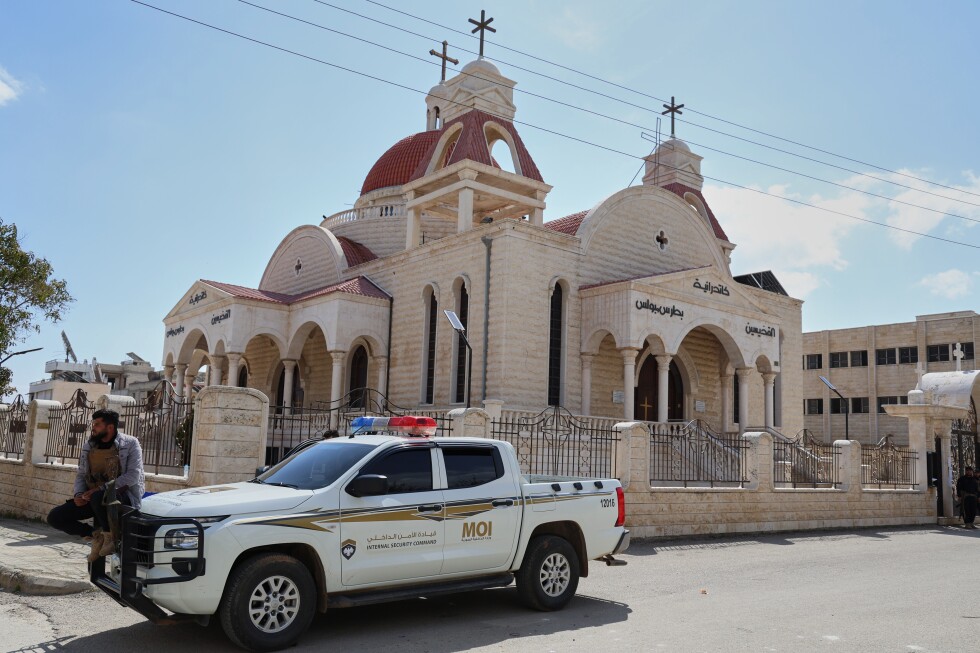
Sectarian violence erupted in the central Syrian town of Suqaylabiyah after what began as a personal dispute escalated into widespread attacks against the Christian community, local residents reported Saturday.
The violence, which began Friday and continued until early Saturday morning, saw scores of men on motorcycles from the neighboring Sunni town of Qalaat al-Madiq target Christian-owned properties, causing extensive damage to homes, shops, and vehicles.
“We passed through a state of terror, fear, and panic,” said Liyan Dweir, whose clothing shop was riddled with bullets. Dweir explained that his children were terrified during the hours-long assault. “It is unfair that because of an argument two towns clashed,” he added, noting that the violence stemmed from a disagreement between residents of the two communities.
Another resident, Nafeh al-Nader, described how attackers broke through his home’s gate and attempted to set rooms on fire. “They kicked a diesel heater, setting a room on fire,” al-Nader said. A neighbor who rushed to help was struck with a stick by one of the assailants.
While no immediate reports of casualties emerged from the incident, government forces deployed reinforcements to Suqaylabiyah to restore order. On Saturday, hundreds of residents marched through the streets demanding justice and declaring a strike until those responsible are held accountable.
The attacks represent the latest in a troubling pattern of sectarian violence that has intensified since the fall of longtime Syrian leader Bashar Assad in December 2024. Over the past two years, religious minorities across Syria have increasingly become targets of violence, with Alawite, Druze, and Christian communities suffering attacks from armed groups loyal to the country’s new Islamist leadership.
In March 2025, Alawite communities in Syria’s coastal region faced deadly attacks, while Druze populations in the southern province of Sweida experienced similar violence in July. These incidents reflect the deepening sectarian divide in post-Assad Syria, where minorities that once enjoyed relative security under the previous regime now face growing threats.
Syria’s interim President Ahmad al-Sharaa has publicly condemned attacks on minorities, but many critics accuse his government of either turning a blind eye or being unable to control the armed factions it is attempting to integrate into state structures.
The recent violence in Suqaylabiyah carries particular significance given the town’s history during Syria’s 15-year conflict. While Suqaylabiyah remained under Assad’s control throughout most of the war, neighboring Qalaat al-Madiq was held by insurgent groups that eventually contributed to toppling the Assad family’s 54-year rule.
Tensions have been further inflamed by recent policy changes affecting minority communities. The new authorities recently banned alcohol consumption in Damascus, a move that has particularly impacted Christian neighborhoods known for their restaurants and pubs.
Before Syria’s conflict began in 2011, Christians constituted approximately 10% of the country’s 23 million population. Under Assad, they enjoyed freedom of worship and access to high government positions. Many initially adopted a wait-and-see approach toward the new government, but optimism has faded following incidents like the June suicide bombing at a church outside Damascus that killed 25 people and wounded dozens more.
The ongoing sectarian violence has accelerated the exodus of Syria’s Christian community, with many leaving the country over the past 15 years. What was once a vibrant minority community of over two million has now dwindled significantly, reflecting the broader demographic changes that have reshaped Syria during its prolonged conflict.
As government forces attempt to maintain order in Suqaylabiyah, the incident serves as a stark reminder of Syria’s fragile social fabric and the challenges facing religious minorities in the country’s uncertain political landscape.
Fact Checker
Verify the accuracy of this article using The Disinformation Commission analysis and real-time sources.

13 Comments
Sectarian violence has plagued Syria for far too long. I’m worried this incident could reignite broader tensions if not addressed properly. The authorities need to investigate the root causes, protect all citizens, and promote reconciliation between the communities.
Absolutely. Containing such outbreaks and preventing them from escalating should be the top priority. Sustainable peace in Syria will require addressing the underlying divisions.
This is a worrying development in Syria’s ongoing conflict. Attacks on minority communities are unacceptable and risk exacerbating sectarian divisions. I hope the government can quickly restore order, protect citizens, and initiate a fair investigation to address the root causes of this violence.
Attacks on minority communities are never acceptable, regardless of the trigger. I hope the Syrian authorities can quickly restore order, identify the instigators, and take steps to prevent further violence between the communities. Sustainable peace requires addressing the root causes of sectarian tensions.
This is a concerning development in Syria’s ongoing instability. Attacks on minority communities are unacceptable and risk further destabilizing the country. I hope the government can swiftly restore order and prevent retaliation.
Attacks on minority communities are never acceptable, regardless of the trigger. I hope the Syrian government can swiftly address this situation and protect all citizens. Sectarian divisions have already caused so much suffering in this conflict.
Absolutely. The authorities need to restore law and order, identify the instigators, and ensure accountability. Preventing further escalation should be the top priority.
This is a deeply troubling escalation of violence against the Christian community in Syria. The government must act swiftly to restore order, protect citizens, and prevent further sectarian attacks. Long-term stability will require genuine inter-communal dialogue and reconciliation.
It’s tragic to see this outbreak of violence in a Christian town. While the initial dispute may have been personal, the targeting of homes and businesses is clearly an attempt to stoke wider sectarian tensions. De-escalation and a fair investigation will be crucial.
This is a concerning escalation of sectarian tensions in Syria. The targeting of Christian-owned properties and homes is deeply troubling. I hope the authorities can restore order and prevent further violence between the communities.
Agreed, this type of communal violence is very worrying. The government needs to investigate the root causes and take steps to promote inter-religious dialogue and reconciliation.
Sectarian violence is always concerning, and this incident in Syria is no exception. I hope the government can swiftly de-escalate the situation, protect all citizens, and initiate a fair investigation to understand what sparked this outbreak. Long-term stability will require promoting reconciliation between the communities.
Agreed. Preventing retaliation and further escalation should be the immediate priority. The authorities need to demonstrate their ability to uphold the rule of law and ensure the security of all Syrians, regardless of their religious affiliations.